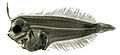
Dracopristis (meaning 'dragon shark') is an extinct genus of ctenacanth (a group of shark-like cartilaginous fish) that lived during the Carboniferousperiod in North America, around 307 million years ago. The species was discovered in the Kinney Brick Quarry in New Mexico, USA. Like many fossils from the site, the fossils of Dracopristis are very well-preserved. A single species is known, Dracopristis hoffmanorum, which is named in honor of Ralph and Jeanette Hoffman, the owners of the quarry. Prior to being scientific named, D. hoffmanorum was informally referred to as the "Godzilla shark".
Dracopristis possessed large dermal denticles along its head, along with rows of short, multi-cusped teeth in its jaws and very large spines on its dorsal fins, the latter of which inspired the name of the genus. The dorsal spines of the type specimen are about 0.57 m (1 ft 10 in) in length, while the entire body was approximately 2 m (6 ft 7 in) in length. Its large spines were likely used for defense against larger fish, while Dracopristis itself was likely a benthic predator that inhabited shallow, brackish-water environments. (Full article...)
👁 Image Among the electric fishes are electric eels, knifefish capable of generating an electric field, both at low voltage for electrolocation and at high voltage to stun their prey. An electric fish is any fish that can generate electric fields, whether to sense things around them, for defence, or to stun prey. Most fish able to produce shocks are also electroreceptive, meaning that they can sense electric fields. The only exception is the stargazer family (Uranoscopidae). Electric fish, although a small minority of all fishes, include both oceanic and freshwater species, and both cartilaginous and bony fishes.
Electric fish produce their electrical fields from an electric organ. This is made up of electrocytes, modified muscle or nerve cells, specialized for producing strong electric fields, used to locate prey, for defence against predators, and for signalling, such as in courtship. Electric organ discharges are two types, pulse and wave, and vary both by species and by function. (Full article...)
👁 Image The common torpedo (Torpedo torpedo), also known as ocellate torpedo or eyed electric ray, is a species of electric ray in the family Torpedinidae. It is found in the Mediterranean Sea and the eastern Atlantic Ocean from the Bay of Biscay to Angola, and is a benthic fish typically encountered over soft substrates in fairly shallow, coastal waters. Growing to 60 cm (24 in) long, this species has a nearly circular pectoral fin disc and a short, thick tail with two dorsal fins of nearly equal size and a large caudal fin. It can be identified by the prominent blue spots on its back, which usually number five but may vary from zero to nine, as well as by the small knobs on the rims of its spiracles.
For attack and defense, the common torpedo can deliver a strong electric shock of up to 200 volts. It is a solitary, nocturnalambush predator that feeds mainly on bony fishes and crustaceans. This species is aplacental viviparous, with the developing embryos nourished by yolk and histotroph ("uterine milk") produced by the mother. Females produce litters of up to 28 young every year in late summer or autumn, after a gestation period of 4–8 months; the specifics vary between geographical regions. The common torpedo's shock is painful but otherwise of little danger to humans. Its electrogenic properties led it to be used in medicine by the ancient Greeks and Romans. In modern times, it has no economic value and is mostly discarded when caught as bycatch in fisheries. The impact of fishing on its population is uncertain, and the International Union for Conservation of Nature (IUCN) has listed it as Vulnerable. (Full article...)
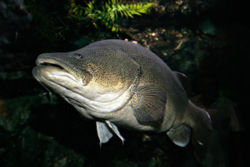
The Murray cod (Maccullochella peelii) is a large Australian predatory freshwater fish of the genus Maccullochella in the family Percichthyidae. Although the species is called a cod in the vernacular, it is not related to the Northern Hemisphere marine cod (Gadus) species. The Murray cod is an important part of Australia's vertebrate wildlife—as an apex predator in the Murray-Darling River system—and also significant in Australia's human culture. The Murray cod is the largest exclusively freshwater fish in Australia, and one of the largest in the world. Other common names for Murray cod include cod, greenfish, goodoo, Mary River cod, Murray perch, ponde, pondi and Queensland freshwater cod.
The scientific name of Murray cod derives from an early Australian fish researcher Allan Riverstone McCulloch and the river from which the explorer Major Mitchell first scientifically described the species, the Peel River. This was for a number of years changed to M. peelii peelii to differentiate Murray cod from Mary River cod, which were designated as a subspecies of Murray cod. However, as of 2010, Mary River cod have been raised to full species status (M. mariensis), thus Murray cod have reverted simply to M. peelii. (Full article...)
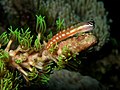
👁 Image The dwarf pufferfish (Carinotetraodon travancoricus), also known as the Malabar pufferfish, pygmy pufferfish, or pea pufferfish, is a small freshwaterpufferfishendemic to Kerala and southern Karnataka in Southwest India. They are popular in aquaria for their bright colours and small size. At a maximum total length of 3.5 cm, dwarf pufferfish are one of the smallest pufferfish in the world. They closely resemble the related Carinotetraodon imitator, and the two can be difficult to distinguish. C. imitator was not recognised as a different species until 1999.
Dwarf pufferfish dwell at the bottom of heavily vegetated waterways, predating small animals. Unlike other species of pufferfish, they are found in large groups in the wild. They breed throughout most of the year, with spawning pairs producing 1–5 eggs in 1–4 day intervals. Habitat loss and overharvesting for the aquarium trade threaten wild populations of dwarf pufferfish. (Full article...)
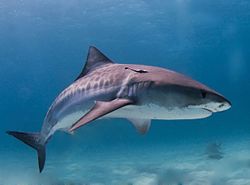
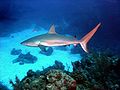
The tiger shark (Galeocerdo cuvier) is a species of ground shark, and the only extant member of the genus Galeocerdo and family Galeocerdonidae. It is a large predator, with females capable of attaining a length of over 5 m (16 ft 5 in). Populations are found in many tropical and temperate waters, especially around central Pacific islands. Its name derives from the dark stripes down its body, which resemble a tiger's pattern and fade as the shark matures.
The tiger shark is a solitary, mostly nocturnal hunter. It is notable for having the widest food spectrum of all sharks, with a range of prey that includes crustaceans, fish, seals, birds, squid, sea turtles, sea snakes, dolphins, and others, even smaller sharks. It also has a reputation as a "garbage eater", consuming a variety of inedible, man-made objects that linger in its stomach. Tiger sharks have only one recorded natural predator, the orca. It is considered a near-threatened species because of finning and fishing by humans. (Full article...)
The rainbow trout (Oncorhynchus mykiss) is a species of trout native to cold-water tributaries of the Pacific Ocean in North America and Asia. The steelhead (sometimes called steelhead trout) is an anadromous (sea-run) form of the coastal rainbow trout(O. m. irideus) or Columbia River redband trout(O. m. gairdneri) that usually returns to freshwater to spawn after living two to three years in the ocean.
Adult freshwater stream rainbow trout average between 0.5 and 2.5 kilograms (1 and 5 lb), while lake-dwelling and anadromous forms may reach 9 kg (20 lb). Coloration varies widely based on subspecies, forms, and habitat. Adult fish are distinguished by a broad reddish stripe along the lateral line, from gills to the tail, which is most vivid in breeding males. (Full article...)
👁 Image The Australian weasel shark (Hemigaleus australiensis) is an uncommon species of ground shark in the familyHemigaleidae. It inhabits shallow waters off northern Australia to a depth of 170 m (560 ft); smaller sharks frequent sand and seagrasshabitat and shift to coral reefs as they grow older. A slim, drab species reaching a length of 1.1 m (3.6 ft), it has sickle-shaped fins with dark tips on the second dorsal fin and caudal fin upper lobe. Its upper teeth are broad with strong serrations only on the trailing edge. The lateral line along each side is prominent and exhibits a downward curve below the second dorsal fin.
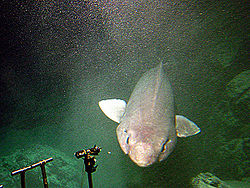
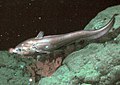
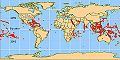
👁 Image The false catshark or sofa shark (Pseudotriakis microdon) is a species of ground shark in the familyPseudotriakidae, and the sole member of its genus. It has a worldwide distribution, and has most commonly been recorded close to the bottom over continental and insular slopes, at depths of 500–1,400 m (1,600–4,600 ft). Reaching 3.0 m (9.8 ft) in length, this heavy-bodied shark can be readily identified by its elongated, keel-like first dorsal fin. It has long, narrow eyes and a large mouth filled with numerous tiny teeth. It is usually dark brown in color, though a few are light gray.
With flabby muscles and a large oilyliver, the false catshark is a slow-moving predator and scavenger of a variety of fishes and invertebrates. It has a viviparous mode of reproduction, featuring an unusual form of oophagy in which the developing embryos consume ova or egg fragments released by the mother and use the yolk material to replenish their external yolk sacs for later use. This species typically gives birth to two pups at a time. The International Union for Conservation of Nature (IUCN) has assessed the conservation status of the false catshark as Least-concern. While neither targeted by fisheries nor commercially valuable, it is caught incidentally by longlines and bottom trawls, and its low reproductive rate may render it susceptible to population depletion. (Full article...)
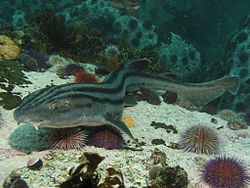
👁 Image The pyjama shark or striped catshark (Poroderma africanum) is a species of catshark, and part of the familyScyliorhinidae, endemic to the coastal waters of South Africa. This abundant, bottom-dwelling species can be found from the intertidal zone to a depth of around 100 m (330 ft), particularly over rocky reefs and kelp beds. With a series of thick, parallel, dark stripes running along its stout body, the pyjama shark has an unmistakable appearance. It is additionally characterized by a short head and snout with a pair of slender barbels that do not reach the mouth, and two dorsal fins that are placed far back on the body. It can grow up to a length of 1.1 m (3.6 ft) long.
The pyjama shark is primarily nocturnal, spending most of the day lying motionless and hidden in a cave or crevice or among vegetation. It often forms groups, particularly during summer. This species is an opportunistic predator that feeds on a wide variety of fishes and invertebrates; it favors cephalopods and frequents the spawning grounds of the chokka squid (Loligo reynaudi). When threatened, it curls into a circle with its tail covering its head. Reproduction is oviparous, with females laying rectangular, dark brown egg cases two at a time year-round. This small and harmless shark adapts well to captivity and is commonly displayed in public aquariums. It is often caught as a bycatch of commercial and recreational fisheries. Many are killed by fishers who regard them as pests. However, there is no data suggesting its numbers have declined, so the International Union for Conservation of Nature (IUCN) has assessed the pyjama shark as least concern. (Full article...)
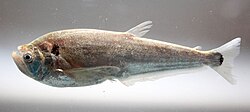
👁 Image The great northern tilefish (Lopholatilus chamaeleonticeps) or golden tile, is the largest species in the family Malacanthidae (tilefishes). It grows to a length of between 38 and 44 inches (970 and 1,120 mm). The great northern tilefish is a slow-growing and long-lived species that has four stages of life. After hatching from eggs, the larvae are found in plankton. As they grow into juveniles, the individuals seek shelter until finding or making their own burrows. As adults, the tilefish continue to expand their burrows in the sediment throughout their lives. The diet of the larvae is unknown, but presumed to consist of zooplankton; juveniles and adults feed upon various benthicinvertebrates, crustaceans, and fish. After reaching sexual maturity between 5 and 7 years of age, females lay eggs throughout the mating season for the male to fertilize, with each female laying an average of 2.3 million eggs.
The great northern tilefish fishery has been regulated to prevent overfishing. Regulations include catch limits and gear restrictions to prevent damage to the species' habitat and population. The result of these regulations has been a rebounding of the population, which led to an increase in the 2012 catch limit in the southern part of the Atlantic seaboard. (Full article...)
Thinopus is the name given to a trace fossil (ichnotaxon) found in late Devonian rocks in Pennsylvania. The only specimen was described by paleontologistOthniel Charles Marsh in a brief note published in 1896, with the only ichnospeciesThinopus antiquus. Marsh interpreted it as the fossil footprints of an early amphibian, making it the oldest evidence for tetrapods (land vertebrates) known at the time. Later research, however, argued that the fossil is better interpreted as the impressions of coprolites (fossilized feces) of fish. This would make Thinopus the earliest published name of a fish coprolite. (Full article...)
The Jersey Shore shark attacks of 1916 were a series of shark attacks along the coast of New Jersey, in the United States, between July 1 and 12, 1916, in which four people were killed and one critically injured. The incidents occurred during a deadly summer heat wave and polio epidemic in the United States that drove thousands of people to the seaside resorts of the Jersey Shore. Since 1916, scholars have debated which shark species was responsible and the number of animals involved, with the great white shark and the bull shark most frequently cited.
Personal and national reaction to the fatalities involved a wave of panic that led to shark hunts aimed at eradicating the population of "man-eating" sharks and protecting the economies of New Jersey's seaside communities. Resort towns enclosed their public beaches with steel nets to protect swimmers. Scientific knowledge about sharks before 1916 was based on conjecture and speculation. The attacks forced ichthyologists to reassess common beliefs about the abilities of sharks and the nature of shark attacks. (Full article...)
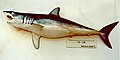
👁 Image The longfin mako shark (Isurus paucus) is a species of mackerel shark in the family Lamnidae, with a probable worldwide distribution in temperate and tropical waters. An uncommon species, it is typically lumped together under the name "mako" with its better-known relative, the shortfin mako shark (I. oxyrinchus). The longfin mako is a pelagic species found in moderately deep water, having been reported to a depth of 220 m (720 ft). Growing to a maximum length of 4.3 m (14 ft), the slimmer build and long, broad pectoral fins of this shark suggest that it is a slower and less active swimmer than the shortfin mako.
Longfin mako sharks are predators that feed on small schoolingbony fishes and cephalopods. Whether this shark is capable of elevating its body temperature above that of the surrounding water like the other members of its family is uncertain, though it possesses the requisite physiological adaptations. Reproduction in this species is aplacental viviparous, meaning the embryos hatch from eggs inside the uterus. In the later stages of development, the unborn young are fed nonviable eggs by the mother (oophagy). The litter size is typically two, but may be as many as eight. The longfin mako is of limited commercial value, as its meat and fins are of lower quality than those of other pelagic sharks; however, it is caught unintentionally in low numbers across its range. The International Union for Conservation of Nature has assessed this species as endangered due to its rarity, low reproductive rate, and continuing bycatch mortality. In 2019, alongside the shortfin mako, the IUCN listed the longfin mako as "Endangered". (Full article...)
The body of an alligator gar is torpedo-shaped, usually brown or olive colored, fading to a lighter gray or yellow ventral surface. In very rare occurrences, they can also be black, seen in gars that have a high level of melanin. Their scales are not like the scales of other fishes; rather, they are ganoid scales, which are bone-like, rhomboidal-shaped scales, often with serrated edges, and covered by an enamel-like substance. Ganoid scales are nearly impenetrable, and are excellent protection against predation. Unlike other gar species, the upper jaw of an alligator gar has a dual row of large, sharp teeth that are used to impale and hold prey. Alligator gar are stalking, ambush predators, primarily piscivores, but they also ambush and eat waterfowl and small mammals they find floating on the water's surface. (Full article...)
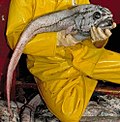
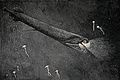
Image 10Long-snouted lancetfish. Lancetfish are ambush predators which spend all their time in the mesopelagic zone. They are among the largest mesopelagic fishes (up to 2 m (6.6 ft). (from Deep-sea fish)
Image 11Most of the rest of the mesopelagic fishes are ambush predators, such as this sabertooth fish. The sabertooth uses its telescopic, upward-pointing eyes to pick out prey silhouetted against the gloom above. Their recurved teeth prevent a captured fish from backing out. (from Pelagic fish)
Image 12Lanternfish are partial residents of the ocean epipelagic zone During the day they hide in deep waters, but at night they migrate up to surface waters to feed. (from Pelagic fish)
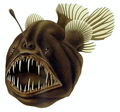
Image 14The humpback anglerfish is a bathypelagic ambush predator, which attracts prey with a bioluminescent lure. It can ingest prey larger than itself, which it swallows with an inrush of water when it opens its mouth. (from Pelagic fish)
Image 17The yellow tang, a usually placid surgeon fish, can erect spines in its tail and slash at its opponent with rapid sideways movements. (from Coral reef fish)
Image 18Humans seldom encounter frilled sharks alive, so they pose little danger (though scientists have accidentally cut themselves examining their teeth). (from Deep-sea fish)
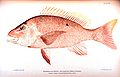
Image 21Red snapper, are generalized reef feeders with standard jaw and mouth structures that allow them to eat almost anything, though they prefer small fish and crustaceans. (from Coral reef fish)
Image 22Many bristlemouth species, such as the "spark anglemouth" above, are also bathypelagic ambush predators that can swallow prey larger than themselves. They are among the most abundant of all vertebrate families. (from Pelagic fish)
Image 28Surgeonfish are among the most common of coral reef herbivores, often feeding in shoals. This may be a mechanism for overwhelming the highly aggressive defence responses of small territorial damselfishes that vigorously guard small patches of algae on coral reefs. (from Coral reef fish)
Image 39Coral reefs support flourishing ecosystems, paradoxically in clear, low nutrient waters, along tropical continental coasts and around volcanic islands. Coral reef fish are numerous and diverse. (from Coastal fish)
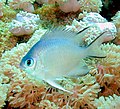
Image 43In the foreground is an orange-lined triggerfish displaying spines. Triggerfish have mouths that crush shells. Orange-lined triggerfish are particularly aggressive. The black and white fish are three-stripe damselfish and the unstriped fish are blue-green chromis damselfish. If the triggerfish attacks, the damselfish will hide in the nearby cauliflower coral. If the triggerfish wants to hide, it will squeeze into a coral crevice and lock itself in place with its spines. (from Coral reef fish)
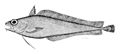
Image 44Cod-like fishes, like this morid cod have a barbel (fleshy filament) on their lower jaw which they use to detect prey buried in the sand or mud. (from Coastal fish)
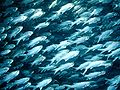
Image 45Most mesopelagic fishes are small filter feeders that ascend at night to feed in the nutrient rich waters of the epipelagic zone. During the day, they return to the dark, cold, oxygen-deficient waters of the mesopelagic where they are relatively safe from predators. Lanternfish account for as much as 65% of all deep sea fish biomass and are largely responsible for the deep scattering layer of the world's oceans. (from Pelagic fish)
Image 46The stoplight loosejaw has a lower jaw one-quarter as long as its body. The jaw has no floor and is attached only by a hinge and a modified tongue bone. Large fang-like teeth in the front are followed by many small barbed teeth. (from Deep-sea fish)
Image 56The stoplight loosejaw is also one of the few fishes that produce red bioluminescence. As most of their prey cannot perceive red light, this allows it to hunt with an essentially invisible beam of light. (from Deep-sea fish)
Image 62Young, red flabby whalefish make nightly vertical migrations into the lower mesopelagic zone to feed on copepods. When males mature into adults, they develop a massive liver and then their jaws fuse shut. They no longer eat, but continue to metabolise the energy stored in their liver. (from Pelagic fish)
Image 66Shortfin mako shark make long seasonal migrations. They appear to follow temperature gradients, and have been recorded travelling more than 4,500 km in one year. (from Pelagic fish)
Image 69The stargazer is an ambush predator which can deliver both venom and electric shocks. It has been called "the meanest thing in creation". (from Coastal fish)
Image 75The giant whale shark, another resident of the ocean epipelagic zone, filter feeds on plankton, and periodically dives deep into the mesopelagic zone. (from Pelagic fish)
Brachysomophis cirrocheilos, the stargazer snake eel, is a marine fish belonging to the family Ophichthidae. It is native to shallow tropical and subtropical waters in the western Indo-Pacific region. It hunts at night for crustaceans and small fish, after which it submerges itself into the sediment tail first and remains there all day, with just its eyes and the top of its head projecting, as seen here in Batangas Bay in the Philippines.
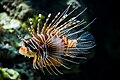
The flying gurnard is a fish of tropical to warm temperate waters on both sides of the Atlantic Ocean. When excited, it spreads its "wings", semi-transparent appendages tipped with a phosphorescent bright blue coloration which are used to frighten predators.
The leopard shark (Triakis semifasciata) is a species of hound shark found along the Pacific coast of North America from the U.S. state of Oregon to Mazatlán in Mexico. Typically measuring 1.2–1.5 m (3.9–4.9 ft) long, this slender-bodied shark is characterized by black saddle-like markings and large spots over its back.
The Atlantic spadefish is a species of marine fish endemic to the shallow waters off the coast of the southeastern United States and in the Caribbean Sea. They are similar in appearance to fresh waterangelfish, but much larger, reaching up to three feet (0.9 m) in length. Due to their reputation as strong fighters, they are popular game fish, especially during the summer months when they are most active.
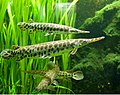
In American English, the name gar (or garpike) is strictly applied to members of the Lepisosteidae, a family including seven living species of fish in two genera that inhabit fresh, brackish, and occasionally marine, waters of eastern North America, Central America, and the Caribbean islands.
The Eurasian ruffe (Gymnocephalus cernua) is a species of freshwater fish found in temperate regions of Europe and Asia. The aggressive fish is known to reproduce rapidly, leading to problems when it is introduced to foreign bodies of water.
The mandarinfish (Synchiropus splendidus, not to be confused with the similarly named mandarin fish) is a small (~6 cm or 2.4 in), brightly-colored member of the dragonet family, popular in the saltwater aquarium trade. The mandarinfish is native to the Western Pacific, ranging approximately from the Ryukyu Islands south to Australia.
The Oscar (Astronotus ocellatus) is a species of fish from the cichlidfamily. In South America, where the species occurs, they are often found for sale as a food fish in the local markets. The species is also a popular aquarium fish. They have been reported to grow to a length of 45 cm (ca. 18 in) and a mass of 1.6 kg (3.5 lb).
The Peacock flounder (Bothus mancus) is a species of lefteye flounder found widely in relatively shallow waters in the Indo-Pacific. This photomontage shows four separate views of the same fish, each several minutes apart, starting from the top left. Over the course of the photos, the fish changes its colors to match its new surroundings, and then finally (bottom right) buries itself in the sand, leaving only the eyes protruding.
The spotted trunkfish (Lactophrys bicaudalis) is a species of ray-finned fish in the family Ostraciidae, native to the Caribbean Sea and parts of the western Atlantic Ocean. Members of this family are known as boxfishes because they have a hard outer covering consisting of hexagonal, plate-like scales fused together into a solid, triangular or box-like carapace. Because of this casing, the body of the spotted trunkfish is not flexible, and locomotion is normally limited to slow movements performed by rippling its dorsal and anal fins and gently beating its pectoral fins. If faster motion is required, it can additionally use its caudal fin for propulsion. This spotted trunkfish was photographed at a depth of about 40 ft (12 m) at Bari Reef, Bonaire.
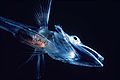
Icefish are a type of Antarctic fish belonging to various families, including the Channichthyidae family. They have no haemoglobin and their blood is transparent. They feed on krill, copepods, and other fish. Icefish rely on well-oxygenated water and absorb oxygen directly through the skin as they lack red blood cells.
"You know when they have a fishing show on TV? They catch the fish and then let it go. They don't want to eat the fish, they just want to make it late for something."
The Mini Edition of the Fish Portal is available for you to use on your wikipedia user page or talk page. It uses minimum space but retains many crucial features of the portal. To use it, place {{Portal:Fish/Mini portal}} on the designated page. See here for an example of the mini portal on a user page.
The Fish Quiz is a friendly quiz competition designed to test your general knowledge of fish. The current game is Fish Quiz Tournament X. You can read more and join the game here.
Associated Wikimedia
The following Wikimedia Foundation sister projects provide more on this subject:


_by_Nick_Hobgood.jpg)


.jpg)















.gif)















.jpg)



































.jpg)

_(14419490013).jpg)


.jpg)
_edit.jpg)