


Liberalism is a political and moral philosophy based on the rights of the individual, liberty, consent of the governed, political equality, right to private property, and equality before the law. Different liberals espouse various and sometimes conflicting views depending on their understanding of these principles but generally support liberal democracy, private property, market economies, individual rights (including civil rights and human rights), secularism, rule of law, economic and political freedom, freedom of speech, freedom of the press, freedom of assembly, and freedom of religion. Liberalism is frequently cited as the dominant ideology of modern history.
Liberalism became a distinct movement in the Age of Enlightenment, gaining popularity among Western philosophers and economists. Liberalism sought to replace the norms of hereditary privilege, state religion, absolute monarchy, the divine right of kings and traditional conservatism with representative democracy, rule of law, and equality under the law. Liberals also ended mercantilist policies, royal monopolies, and other trade barriers, instead promoting free trade and marketization. The philosopher John Locke is often credited with founding liberalism as a distinct tradition based on the social contract, arguing that each man has a natural right to life, liberty and property, and governments must not violate these rights. While the British liberal tradition emphasized expanding democracy, French liberalism emphasized rejecting authoritarianism and is linked to nation-building. (Full article...)
Selected article - show another
.png)
The Liberal Party was one of the two major political parties in the United Kingdom, along with the Conservative Party, in the 19th and early 20th centuries. Beginning as an alliance of Whigs, free trade–supporting Peelites, and reformist Radicals in the 1850s, by the end of the 19th century, it had formed four governments under William Ewart Gladstone. Despite being divided over the issue of Irish Home Rule, the party returned to government in 1905 and won a landslide victory in the 1906 general election. Under prime ministers Henry Campbell-Bannerman (1905–1908) and H. H. Asquith (1908–1916), the Liberal Party passed reforms that created a basic welfare state. Although Asquith was the party leader, its dominant figure was David Lloyd George.
Asquith was overwhelmed by his wartime role as prime minister and Lloyd George led a coalition that replaced him in late 1916. However, Asquith remained as Liberal Party leader. The split between Lloyd George's breakaway faction and Asquith's official Liberal faction badly weakened the party. The coalition government of Lloyd George was increasingly dominated by the Conservative Party, which finally ousted him as prime minister in 1922. The subsequent Liberal collapse was quick and catastrophic. With 397 MPs elected in the 1906 election; they had only 40 in 1924. Their share of the popular vote plunged from 49% to 18%. The Labour Party absorbed most of the ex-Liberal voters and then became the Conservatives' main rival. (Full article...)
Selected biography - show another
.jpg)
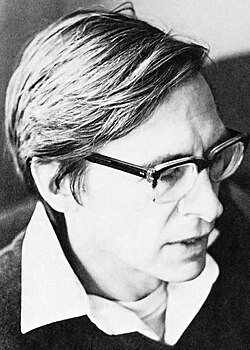
John Bordley Rawls (/rɔːlz/; February 21, 1921 – November 24, 2002) was an American moral, legal and political philosopher in the modern liberal tradition. Rawls has been described as one of the most influential political philosophers of the 20th century.
In 1990, Will Kymlicka wrote in his introduction to the field that "it is generally accepted that the recent rebirth of normative political philosophy began with the publication of John Rawls's A Theory of Justice in 1971". Rawls's theory of "justice as fairness" recommends equal basic liberties, equality of opportunity, and facilitating the maximum benefit to the least advantaged members of society in any case where inequalities may occur. Rawls's argument for these principles of social justice uses a thought experiment called the "original position", in which people deliberately select what kind of society they would choose to live in if they did not know which social position they would personally occupy. In his later work Political Liberalism (1993), John Rawls addressed the question of how political power can be exercised legitimately in a society where citizens hold diverse and often conflicting moral, religious, and philosophical points of view. (Full article...)
List of selected biographies
|
|---|
Selected quote
— John Dewey, Liberalism and Social Action, 1935.
|


General images
-
👁 Image 2GDP per capita in Chile and Latin America 1950–2010 (time under Pinochet highlighted) (from Neoliberalism)GDP per capita in Chile and Latin America 1950–2010 (time under Pinochet highlighted) (from Neoliberalism)
-
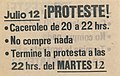
👁 Image 3Pamphlet calling for a protest of economic policy in 1983 following the economic crisis (from Neoliberalism)Pamphlet calling for a protest of economic policy in 1983 following the economic crisis (from Neoliberalism)
-
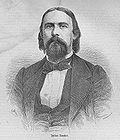
Julius Faucher (from Liberalism)
-
Per capita income during the Great Depression (from Neoliberalism)
-
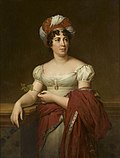
Madame de Staël (from Liberalism)
-
👁 Image 7Execution of José María de Torrijos y Uriarte and his men in 1831 as Spanish King Ferdinand VII took repressive measures against the liberal forces in his country (from Liberalism)Execution of José María de Torrijos y Uriarte and his men in 1831 as Spanish King Ferdinand VII took repressive measures against the liberal forces in his country (from Liberalism)
-
👁 Image 8Raif Badawi, a Saudi Arabian writer and the creator of the website Free Saudi Liberals, who was sentenced to ten years in prison and 1,000 lashes for "insulting Islam" in 2014 (from Liberalism)Raif Badawi, a Saudi Arabian writer and the creator of the website Free Saudi Liberals, who was sentenced to ten years in prison and 1,000 lashes for "insulting Islam" in 2014 (from Liberalism)
-
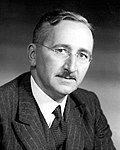
Friedrich Hayek (from Neoliberalism)
-
Gustave de Molinari (from Liberalism)
-
Wealth inequality in the United States increased from 1989 to 2013. (from Neoliberalism)
-
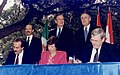
👁 Image 12U.S. President Bush, Canadian PM Mulroney, and Mexican President Salinas participate in the ceremonies to sign the North American Free Trade Agreement (NAFTA). (from Neoliberalism)U.S. President Bush, Canadian PM Mulroney, and Mexican President Salinas participate in the ceremonies to sign the North American Free Trade Agreement (NAFTA). (from Neoliberalism)
-
Ludwig Erhard (from Neoliberalism)
-
👁 Image 15Chilean (orange) and average Latin American (blue) rates of growth of GDP (1971–2007) (from Neoliberalism)Chilean (orange) and average Latin American (blue) rates of growth of GDP (1971–2007) (from Neoliberalism)
-
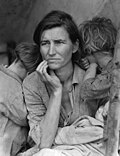
👁 Image 16The Great Depression, with its periods of worldwide economic hardship, formed the backdrop against which the Keynesian Revolution took place (the image is Dorothea Lange's Migrant Mother depiction of destitute pea-pickers in California, taken in March 1936). (from Liberalism)The Great Depression, with its periods of worldwide economic hardship, formed the backdrop against which the Keynesian Revolution took place (the image is Dorothea Lange's Migrant Mother depiction of destitute pea-pickers in California, taken in March 1936). (from Liberalism)
-
👁 Image 17As a liberal nationalist, K. J. Ståhlberg (1865–1952), the President of Finland, anchored the state in liberal democracy, guarded the fragile germ of the rule of law, and embarked on internal reforms. (from Liberalism)As a liberal nationalist, K. J. Ståhlberg (1865–1952), the President of Finland, anchored the state in liberal democracy, guarded the fragile germ of the rule of law, and embarked on internal reforms. (from Liberalism)
-
👁 Image 18The US federal minimum wage if it had kept pace with productivity compared to the actual wage (from Neoliberalism)The US federal minimum wage if it had kept pace with productivity compared to the actual wage (from Neoliberalism)
-
Franklin D. Roosevelt (from Liberalism)
-
Builders in West Berlin, 1952 (from Neoliberalism)
-
👁 Image 22The European Union–Mercosur free trade agreement, which would form one of the world's largest free trade areas, has been denounced by environmental activists and indigenous rights campaigners. (from Neoliberalism)The European Union–Mercosur free trade agreement, which would form one of the world's largest free trade areas, has been denounced by environmental activists and indigenous rights campaigners. (from Neoliberalism)
-
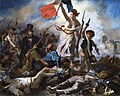
👁 Image 23The iconic painting Liberty Leading the People by Eugène Delacroix, a tableau of the July Revolution in 1830 (from Liberalism)The iconic painting Liberty Leading the People by Eugène Delacroix, a tableau of the July Revolution in 1830 (from Liberalism)
-
👁 Image 24Ronald Reagan (left) and Margaret Thatcher (right) were responsible for the popularisation of Neoliberalism. (from Neoliberalism)Ronald Reagan (left) and Margaret Thatcher (right) were responsible for the popularisation of Neoliberalism. (from Neoliberalism)
-
👁 Image 25Sismondi, who wrote the first critique of the free market from a liberal perspective in 1819 (from Liberalism)Sismondi, who wrote the first critique of the free market from a liberal perspective in 1819 (from Liberalism)
-
United States incarceration rate per 100,000 population, 1925–2014 (from Neoliberalism)
-
Benjamin Constant, a Franco-Swiss political activist and theorist (from Liberalism)
-
Member nations of the International Monetary Fund (from Neoliberalism)
-
👁 Image 29John Maynard Keynes, one of the most influential economists of modern times and whose ideas, which are still widely felt, formalized modern liberal economic policy (from Liberalism)John Maynard Keynes, one of the most influential economists of modern times and whose ideas, which are still widely felt, formalized modern liberal economic policy (from Liberalism)
-
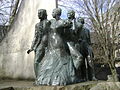
👁 Image 30Monument to the liberals of the 19th century in Agra del Orzán neighborhood, La Coruña, Galicia (Spain) (from Liberalism)Monument to the liberals of the 19th century in Agra del Orzán neighborhood, La Coruña, Galicia (Spain) (from Liberalism)
-
Unemployment in Chile and South America (1980–1990) (from Neoliberalism)
-
👁 Image 32The 2017–2018 Russian protests were organized by Russia's liberal opposition. (from Liberalism)The 2017–2018 Russian protests were organized by Russia's liberal opposition. (from Liberalism)
-
👁 Image 33T. H. Green, an influential liberal philosopher who established in Prolegomena to Ethics (1884) the first major foundations for what later became known as positive liberty and in a few years, his ideas became the official policy of the Liberal Party in Britain, precipitating the rise of social liberalism and the modern welfare state (from Liberalism)T. H. Green, an influential liberal philosopher who established in Prolegomena to Ethics (1884) the first major foundations for what later became known as positive liberty and in a few years, his ideas became the official policy of the Liberal Party in Britain, precipitating the rise of social liberalism and the modern welfare state (from Liberalism)
-
👁 Image 35John Locke was the first to develop a liberal philosophy, including the right to private property and the consent of the governed. (from Liberalism)John Locke was the first to develop a liberal philosophy, including the right to private property and the consent of the governed. (from Liberalism)



_b_269.jpg)


.jpg)

.jpg)








_(1).jpg)


.jpg)

.jpg)

.png)


,_%C3%A9crivain_et_homme_politique_-_P1679_-_Mus%C3%A9e_Carnavalet.jpg)







.jpg)


.jpg)


Subcategories


Related portals


WikiProjects


Topics
Recognized content


Associated Wikimedia
The following Wikimedia Foundation sister projects provide more on this subject:
-
Commons
Free media repository -
Wikibooks
Free textbooks and manuals -
Wikidata
Free knowledge base -
Wikinews
Free-content news -
Wikiquote
Collection of quotations -
Wikisource
Free-content library -
Wikiversity
Free learning tools -
Wiktionary
Dictionary and thesaurus


