|
The socialist political movement includes political philosophies that originated in the revolutionary movements of the mid-to-late 18th century and out of concern for the social problems that socialists associated with capitalism. By the late 19th century, after the work of Karl Marx and his collaborator Friedrich Engels, socialism had come to signify anti-capitalism and advocacy for a post-capitalist system based on some form of social ownership of the means of production. By the early 1920s, communism and social democracy had become the two dominant political tendencies within the international socialist movement, with socialism itself becoming the most influential secular movement of the 20th century. Many socialists also adopted the causes of other social movements, such as feminism, environmentalism, and progressivism. (Full article...) Selected articleThe Fabian Society is a British socialist organisation whose purpose is to advance the principles of democratic socialism via gradualist and reformist effort in democracies, rather than by revolutionary overthrow. As one of the founding organisations of the Labour Representation Committee in 1900, and as an important influence upon the Labour Party which grew from it, the Fabian Society has had a powerful influence on British politics. Other members of the Fabian Society have included political leaders from countries formerly part of the British Empire, such as Jawaharlal Nehru, who adopted Fabian principles as part of their own political ideologies. Today, the society functions primarily as a think tank and is one of 15 socialist societies affiliated with the Labour Party. Similar societies exist in Australia (the Australian Fabian Society), in Canada (the Douglas–Coldwell Foundation and the now disbanded League for Social Reconstruction), in Sicily (Sicilian Fabian Society) and in New Zealand (The NZ Fabian Society).
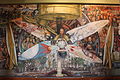
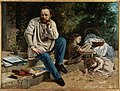
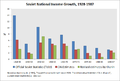
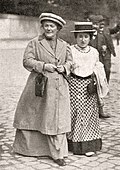
Selected biography - show anotherFrançois Marie Charles Fourier (/ˈfʊrieɪ,-iər/; French: [ʃaʁlfuʁje]; 7 April 1772 – 10 October 1837) was a French philosopher, an influential early socialist thinker, and one of the founders of utopian socialism. Some of his views, held to be radical in his lifetime, have become mainstream in modern society. For instance, Fourier is credited with having originated the word feminism in 1837. Fourier's social views and proposals inspired a movement of intentional communities. Among them in the United States were the community of Utopia, Ohio; La Reunion near present-day Dallas, Texas; Lake Zurich, Illinois; the North American Phalanx in Red Bank, New Jersey; Brook Farm in West Roxbury, Massachusetts; the Community Place and Sodus Bay Phalanx in New York State; Silkville, Kansas, and several others. In Guise, France, he influenced the Familistery of Guise [fr; de; pt]. Fourier later inspired a diverse array of revolutionary thinkers and writers. (Full article...) General imagesThe following are images from various socialism-related articles on Wikipedia.
Did you know (auto-generated) - load new batch
Related portalsTopicsSubcategoriesWant to find an article related to socialism? Try browsing through any of the main categories below:
Select [►] to view subcategories
Selected quotation
Participate!Everyone is welcome to participate in WikiProject Socialism, where editors collaborate to improve all aspects related to socialism on Wikipedia. Associated WikimediaThe following Wikimedia Foundation sister projects provide more on this subject:
Discover Wikipedia using portals | ||||||
 |
VOOZH | about |


.jpg)


.jpg)








_1989_CPA_6101.jpg)

_-_Edward_Carpenter.jpg)




.jpg)

.jpg)





.jpg)


.JPG)