



Linux (/ˈlɪnʊks/ LIN-uuks) is a family of open source Unix-like operating systems based on the Linux kernel, a kernel first released on 17 September 1991, by Linus Torvalds. Linux is typically packaged as a Linux distribution (a.k.a distro), which includes the kernel and supporting system software and libraries – most of which are provided by third parties – to create a complete operating system. Linux was originally designed as a clone of Unix and is released under the copyleft GPL license.
Linux is one of the most prominent examples of free and open-source software collaboration. The Linux kernel is considered by many to be the largest open source project. While originally developed for x86-based personal computers, it has since been ported to more platforms than any other operating system, and is used on a wide variety of devices including PCs, workstations, mainframes, and embedded systems. Linux is the predominant operating system for servers and is also used on all of the world's 500 fastest supercomputers. When combined with Android, which uses a Linux-based kernel and is designed for smartphones, they have the largest installed base of all general-purpose operating systems. (Full article...)
Selected articles - load new batch
-
👁 Image 1 Linux on IBM Z, Linux on zSystems, or zLinux is the collective term for the Linux operating system compiled to run on IBM mainframes, especially IBM Z, zSystems, and LinuxONE servers. Similar terms which imply the same meaning are Linux/390, Linux/390x, etc. The three Linux distributions certified for usage on the IBM Z hardware platform are Red Hat Enterprise Linux, SUSE Linux Enterprise Server, and Ubuntu. (Full article...)Linux on IBM Z, Linux on zSystems, or zLinux is the collective term for the Linux operating system compiled to run on IBM mainframes, especially IBM Z, zSystems, and LinuxONE servers. Similar terms which imply the same meaning are Linux/390, Linux/390x, etc. The three Linux distributions certified for usage on the IBM Z hardware platform are Red Hat Enterprise Linux, SUSE Linux Enterprise Server, and Ubuntu. (Full article...)
-
👁 Image 2 Ubuntu (/ʊˈbʊntuː/ ⓘ uu-BUUN-too) is a Linux distribution based on Debian and composed primarily of free and open-source software. Developed by the British company Canonical and a community of contributors under a meritocratic governance model, Ubuntu is released in multiple official editions: Desktop, Server, and Core for IoT and robotic devices. Ubuntu is published on a six-month release cycle, with long-term support (LTS) versions issued every two years. Canonical provides security updates and support until each release reaches its designated end-of-life (EOL), with optional extended support available through the Ubuntu Pro and Expanded Security Maintenance (ESM) services. (Full article...)
👁 Image
Ubuntu (/ʊˈbʊntuː/ ⓘ uu-BUUN-too) is a Linux distribution based on Debian and composed primarily of free and open-source software. Developed by the British company Canonical and a community of contributors under a meritocratic governance model, Ubuntu is released in multiple official editions: Desktop, Server, and Core for IoT and robotic devices.
Ubuntu is published on a six-month release cycle, with long-term support (LTS) versions issued every two years. Canonical provides security updates and support until each release reaches its designated end-of-life (EOL), with optional extended support available through the Ubuntu Pro and Expanded Security Maintenance (ESM) services. (Full article...) -
👁 Image 3 The Linux Foundation (LF) is a non-profit organization established in 2000 to support Linux development and open-source software projects. (Full article...)The Linux Foundation (LF) is a non-profit organization established in 2000 to support Linux development and open-source software projects. (Full article...)
-
👁 Image 4 Fedora Linux is a free and open-source Linux distribution developed by the Fedora Project. It was originally developed in 2003 as a continuation of the Red Hat Linux project. It contains software distributed under various free and open-source licenses and aims to be on the leading edge of open-source technologies. It is now the upstream source for CentOS Stream and Red Hat Enterprise Linux. Since the release of Fedora 21 in December 2014, three editions have been made available: personal computer, server and cloud computing. This was expanded to five editions for containerization and Internet of Things (IoT) as of the release of Fedora 37 in November 2022. A new version of Fedora Linux is released every six months. (Full article...)
👁 Image
Fedora Linux is a free and open-source Linux distribution developed by the Fedora Project. It was originally developed in 2003 as a continuation of the Red Hat Linux project. It contains software distributed under various free and open-source licenses and aims to be on the leading edge of open-source technologies. It is now the upstream source for CentOS Stream and Red Hat Enterprise Linux.
Since the release of Fedora 21 in December 2014, three editions have been made available: personal computer, server and cloud computing. This was expanded to five editions for containerization and Internet of Things (IoT) as of the release of Fedora 37 in November 2022. A new version of Fedora Linux is released every six months. (Full article...) -
👁 Image 5 The Linux kernel mailing list (LKML) is the main electronic mailing list for Linux kernel development, where the majority of the announcements, discussions, debates, and flame wars over the kernel take place. Many other mailing lists exist to discuss the different subsystems and ports of the Linux kernel, but LKML is the principal communication channel among Linux kernel developers. It is a very high-volume list, usually receiving about 1,400 messages each day, most of which are kernel code patches. Linux utilizes a workflow governed by LKML, which is the "bazaar" where kernel development takes place. In his book Linux Kernel Development, Robert Love notes: (Full article...)The Linux kernel mailing list (LKML) is the main electronic mailing list for Linux kernel development, where the majority of the announcements, discussions, debates, and flame wars over the kernel take place. Many other mailing lists exist to discuss the different subsystems and ports of the Linux kernel, but LKML is the principal communication channel among Linux kernel developers. It is a very high-volume list, usually receiving about 1,400 messages each day, most of which are kernel code patches.
Linux utilizes a workflow governed by LKML, which is the "bazaar" where kernel development takes place. In his book Linux Kernel Development, Robert Love notes: (Full article...) -
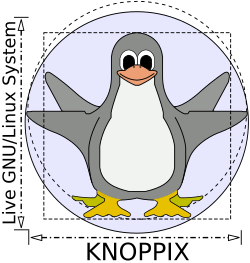
👁 Image 6 Knoppix, stylized KNOPPIX (/ˈknɒpɪks/ KNOP-iks), is an operating system based on Debian designed to be run directly from a CD or DVD (Live CD) or a USB flash drive (Live USB). It was first released in 2000 by German Linux consultant Klaus Knopper, and was one of the first popular live distributions. Knoppix is loaded from the removable medium and decompressed into a RAM drive. The decompression is transparent and on-the-fly. There are two main editions, available in both English and German: the traditional compact-disc (700 megabytes) edition and the DVD (4.7 gigabytes) "Maxi" edition. (Full article...)
👁 Image
Knoppix, stylized KNOPPIX (/ˈknɒpɪks/ KNOP-iks), is an operating system based on Debian designed to be run directly from a CD or DVD (Live CD) or a USB flash drive (Live USB). It was first released in 2000 by German Linux consultant Klaus Knopper, and was one of the first popular live distributions. Knoppix is loaded from the removable medium and decompressed into a RAM drive. The decompression is transparent and on-the-fly.
There are two main editions, available in both English and German: the traditional compact-disc (700 megabytes) edition and the DVD (4.7 gigabytes) "Maxi" edition. (Full article...) -
👁 Image 7 Linux adoption is the adoption of Linux-based computer operating systems (OSes) by households, nonprofit organizations, businesses, and governments. Android, which runs on Linux, is the world's most widely used computer operating system. As of October 2024[update], Android has 45% of the global operating system market followed by Windows with 26%. Notably, Android uses a customized Linux kernel with a separate runtime environment and software stack compared to the vast majority of other Linux-based systems. (Full article...)Linux adoption is the adoption of Linux-based computer operating systems (OSes) by households, nonprofit organizations, businesses, and governments.
Android, which runs on Linux, is the world's most widely used computer operating system. As of October 2024[update], Android has 45% of the global operating system market followed by Windows with 26%. Notably, Android uses a customized Linux kernel with a separate runtime environment and software stack compared to the vast majority of other Linux-based systems. (Full article...) -
👁 Image 8 SUSE Linux Enterprise (SLE) is a Linux-based operating system developed by SUSE. It is available in two editions, suffixed with Server (SLES) for servers and mainframes, and Desktop (SLED) for workstations and desktop computers. Its major versions are released at an interval of three–four years, while minor versions (called "Service Packs" until SLE 15 or "Minor Release" starting with SLE 16) are released about every 12 months. SUSE Linux Enterprise products receive more intense testing than the upstream openSUSE community product, with the intention that only mature, stable versions of the included components will make it through to the released enterprise product. It is developed from a common code base with other SUSE Linux Enterprise products. (Full article...)SUSE Linux Enterprise (SLE) is a Linux-based operating system developed by SUSE. It is available in two editions, suffixed with Server (SLES) for servers and mainframes, and Desktop (SLED) for workstations and desktop computers.
Its major versions are released at an interval of three–four years, while minor versions (called "Service Packs" until SLE 15 or "Minor Release" starting with SLE 16) are released about every 12 months. SUSE Linux Enterprise products receive more intense testing than the upstream openSUSE community product, with the intention that only mature, stable versions of the included components will make it through to the released enterprise product. It is developed from a common code base with other SUSE Linux Enterprise products. (Full article...) -
👁 Image 9 Linux malware includes viruses, Trojans, worms and other types of malware that affect the Linux family of operating systems. Linux, Unix and other Unix-like computer operating systems are generally regarded as very well-protected against, but not immune to, computer viruses. (Full article...)Linux malware includes viruses, Trojans, worms and other types of malware that affect the Linux family of operating systems. Linux, Unix and other Unix-like computer operating systems are generally regarded as very well-protected against, but not immune to, computer viruses. (Full article...)
-
👁 Image 10 Linux began in 1991 as a personal project by Finnish student Linus Torvalds to create a new free operating system kernel. The resulting Linux kernel has been marked by constant growth throughout its history. Since the initial release of its source code in 1991, it has grown from a small number of C files under a license prohibiting commercial distribution to the 4.15 version in 2018 with more than 23.3 million lines of source code, not counting comments, under the GNU General Public License v2 with a syscall exception meaning anything that uses the kernel via system calls are not subject to the GNU GPL. (Full article...)Linux began in 1991 as a personal project by Finnish student Linus Torvalds to create a new free operating system kernel. The resulting Linux kernel has been marked by constant growth throughout its history. Since the initial release of its source code in 1991, it has grown from a small number of C files under a license prohibiting commercial distribution to the 4.15 version in 2018 with more than 23.3 million lines of source code, not counting comments, under the GNU General Public License v2 with a syscall exception meaning anything that uses the kernel via system calls are not subject to the GNU GPL. (Full article...)
-
👁 Image 11 Arch Linux using the KDE Plasma 6 desktop environment Arch Linux (/ɑːrtʃ/) is an open source, rolling release Linux distribution. Arch Linux is kept up-to-date by regularly updating the individual pieces of software that it comprises. It provides monthly "snapshots" which are used as installation media. Arch Linux is intentionally minimal, and is meant to be configured by the user during installation so they may add only what they require. Pacman, a package manager written specifically for Arch Linux, is used to install, remove and update software packages. The Arch User Repository (AUR) serves as a community-driven software repository for Arch Linux and provides packages not included in the official repositories and alternative versions of packages; AUR packages can be downloaded and built manually, or installed through an AUR 'helper'. (Full article...)
Arch Linux (/ɑːrtʃ/) is an open source, rolling release Linux distribution. Arch Linux is kept up-to-date by regularly updating the individual pieces of software that it comprises. It provides monthly "snapshots" which are used as installation media. Arch Linux is intentionally minimal, and is meant to be configured by the user during installation so they may add only what they require.
Pacman, a package manager written specifically for Arch Linux, is used to install, remove and update software packages. The Arch User Repository (AUR) serves as a community-driven software repository for Arch Linux and provides packages not included in the official repositories and alternative versions of packages; AUR packages can be downloaded and built manually, or installed through an AUR 'helper'. (Full article...) -
👁 Image 12 GoboLinux is a Linux distribution whose most prominent feature is a reorganization of the traditional Linux file system. Rather than following the Filesystem Hierarchy Standard like most Unix-like systems, each program in a GoboLinux system has its own subdirectory tree, where all of its files (including settings specific for that program) may be found. Thus, a program "Foo" has all of its specific files and libraries in /Programs/Foo, under the corresponding version of this program at hand. For example, the commonly known GCC compiler suite version 8.1.0, would reside under the directory /Programs/GCC/8.1.0. According to the GoboLinux developers, this results in a cleaner system. (Full article...)GoboLinux is a Linux distribution whose most prominent feature is a reorganization of the traditional Linux file system. Rather than following the Filesystem Hierarchy Standard like most Unix-like systems, each program in a GoboLinux system has its own subdirectory tree, where all of its files (including settings specific for that program) may be found. Thus, a program "Foo" has all of its specific files and libraries in
/Programs/Foo, under the corresponding version of this program at hand. For example, the commonly known GCC compiler suite version 8.1.0, would reside under the directory/Programs/GCC/8.1.0.
According to the GoboLinux developers, this results in a cleaner system. (Full article...) -
👁 Image 13 Tux Racer is a 2000 open-source winter sports racing video game starring the Linux mascot, Tux the penguin. It was originally developed by Jasmin Patry as a computer graphics project at the University of Waterloo. Later on, Patry and the newly founded Sunspire Studios, composed of several former students of the university, expanded it. In the game, the player controls Tux as he slides down a course of snow and ice collecting herrings. Tux Racer was officially downloaded over one million times as of 2001. It also was well received, often being acclaimed for the graphics, fast-paced gameplay, and replayability, and was a fan favorite among Linux users and the free software community. The game's popularity secured the development of a proprietized release that included enhanced graphics and multiplayer, and it also became the first GPL-licensed game to receive an arcade adaptation. It is the only product that Sunspire Studios developed and released, after which the company liquidated. (Full article...)Tux Racer is a 2000 open-source winter sports racing video game starring the Linux mascot, Tux the penguin. It was originally developed by Jasmin Patry as a computer graphics project at the University of Waterloo. Later on, Patry and the newly founded Sunspire Studios, composed of several former students of the university, expanded it. In the game, the player controls Tux as he slides down a course of snow and ice collecting herrings.
Tux Racer was officially downloaded over one million times as of 2001. It also was well received, often being acclaimed for the graphics, fast-paced gameplay, and replayability, and was a fan favorite among Linux users and the free software community. The game's popularity secured the development of a proprietized release that included enhanced graphics and multiplayer, and it also became the first GPL-licensed game to receive an arcade adaptation. It is the only product that Sunspire Studios developed and released, after which the company liquidated. (Full article...) -
👁 Image 14 Screenshot of Debian 13 (Trixie) with the GNOME desktop environment version 48.3 Debian (/ˈdɛbiən/) is a Linux distribution developed by the Debian Project, established by Ian Murdock in August 1993. Debian is developed openly by a team of volunteers guided by the Debian Project Leader and three foundation documents: the Debian Social Contract, the Debian Constitution, and the Debian Free Software Guidelines. (Full article...)
Debian (/ˈdɛbiən/) is a Linux distribution developed by the Debian Project, established by Ian Murdock in August 1993.
Debian is developed openly by a team of volunteers guided by the Debian Project Leader and three foundation documents: the Debian Social Contract, the Debian Constitution, and the Debian Free Software Guidelines. (Full article...) -
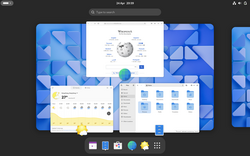
👁 Image 15 GNOME Shell with GNOME Web, Weather and Files (version 50) GNOME (/ɡəˈnoʊm, ˈnoʊm/) is a free and open-source desktop environment for Linux and other Unix-like operating systems. It is distributed as the default desktop environment of many major Linux distributions, including Debian, Fedora Linux, Ubuntu, Red Hat Enterprise Linux, and SUSE Linux Enterprise, and is the default in Oracle Solaris, a Unix operating system. GNOME is developed by the GNOME Project, which is composed of both volunteers and paid contributors, the largest corporate contributor being Red Hat. It is an international project that aims to develop frameworks for software development, to program end-user applications based on these frameworks, and to coordinate efforts for the internationalization, localization, and accessibility of that software. (Full article...)
GNOME (/ɡəˈnoʊm,ˈnoʊm/) is a free and open-source desktop environment for Linux and other Unix-like operating systems. It is distributed as the default desktop environment of many major Linux distributions, including Debian, Fedora Linux, Ubuntu, Red Hat Enterprise Linux, and SUSE Linux Enterprise, and is the default in Oracle Solaris, a Unix operating system.
GNOME is developed by the GNOME Project, which is composed of both volunteers and paid contributors, the largest corporate contributor being Red Hat. It is an international project that aims to develop frameworks for software development, to program end-user applications based on these frameworks, and to coordinate efforts for the internationalization, localization, and accessibility of that software. (Full article...)


.svg)




_screenshot_-_using_GNOME_desktop.png)


Release news
- 2026-03-18 GNOME 50 released. (announcement)
- 2026-02-08 Linux kernel 6.19 released.
- 2025-11-30 Linux kernel 6.18 released.
- 2025-10-28 Fedora Linux 43 released.
- 2025-10-09 Ubuntu 25.10 "Questing Quokka" released.
- 2025-10-01 openSUSE Leap 16 released.
- 2025-09-28 Linux kernel 6.17 released.
- 2025-09-17 GNOME 49 released. (announcement)
- 2025-08-09 Debian 13 "Trixie" released.
- 2025-07-27 Linux kernel 6.16 released.
- 2025-05-25 Linux kernel 6.15 released.
- 2025-05-13 Red Hat Enterprise Linux 10 released.
- 2025-04-17 Ubuntu 25.04 "Plucky Puffin" released.
- 2025-04-15 Fedora Linux 42 released.
- 2025-03-24 Linux kernel 6.14 released.
- 2025-03-19 GNOME 48 released. (announcement)
- 2025-02-11 KDE Plasma 6.3 released.
- 2025-01-19 Linux kernel 6.13 released.
- 2024-11-17 Linux kernel 6.12 released.
- 2024-10-29 Fedora Linux 41 released.
- 2024-10-10 Ubuntu 24.10 "Oracular Oriole" released.
- 2024-09-18 GNOME 47 released. (announcement)
- 2024-09-15 Linux kernel 6.11 released.
- 2024-07-14 Linux kernel 6.10 released.
- 2024-05-12 Linux kernel 6.9 released.
- 2024-04-25 Ubuntu 24.04 LTS "Noble Numbat" released.
- 2024-04-23 Fedora Linux 40 released.
- 2024-03-20 GNOME 46 released. (announcement)
- 2024-03-10 Linux kernel 6.8 released.
- 2024-02-28 KDE Plasma 6 released.
- 2024-01-07 Linux kernel 6.7 released.
- 2023-11-20 Rocky Linux 9.3 released
- 2023-11-07 Fedora Linux 39 released.
- 2023-10-30 Linux kernel 6.6 released.
- 2023-10-12 Ubuntu 23.10 "Mantic Minotaur" released.
- 2023-09-20 GNOME 45 released.
- 2023-08-27 Linux kernel 6.5 released.
- 2023-06-26 Linux kernel 6.4 released.
- 2023-06-10 Debian 12 "bookworm" released.
- 2023-05-16 Rocky Linux 9.2 released.
- 2023-05-10 AlmaLinux 9.2 "Turquoise Kodkod" released.
- 2023-04-23 Linux kernel 6.3 released.
- 2023-04-20 Ubuntu 23.04 "Lunar Lobster" released.
- 2023-03-22 GNOME 44 released.
- 2023-02-19 Linux kernel 6.2 released.
- 2022-12-11 Linux kernel 6.1 released.
- 2022-11-16 Red Hat Enterprise Linux 9.1 and AlmaLinux 9.1 released.
- 2022-11-15 Fedora Linux 37 released.
- 2022-10-20 Ubuntu 22.10 "Kinetic Kudu" released.
- 2022-10-02 Linux kernel 6.0 released.
- 2022-09-21 GNOME 43 released-
- 2022-07-31 Linux kernel 5.19 released.
- 2022-05-26 AlmaLinux 9 released.
- 2022-05-22 Linux kernel 5.18 released.
- 2022-05-18 Red Hat Enterprise Linux 9 released.
- 2022-05-10 Fedora Linux 36 released.
- 2022-04-21 Ubuntu 22.04 LTS "Jammy Jellyfish" released.
- 2022-03-23 GNOME 42 released.
- 2022-03-20 Linux kernel 5.17 released.
- 2022-02-02 Slackware 15.0 released.
- 2022-01-09 Linux kernel 5.16 released.
- 2021-11-02 Fedora Linux 35 released.
Selected image
👁 System Call Interface and the GNU C Library


The Linux kernel System Call Interface and the GNU C Library.
Related portals


Selected biographies - load new batch
-
👁 Image 1 Photo of Wright (foreground) Chris Wright is a Linux kernel developer and CTO with Red Hat. He was the Linux kernel co-maintainer for the -stable branch with Greg Kroah-Hartman. He is involved in Linux kernel security related topics and is currently the maintainer for the LSM framework. Wright also serves as the Chair of the OpenDaylight Project Board of Directors. (Full article...)
Chris Wright is a Linux kernel developer and CTO with Red Hat. He was the Linux kernel co-maintainer for the -stable branch with Greg Kroah-Hartman. He is involved in Linux kernel security related topics and is currently the maintainer for the LSM framework.
Wright also serves as the Chair of the OpenDaylight Project Board of Directors. (Full article...) -
👁 Image 2 Harald Welte, also known as LaForge, is a German programmer. Welte is the founder of the free software project Osmocom and was formerly involved in the netfilter/iptables and Openmoko projects. He is a member of the Chaos Computer Club. (Full article...)
👁 Image
Harald Welte, also known as LaForge, is a German programmer.
Welte is the founder of the free software project Osmocom and was formerly involved in the netfilter/iptables and Openmoko projects. He is a member of the Chaos Computer Club. (Full article...) -
👁 Image 3 Hans Reiser in 2006 Hans Thomas Reiser (born December 19, 1963) is an American computer programmer, entrepreneur, and convicted murderer. In April 2008, Reiser was convicted of the first-degree murder of his wife, Nina Reiser, who disappeared in September 2006. He subsequently pleaded guilty to a reduced charge of second-degree murder, as part of a settlement agreement that included disclosing the location of Nina Reiser's body, which he revealed to be in a shallow grave near the couple's home. Prior to his incarceration, Reiser created the ReiserFS computer file system, which may be used by the Linux kernel but is now removed, as well as its attempted successor, Reiser4. In 2004, he founded Namesys, a corporation meant to coordinate the development of both file systems. (Full article...)
Hans Thomas Reiser (born December 19, 1963) is an American computer programmer, entrepreneur, and convicted murderer. In April 2008, Reiser was convicted of the first-degree murder of his wife, Nina Reiser, who disappeared in September 2006. He subsequently pleaded guilty to a reduced charge of second-degree murder, as part of a settlement agreement that included disclosing the location of Nina Reiser's body, which he revealed to be in a shallow grave near the couple's home.
Prior to his incarceration, Reiser created the ReiserFS computer file system, which may be used by the Linux kernel but is now removed, as well as its attempted successor, Reiser4. In 2004, he founded Namesys, a corporation meant to coordinate the development of both file systems. (Full article...) -
👁 Image 4 Con Kolivas is a Greek-Australian anaesthetist. He has worked as a computer programmer on the Linux kernel and on the development of the cryptographic currency mining software CGMiner. His Linux contributions include patches for the kernel to improve its desktop performance, particularly reducing I/O impact. (Full article...)Con Kolivas is a Greek-Australian anaesthetist. He has worked as a computer programmer on the Linux kernel and on the development of the cryptographic currency mining software CGMiner. His Linux contributions include patches for the kernel to improve its desktop performance, particularly reducing I/O impact. (Full article...)
-
👁 Image 5 Solar Designer at PHDays 2012 Alexander Peslyak (Александр Песляк) (born 1977), better known as Solar Designer, is a security specialist from Russia. He is best known for his publications on exploitation techniques, including the return-to-libc attack and the first generic heap-based buffer overflow exploitation technique, as well as computer security protection techniques such as privilege separation for daemon processes. Peslyak is the author of the widely popular password cracking tool John the Ripper. His code has also been used in various third-party operating systems, such as OpenBSD and Debian. (Full article...)
👁 Image Solar Designer at PHDays 2012
Alexander Peslyak (Александр Песляк) (born 1977), better known as Solar Designer, is a security specialist from Russia. He is best known for his publications on exploitation techniques, including the return-to-libc attack and the first generic heap-based buffer overflow exploitation technique, as well as computer security protection techniques such as privilege separation for daemon processes.
Peslyak is the author of the widely popular password cracking tool John the Ripper. His code has also been used in various third-party operating systems, such as OpenBSD and Debian. (Full article...) -
👁 Image 6 Bruce Perens in 2009 Bruce Perens (born around 1958) is an American computer programmer and advocate in the free software movement. He created The Open Source Definition and published the first formal announcement and manifesto of open source. He co-founded the Open Source Initiative (OSI) with Eric S. Raymond. In 2005, Perens represented Open Source at the United Nations World Summit on the Information Society, at the invitation of the United Nations Development Programme. He has appeared before national legislatures and is often quoted in the press, advocating for open source and the reform of national and international technology policy. (Full article...)
Bruce Perens (born around 1958) is an American computer programmer and advocate in the free software movement. He created The Open Source Definition and published the first formal announcement and manifesto of open source. He co-founded the Open Source Initiative (OSI) with Eric S. Raymond.
In 2005, Perens represented Open Source at the United Nations World Summit on the Information Society, at the invitation of the United Nations Development Programme. He has appeared before national legislatures and is often quoted in the press, advocating for open source and the reform of national and international technology policy. (Full article...) -
👁 Image 7 Keith Packard (born April 16, 1963) is a software developer, best known for his work on the X Window System. Packard is responsible for many X extensions and technical papers on X. He has been heavily involved in the development of X since the late 1980s as a member of the MIT X Consortium, XFree86 and the X.Org Foundation. (Full article...)Keith Packard (born April 16, 1963) is a software developer, best known for his work on the X Window System.
Packard is responsible for many X extensions and technical papers on X. He has been heavily involved in the development of X since the late 1980s as a member of the MIT X Consortium, XFree86 and the X.Org Foundation. (Full article...) -
👁 Image 8 Stephen C. Tweedie is a Scottish software developer who is known for his work on the Linux kernel, in particular his work on filesystems. After becoming involved with the development of the ext2 filesystem working on performance issues, he led the development of the ext3 filesystem which involved adding a journaling layer (JBD) to the ext2 filesystem. For his work on the journaling layer, he has been described by fellow Linux developer Andrew Morton as "a true artisan". (Full article...)Stephen C. Tweedie is a Scottish software developer who is known for his work on the Linux kernel, in particular his work on filesystems.
After becoming involved with the development of the ext2 filesystem working on performance issues, he led the development of the ext3 filesystem which involved adding a journaling layer (JBD) to the ext2 filesystem. For his work on the journaling layer, he has been described by fellow Linux developer Andrew Morton as "a true artisan". (Full article...) -
👁 Image 9 Matthew Garrett is an Irish technologist, programmer, and free software activist who is a major contributor to a series of free software projects including Linux, GNOME, Debian, Ubuntu, and Red Hat. He has received the Free Software Award from the Free Software Foundation (FSF) for his work on Secure Boot, UEFI, and the Linux kernel. (Full article...)
👁 Image
Matthew Garrett is an Irish technologist, programmer, and free software activist who is a major contributor to a series of free software projects including Linux, GNOME, Debian, Ubuntu, and Red Hat. He has received the Free Software Award from the Free Software Foundation (FSF) for his work on Secure Boot, UEFI, and the Linux kernel. (Full article...) -
👁 Image 10 Kühn in 2007 Bradley M. Kühn (born 1973) is a free software activist from the United States. Kühn is currently Policy Fellow and Hacker-in-Residence of the Software Freedom Conservancy, having previously been executive director. Until 2010 he was the FLOSS Community Liaison and Technology Director of the Software Freedom Law Center (SFLC). He previously served as the Executive Director of Free Software Foundation (FSF) from 2001 until March 2005. He served on the FSF's board of directors from March 2010 until October 2019. (Full article...)
Bradley M. Kühn (born 1973) is a free software activist from the United States.
Kühn is currently Policy Fellow and Hacker-in-Residence of the Software Freedom Conservancy, having previously been executive director. Until 2010 he was the FLOSS Community Liaison and Technology Director of the Software Freedom Law Center (SFLC). He previously served as the Executive Director of Free Software Foundation (FSF) from 2001 until March 2005. He served on the FSF's board of directors from March 2010 until October 2019. (Full article...) -
👁 Image 11 Ingo Molnár, employed by Red Hat as of May 2013, is a Hungarian Linux hacker. He is known for his contributions to the operating system in terms of security and performance. (Full article...)
👁 Image
Ingo Molnár, employed by Red Hat as of May 2013, is a Hungarian Linux hacker. He is known for his contributions to the operating system in terms of security and performance. (Full article...) -
👁 Image 12 Rémy Card is a French software developer who is credited as one of the primary developers of the Extended file system (ext) and Second Extended file system (ext2) for Linux. (Full article...)Rémy Card is a French software developer who is credited as one of the primary developers of the Extended file system (ext) and Second Extended file system (ext2) for Linux. (Full article...)
-
👁 Image 13 Valerie Anita Aurora is an American software engineer and feminist activist. She was the co-founder of the Ada Initiative, a non-profit organization that sought to increase women's participation in the free-culture movement, open-source technology, and open source culture. Aurora is also known within the Linux community for advocating new developments in filesystems in Linux, including ChunkFS and the Union file system. Her birth name was Val Henson, but she changed it shortly before 2009, choosing her middle name after the computer scientist Anita Borg. In 2012, Aurora, and Ada Initiative co-founder Mary Gardiner were named two of the most influential people in computer security by SC Magazine. In 2013, she won the O'Reilly Open Source Award. (Full article...)
👁 Image
Valerie Anita Aurora is an American software engineer and feminist activist. She was the co-founder of the Ada Initiative, a non-profit organization that sought to increase women's participation in the free-culture movement, open-source technology, and open source culture. Aurora is also known within the Linux community for advocating new developments in filesystems in Linux, including ChunkFS and the Union file system. Her birth name was Val Henson, but she changed it shortly before 2009, choosing her middle name after the computer scientist Anita Borg. In 2012, Aurora, and Ada Initiative co-founder Mary Gardiner were named two of the most influential people in computer security by SC Magazine. In 2013, she won the O'Reilly Open Source Award. (Full article...) -
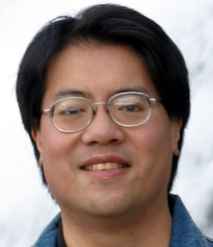
👁 Image 14 Ted Ts'o in 2003. Theodore Yue Tak Ts'o (Chinese: 曹子德; born 1968) is an American software engineer mainly known for his contributions to the Linux kernel, in particular his contributions to file systems. He is the secondary developer and maintainer of e2fsprogs, the userspace utilities for the ext2, ext3, and ext4 filesystems, and is a maintainer for the ext4 file system. (Full article...)
Theodore Yue Tak Ts'o (Chinese: 曹子德; born 1968) is an American software engineer mainly known for his contributions to the Linux kernel, in particular his contributions to file systems. He is the secondary developer and maintainer of e2fsprogs, the userspace utilities for the ext2, ext3, and ext4 filesystems, and is a maintainer for the ext4 file system. (Full article...) -
👁 Image 15 Benjamin Mako Hill in 2012 Benjamin Mako Hill (/ˈbɛndʒəmɪn ˈmeɪkoʊ hɪl/) is a free software activist, hacker, author, and professor. He is a contributor and free software developer as part of the Debian and Ubuntu projects as well as the co-author of three technical manuals on the subject, Debian GNU/Linux 3.1 Bible, The Official Ubuntu Server Book, and The Official Ubuntu Book. Hill is an associate professor in Communication at the University of Washington. (Full article...)
Benjamin Mako Hill (/ˈbɛndʒəmɪnˈmeɪkoʊhɪl/) is a free software activist, hacker, author, and professor. He is a contributor and free software developer as part of the Debian and Ubuntu projects as well as the co-author of three technical manuals on the subject, Debian GNU/Linux 3.1 Bible, The Official Ubuntu Server Book, and The Official Ubuntu Book.
Hill is an associate professor in Communication at the University of Washington. (Full article...)


.jpg)


.jpg)







.JPG)

General images - load new batch
-
👁 Image 1Fedora 21, a version that brought experimental Wayland and HiDPI support (December 2014) (from Fedora Linux)Fedora 21, a version that brought experimental Wayland and HiDPI support (December 2014) (from Fedora Linux)
-
Debian 12 installation menu (UEFI Mode) (from Debian)
-
Logo of Debian GNU/kFreeBSD (from Debian)
-
Linux kernel panic output (from Linux kernel)
-
The core values of the Fedora community (from Fedora Linux)
-
A Debian 10 Buster box cover (from Debian)
-
👁 Image 9Four interfaces are distinguished: two internal to the kernel, and two between the kernel and userspace. (from Linux kernel)Four interfaces are distinguished: two internal to the kernel, and two between the kernel and userspace. (from Linux kernel)
-
Eucalyptus interface (from Ubuntu)
-
Debian 6 (Squeeze), 2011 (from Debian)
-
Redevelopment costs of Linux kernel (from Linux kernel)
-
alt=UbuntuDDE logo (from Ubuntu)
-
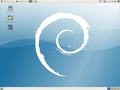
Xfce is default on CD images and non-Linux ports. (from Debian)
-
alt=Ubuntu Sway logo (from Ubuntu)
-
👁 Image 16Fedora with the KDE Plasma Desktop, one of the several official Fedora Spins. As of Fedora 42, it became an official Fedora edition alongside Fedora Workstation with GNOME. (from Fedora Linux)Fedora with the KDE Plasma Desktop, one of the several official Fedora Spins. As of Fedora 42, it became an official Fedora edition alongside Fedora Workstation with GNOME. (from Fedora Linux)
-
Logo of GNU Hurd (from Debian)
-
Debian 12 console login and welcome message (from Debian)
-
A fresh install of Silverblue 41 (from Fedora Linux)
-
Text version of the Debian Installer (from Debian)
-
Linus Torvalds at the LinuxCon Europe 2014 (from Linux kernel)
-
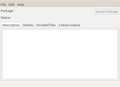
Package installed with Aptitude (from Debian)
-
👁 Image 25The Linux kernel supports various hardware architectures, providing a common platform for software, including proprietary software. (from Linux kernel)The Linux kernel supports various hardware architectures, providing a common platform for software, including proprietary software. (from Linux kernel)
-
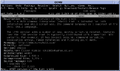
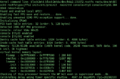
Boot messages of a Linux kernel 2.6.25.17 (from Linux kernel)
-
Fedora Workstation 41 with its default applications (from Fedora Linux)
-
👁 Image 29At XDC2014, Alex Deucher from AMD announced the unified kernel-mode driver. The proprietary Linux graphic driver, libGL-fglrx-glx, will share the same DRM infrastructure with Mesa 3D. As there is no stable in-kernel ABI, AMD had to constantly adapt the former binary blob used by Catalyst. (from Linux kernel)At XDC2014, Alex Deucher from AMD announced the unified kernel-mode driver. The proprietary Linux graphic driver, libGL-fglrx-glx, will share the same DRM infrastructure with Mesa 3D. As there is no stable in-kernel ABI, AMD had to constantly adapt the former binary blob used by Catalyst. (from Linux kernel)
-
Screenshot of GDebi Package installer (from Debian)
-
Debian 4 (Etch), 2007 (from Debian)
-
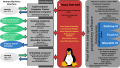
The Linux Storage Stack Diagram (from Linux kernel)
-
Map of the Linux kernel (from Linux kernel)
-
Cloud Ubuntu Orange Box
-
Sankey diagram of Linux Kernel Source Lines of Code (from Linux kernel)
-
Graphical version of the Debian Installer (from Debian)
-
The official logo (also known as open use logo) that contains the well-known Debian swirl (from Debian)













.jpg)




.png)





![👁 Image 39Ubuntu family tree[dubious – discuss] (from Ubuntu)](https://upload.wikimedia.org/wikipedia/commons/thumb/7/79/UbuntuFamilyTree1210.svg/120px-UbuntuFamilyTree1210.svg.png)


Did you know?


- ... that Shuah Khan, the first woman fellow of the Linux Foundation, "signed off" on a patch recommending the use of inclusive terminology in the Linux kernel?
- ... that researchers submitting to the IEEE Symposium on Security and Privacy intentionally introduced security bugs into Linux?
WikiProjects


Topics


Subcategories


Associated Wikimedia
The following Wikimedia Foundation sister projects provide more on this subject:
-
Commons
Free media repository -
Wikibooks
Free textbooks and manuals -
Wikidata
Free knowledge base -
Wikinews
Free-content news -
Wikiquote
Collection of quotations -
Wikisource
Free-content library -
Wikiversity
Free learning tools -
Wiktionary
Dictionary and thesaurus


Sources
More portals


- Pages using the Phonos extension
- Pages including recorded pronunciations
- Pages with English IPA
- Portals with triaged subpages from June 2018
- All portals with triaged subpages
- Portals with no named maintainer
- Automated article-slideshow portals with 41–50 articles in article list
- Random portal component with 11–15 available image subpages
- Automated article-slideshow portals with 31–40 articles in article list