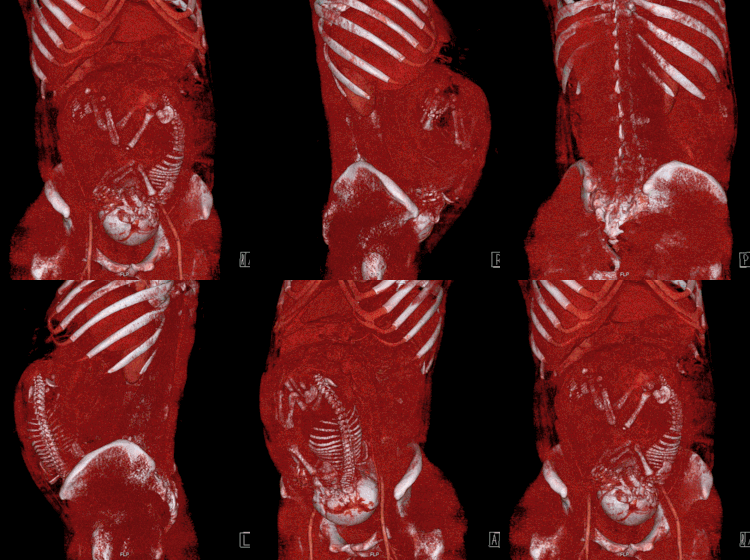
Medicine has been practiced since prehistoric times, and for most of this time it was an art (an area of creativity and skill), frequently having connections to the religious and philosophical beliefs of local culture. For example, a medicine man would apply herbs and say prayers for healing, or an ancient philosopher and physician would apply bloodletting according to the theories of humorism, or the four humors. In recent centuries, since the advent of modern science, most medicine has become a combination of art and science (both basic and applied, under the umbrella of medical science). For example, while stitching technique for sutures is an art learned through practice, knowledge of what happens at the cellular and molecular level in the tissues being stitched arises through science.
Prescientific forms of medicine, now known as traditional medicine or folk medicine, remain commonly used in the absence of scientific medicine and are thus called alternative medicine. Alternative treatments outside of scientific medicine with ethical, safety and efficacy concerns are termed quackery or being based on fringe science. (Full article...)
Leeches are segmented parasitic or predatoryworms that comprise the subclassHirudinea within the phylumAnnelida. They are closely related to the oligochaetes, which include the earthworm, and like them have soft, muscular segmented bodies that can lengthen and contract. Both groups are hermaphrodites and have a clitellum, but leeches typically differ from the oligochaetes in having suckers at both ends and ring markings that do not correspond with their internal segmentation. The body is muscular and relatively solid; the coelom, the spacious body cavity found in other annelids, is reduced to small channels.
The majority of leeches live in freshwater habitats, while some species can be found in terrestrial or marine environments. The best-known species, such as the medicinal leech, Hirudo medicinalis, are hematophagous, attaching themselves to a host with a sucker and feeding on blood, having first secreted the peptide hirudin to prevent the blood from clotting. The jaws used to pierce the skin are replaced in other species by a proboscis which is pushed into the skin. A minority of leech species are predatory, mostly preying on small invertebrates. (Full article...)
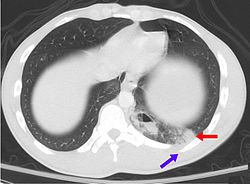
A CT scan showing a pulmonary contusion (red arrow) accompanied by a rib fracture (purple arrow)
A pulmonary contusion, also known as a lung contusion, is a bruise of the lung, caused by chest trauma. As a result of damage to capillaries, blood and other fluids accumulate in the lung tissue. The excess fluid interferes with gas exchange, potentially leading to inadequate oxygen levels (hypoxia). Unlike a pulmonary laceration, another type of lung injury, a pulmonary contusion does not involve a cut or tear of the lung tissue.
A pulmonary contusion is usually caused directly by blunt trauma but can also result from explosion injuries or a shock wave associated with penetrating trauma. With the use of explosives during World Wars I and II, pulmonary contusion resulting from blasts gained recognition. In the 1960s its occurrence in civilians began to receive wider recognition, in which cases it is usually caused by traffic accidents. The use of seat belts and airbags reduces the risk to vehicle occupants. (Full article...)
After completing her medical degree at the University of Manitoba in 1915, McGill moved to Saskatchewan, where she was hired first as the provincial bacteriologist and then as the provincial pathologist. She worked extensively with the Royal Canadian Mounted Police (RCMP) and local police forces for more than thirty years, and was instrumental in establishing the first RCMP forensic laboratory. She directed the RCMP laboratory for three years, and trained new RCMP recruits in forensic detection methods. After retiring in 1946, McGill was appointed Honorary Surgeon for the RCMP by the Canadian Minister of Justice, becoming one of the first official female members of the force, and she continued to act as a consultant to the RCMP until her death in 1959. (Full article...)
The 1966 New York City smog was a major air-pollution episode and environmental disaster, coinciding with that year's Thanksgiving holiday weekend. Smog covered the city and its surrounding area from November23 to 26, filling the city's air with damaging levels of several toxic pollutants. It was the third major smog in New York City, following events of similar scale in 1953 and 1963.
On November 23, a large mass of stagnant air over the East Coast trapped pollutants in the city's air. For three days, New York City was engulfed in dangerously high levels of carbon monoxide, sulfur dioxide, smoke, and haze. Pockets of air pollution pervaded the greater New York metropolitan area, including parts of New Jersey and Connecticut. By November 25, the smog became severe enough that regional leaders announced a "first-stage alert". During the alert, leaders of local and state governments asked residents and industry to take voluntary steps to minimize emissions. Health officials advised people with respiratory or heart conditions to remain indoors. The city shut off garbage incinerators, requiring massive hauling of garbage to landfills. A cold front dispersed the smog on November 26, and the alert ended. (Full article...)
A chest X-ray showing a tumor in the lung (marked by arrow)
Lung cancer, also called lung carcinoma, is a malignant tumor that originates in the tissues of the lungs. Lung cancer is caused by genetic damage to the DNA of cells in the airways, often caused by cigarette smoking or inhaling damaging chemicals. Damaged airway cells gain the ability to multiply unchecked, causing the growth of a tumor. Without treatment, tumors spread throughout the lung, damaging lung function. Eventually lung tumors metastasize, spreading to other parts of the body.
Early lung cancer often has no symptoms and can only be detected by medical imaging. As the cancer progresses, most people experience nonspecific respiratory problems: coughing, shortness of breath, or chest pain. Other symptoms depend on the location and size of the tumor. Those suspected of having lung cancer typically undergo a series of imaging tests to determine the location and extent of any tumors. Definitive diagnosis of lung cancer requires a biopsy of the suspected tumor be examined by a pathologist under a microscope. In addition to recognizing cancerous cells, a pathologist can classify the tumor according to the type of cells it originates from. Around 15% of cases are small-cell lung cancer (SCLC), and the remaining 85% (the non-small-cell lung cancers or NSCLC) are adenocarcinomas, squamous-cell carcinomas, and large-cell carcinomas. After diagnosis, further imaging and biopsies are done to determine the cancer's stage based on how far it has spread. (Full article...)
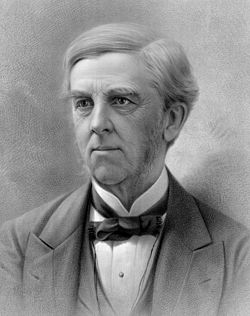
Oliver Wendell Holmes Sr. (/hoʊmz/; August 29, 1809 – October 7, 1894) was an American physician, poet, and polymath based in Boston. Grouped among the fireside poets, he was acclaimed by his peers as one of the best writers of the day. His most famous prose works are the "Breakfast-Table" series, which began with The Autocrat of the Breakfast-Table (1858). He was also an important medical reformer. In addition to being an author and a poet, Holmes was also a physician, professor, lecturer, and inventor.
Born in Cambridge, Massachusetts, Holmes was educated at Phillips Academy and Harvard College. After graduating from Harvard in 1829, he briefly studied law before turning to the medical profession. He began writing poetry at an early age; one of his most famous works, "Old Ironsides", was published in 1830 and was influential in the eventual preservation of the USS Constitution. Following training at the prestigious medical schools of Paris, Holmes was granted his Doctor of Medicine degree from Harvard Medical School in 1836. He taught at Dartmouth Medical School before returning to teach at Harvard and, for a time, served as dean there. During his long professorship, he became an advocate for various medical reforms and notably posited the then-controversial idea that doctors were capable of carrying puerperal fever from patient to patient. Holmes retired from Harvard in 1882 and continued writing poetry, novels and essays until his death in 1894. (Full article...)
👁 Image Menstrual cycle The menstrual cycle is a series of natural changes in hormone production and the structures of the uterus and ovaries of the female reproductive system that makes pregnancy possible. The ovarian cycle controls the production and release of eggs and the cyclic release of estrogen and progesterone. The uterine cycle governs the preparation and maintenance of the lining of the uterus (womb) to receive an embryo. These cycles are concurrent and coordinated, normally last between 21 and 35 days, with a median length of 28 days. Menarche (the onset of the first period) usually occurs around the age of 12 years; menstrual cycles continue for about 30–45 years.
Naturally occurring hormones drive the cycles; the cyclical rise and fall of the follicle stimulating hormone prompts the production and growth of oocytes (immature egg cells). The hormone estrogen stimulates the uterus lining (endometrium) to thicken to accommodate an embryo should fertilization occur. The blood supply of the thickened lining provides nutrients to a successfully implanted embryo. If implantation does not occur, the lining breaks down and blood is released. Triggered by falling progesterone levels, menstruation (commonly referred to as a "period") is the cyclical shedding of the lining, and is a sign that pregnancy has not occurred. (Full article...)
The classic form of the disease can affect any age group, but is usually diagnosed in early childhood and causes symptoms of malabsorption such as weight loss, diarrhoea, and stunted growth. Non-classic coeliac disease is more commonly seen in adults, characterised by vague abdominal symptoms and complications in organs outside the gastrointestinal tract, such as bone disease, anaemia, and other consequences of nutritional deficiencies. In people with a genetic predisposition to the condition, eating gluten causes inflammation in the small intestine, damaging its lining and leading to malabsorption. The development of coeliac disease is believed to be influenced by other environmental factors, such as infections. (Full article...)
D. medinensis worm emerging from a wound on a person's foot
Dracunculiasis, also called Guinea-worm disease, is a parasitic infection by the Guinea worm (Dracunculus medinensis). A person becomes infected by drinking water contaminated with Guinea-worm larvae that reside inside copepods (a type of small crustacean). Stomach acid digests the copepod and releases the Guinea worm larva, which penetrates the digestive tract and escapes into the body. Around a year later, the adult female worm migrates to an exit site – usually the lower leg – and induces an intensely painful blister on the skin. Eventually, the blister bursts, creating a painful wound from which the worm gradually emerges over several weeks. The wound remains painful throughout the worm's emergence, disabling the affected person for the three to ten weeks it takes the worm to emerge. The female worm releases larvae when the host submerges the wound in water in attempts to relieve the pain, thus continuing the life cycle.
There is no medication to treat or prevent dracunculiasis. Instead, the mainstay of treatment is the careful wrapping of the emerging worm around a small stick or gauze to encourage and speed up its exit. Each day, a few more centimeters of the worm emerge, and the stick is turned to maintain gentle tension. Too much tension can break and kill the worm in the wound, causing severe pain and swelling. Dracunculiasis is a disease of extreme poverty, occurring in places with poor access to clean drinking water. Prevention efforts center on filtering drinking water to remove copepods as well as public education campaigns to discourage people from soaking affected limbs in sources of drinking water, as this action allows the worms to spread their larvae. (Full article...)
👁 Image Young people with polio receiving physiotherapy in the 1950s The social history of viruses describes the influence of viruses and viral infections on human history. Epidemics caused by viruses began when human behaviour changed during the Neolithic period, around 12,000 years ago, when humans developed more densely populated agricultural communities. This allowed viruses to spread rapidly and subsequently to become endemic. Viruses of plants and livestock also increased, and as humans became dependent on agriculture and farming, diseases such as potyviruses of potatoes and rinderpest of cattle had devastating consequences.
Smallpox and measles viruses are among the oldest that infect humans. Having evolved from viruses that infected other animals, they first appeared in humans in Europe and North Africa thousands of years ago. The viruses were later carried to the New World by Europeans during the time of the Spanish Conquests, but the indigenous people had no natural resistance to the viruses and millions of them died during epidemics. Influenza pandemics have been recorded since 1580, and they have occurred with increasing frequency in subsequent centuries. The pandemic of 1918–19, in which 40–50 million died in less than a year, was one of the most devastating in history. (Full article...)
Liver histology is altered in HRS while kidney histology is normal. The upper image is a trichrome stain (chicken wire appearance) cirrhosis of the liver, the most common cause of HRS. The lower image is a PAS stain of normal kidney histology.
HRS can affect individuals with cirrhosis, severe alcoholic hepatitis, or liver failure, and usually occurs when liver function deteriorates rapidly because of a sudden insult such as an infection, bleeding in the gastrointestinal tract, or overuse of diuretic medications. HRS is a relatively common complication of cirrhosis, occurring in 18% of people within one year of their diagnosis, and in 39% within five years of their diagnosis. Deteriorating liver function is believed to cause changes in the circulation that supplies the intestines, altering blood flow and blood vessel tone in the kidneys. The kidney failure of HRS is a consequence of these changes in blood flow, rather than direct damage to the kidney. The diagnosis of hepatorenal syndrome is based on laboratory tests of individuals susceptible to the condition. Two forms of hepatorenal syndrome have been defined: Type 1 HRS entails a rapidly progressive decline in kidney function, while type 2 HRS is associated with ascites (fluid accumulation in the abdomen) that does not improve with standard diuretic medications. (Full article...)
Water fluoridation is the controlled addition of fluoride to public water supplies to reduce tooth decay. Fluoridated water maintains fluoride levels effective for cavity prevention, achieved naturally or through supplementation. In the mouth, fluoride slows tooth enameldemineralization and enhances remineralization in early-stage cavities. Defluoridation is necessary when natural fluoride exceeds recommended limits. The World Health Organization (WHO) recommends fluoride levels of 0.5–1.5 mg/L, depending on climate and other factors. In the U.S., the recommended level has been 0.7 mg/L since 2015, lowered from 1.2 mg/L. Bottled water often has unknown fluoride levels.
Tooth decay affects 60–90% of schoolchildren worldwide. Fluoridation reduces cavities in children, with Cochrane reviews estimating reductions of 35% in baby teeth and 26% in permanent teeth when no other fluoride sources are available, though efficacy in adults is less clear.[needs update] In Europe and other regions, declining decay rates are attributed to topical fluorides and alternatives like salt fluoridation and nano-hydroxyapatite. (Full article...)
Aspirin (acetylsalicylic acid), an organic compound that does not occur in nature, was first synthesised in 1899.
In 1897, scientists at the drug and dye firm Bayer began investigating acetylated organic compounds as possible new medicines, following the success of acetanilide ten years earlier. Two years later, Bayer created acetylsalicylic acid, which they marketed around the world under the brand name "Aspirin". The drug was sold widely in the first half of the twentieth century, both by Bayer and by competing drug manufacturers. The name "aspirin" was so widely used that Bayer lost (or sold) the rights to the trademark in many countries. (Full article...)
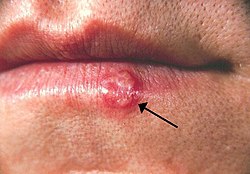
Oral herpes involves the face or mouth. It may result in small blisters in groups, often called cold sores or fever blisters, or may just cause a sore throat. Genital herpes involves the genitalia. It may have minimal symptoms or form blisters that break open and result in small ulcers. These typically heal over two to four weeks. Tingling or shooting pains may occur before the blisters appear. (Full article...)
The 1971 Iraq poison grain disaster was a mass methylmercury poisoning incident where seed grain treated with a methylmercury fungicide, which was never intended for human consumption, was imported into Iraq from Mexico and the United States. Due to factors like foreign-language labeling and distribution too late into the growing cycle, this toxic grain was consumed as food by Iraqi residents in rural areas of the country. Sufferers experienced paresthesia (numbness of skin), ataxia (lack of coordination of muscle movements) and vision loss, symptoms similar to those observed in Minamata disease-affected Japan. Though the official death toll was 459, figures of as much as ten times greater have been suggested. When it occurred in 1971, the poisoning was the largest mercury poisoning event in history, with cases peaking in February 1972 and stopping by the end of March.
Reports after the disaster recommended tighter regulation, better labelling and handling of mercury-treated grain, and wider involvement of the World Health Organization in monitoring and preventing poisoning incidents. Investigation confirmed the particular danger posed to fetuses and young children. (Full article...)
It is believed to be inherited in an X-linked recessive manner, which means a geneticmutation causing the disorder is located on the X chromosome, and while two copies of the mutated gene must be inherited for a female to be born with the disorder, just one copy is sufficient to cause a male to be born with the disorder. Nasodigitoacoustic syndrome is likely caused by a mutated gene located on the X chromosome between positions Xq22.2–q28. (Full article...)
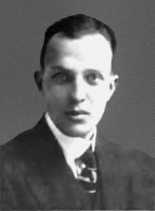
George Foster Herben (17 March 1893 – 17 March 1966) was an American physician. He spent his career in New York, predominantly treating tuberculosis. After interning at Brooklyn Hospital, Herben worked at the Loomis Sanitarium by Liberty, and then at the House of Rest at Sprain Ridge, a tuberculosis hospital and preventorium in Yonkers. At the House of Rest he variously served as physician in chief and as medical director. Herben developed and published several new treatments during this time, including a replacement for conventional iron lungs.
👁 Image Hilda Bull (1886–1953), also known by her married names Hilda Esson and Hilda Dale, was an Australian public health physician and amateur actress and theatre director. She studied medicine at the University of Melbourne and worked as a doctor in London during the First World War, reaching the rank of lieutenant colonel in the British medical service. She later spent 23 years working as a medical officer for the Melbourne City Council and became known for her work in combatting infectious diseases. During her tenure, thousands of inoculations were delivered and the number of annual deaths from diphtheria fell from 14 to zero. She later expanded her work to addressing other communicable diseases and achieved worldwide recognition for her research into poliomyelitis.
Hilda was the wife of the playwright and author Louis Esson and assisted in researching and drafting many of his plays. She was a founding member of the Melbourne University Dramatic Society and acted in a number of plays performed by the Pioneer Players, an amateur theatre company founded by her husband. She later became involved in the New Theatre and directed 15 of their productions. She was actively involved in Australian literary circles throughout her life, including through her close lifelong friendship with the author Katharine Susannah Prichard. (Full article...)
Leptospirosis is a blood infection caused by bacteria of the genus Leptospira that can infect humans, dogs, rodents, and many other wild and domesticated animals. Signs and symptoms can range from none to mild (headaches, muscle pains, and fevers) to severe (bleeding in the lungs or meningitis). Weil's disease (/ˈvaɪlz/VILES), the acute, severe form of leptospirosis, causes the infected individual to become jaundiced (skin and eyes become yellow), develop kidney failure, and bleed. Bleeding from the lungs associated with leptospirosis is known as severe pulmonary haemorrhage syndrome.
More than 10 genetic types of Leptospira cause disease in humans. Both wild and domestic animals can spread the disease, most commonly rodents. The bacteria are spread to humans through animal urine or feces, or water or soil contaminated with animal urine and feces, coming into contact with the eyes, mouth, or nose, or breaks in the skin. In developing countries, the disease occurs most commonly in pest control, farmers, and low-income people who live in areas with poor sanitation. In developed countries, it occurs during heavy downpours and is a risk to pest controllers, sewage workers, and those involved in outdoor activities in warm and wet areas. Diagnosis is typically by testing for antibodies against the bacteria or finding bacterial DNA in the blood. (Full article...)
Women's health in India can be examined in terms of multiple indicators, which vary by geography, socioeconomic standing and culture. To adequately improve the health of women in India multiple dimensions of wellbeing must be analysed in relation to global health averages and also in comparison to men in India. Health is an important factor that contributes to human wellbeing and economic growth.
Currently, women in India face a multitude of health problems, which ultimately affect the aggregate economy's output. Addressing the gender, class or ethnic disparities that exist in healthcare and improving the health outcomes can contribute to economic gain through the creation of quality human capital and increased levels of savings and investment. (Full article...)
Elizabeth Despard WardMBE (néeRynd; formerly Aston; 11 October 1926 – 20 July 2020) was a British healthcare campaigner known for pioneering organ donor cards and founding the charity Kidney Care UK.
Unlike early childhood allergic reactions to milk and eggs, which often lessen as the children age, shellfish allergy tends to first appear in school-age children and older, and persist in adulthood. Strong predictors for adult-persistence are anaphylaxis, high shellfish-specific serum immunoglobulin E (IgE) and robust response to the skin prick test. Adult onset of shellfish allergy is common in workers in the shellfish catching and processing industry. (Full article...)
In its current version, the BDI-II is designed for individuals aged 13 and over, and is composed of items relating to symptoms of depression such as hopelessness and irritability, cognitions such as guilt or feelings of being punished, as well as physical symptoms such as fatigue, weight loss, and lack of interest in sex. (Full article...)
Susceptibility to acne is primarily genetic in 80% of cases. The roles of diet and cigarette smoking in the condition are unclear, and neither cleanliness nor exposure to sunlight are associated with acne. In both sexes, hormones called androgens appear to be part of the underlying mechanism, by causing increased production of sebum. Another common factor is the excessive growth of the bacterium Cutibacterium acnes, which is present on the skin. (Full article...)
An ultrasound image demonstrating a blood clot in the left common femoral vein.
Thrombophilia (sometimes called hypercoagulability or a prothrombotic state) is an abnormality of blood coagulation that increases the risk of thrombosis (blood clots in blood vessels). Such abnormalities can be identified in 50% of people who have an episode of thrombosis (such as deep vein thrombosis in the leg) that was not provoked by other causes. A significant proportion of the population has a detectable thrombophilic abnormality, but most of these develop thrombosis only in the presence of an additional risk factor.
There is no specific treatment for most thrombophilias, but recurrent episodes of thrombosis may be an indication for long-term preventive anticoagulation. The first major form of thrombophilia to be identified by medical science, antithrombin deficiency, was identified in 1965, while the most common abnormalities (including factor V Leiden) were described in the 1990s. (Full article...)
👁 Image Vitamin C or ascorbate is a water-soluble vitamin found in citrus and other fruits, berries and vegetables. It is found as a form of ascorbic acid. It is an essential nutrient involved in the repair of tissue, the formation of collagen, and the enzymatic production of certain neurotransmitters. It is required for the functioning of several enzymes and is important for immune system function. It also functions as an antioxidant. Most animals are able to synthesize their own vitamin C. However, higher primates (including humans), most bats, guinea pigs, some fish species, and some bird species must acquire it from dietary sources because a gene for a synthesis enzyme has mutations that render it dysfunctional; humans obtain this vitamin from those fruits and vegetables.
It is also a generic prescription medication and in some countries is sold as a non-prescription dietary supplement. As a therapy, it is used to prevent and treat scurvy, a disease caused by vitamin C deficiency. Vitamin C may be taken by mouth or by intramuscular, subcutaneous or intravenous injection. Various health claims exist on the supposition that moderate vitamin C deficiency increases disease risk, such as for the common cold, cancer or COVID-19. There are also claims of benefits from vitamin C supplementation in excess of the recommended dietary intake for people who are not considered vitamin C deficient. Vitamin C is generally well tolerated. Large doses may cause gastrointestinal discomfort, headache, trouble sleeping, and flushing of the skin. The United States National Academy of Medicine recommends against consuming large amounts. (Full article...)
Image 4Global concentrations of health care resources, as depicted by the number of physicians per 10,000 individuals, by country. Data is sourced from a WHOindicator and is from 2017-2023. (from Health care)
Image 19A 12th-century manuscript of the Hippocratic Oath in Greek, one of the most famous aspects of classical medicine that carried into later eras (from History of medicine)
Image 23The Quaker-run York Retreat, founded in 1796, gained international prominence as a centre for moral treatment and a model of asylum reform following the publication of Samuel Tuke's Description of the Retreat (1813). (from History of medicine)
Image 25The plinthios brochos as described by Greek physician Heraklas, a sling for binding a fracturedjaw. These writings were preserved in one of Oribasius' collections. (from History of medicine)
Image 47Emil Kraepelin (1856–1926), the founder of modern scientific psychiatry, psychopharmacology and psychiatric genetics (from History of medicine)
Image 55Medical personnel place sterilized covers on the arms of the daVinci Xi surgical system, a minimally-invasive robotic surgery system, at the William Beaumont Army Medical Center. (from History of medicine)
Image 60Most countries have seen a tremendous increase in life expectancy since 1945. However, in southern Africa, the HIV epidemic beginning around 1990 has eroded national health. (from History of medicine)
... that Frederick Warren Freer switched from studying medicine to art after becoming partially deaf?
... that Plotkin's Vaccines was written by the inventor of the rubella vaccine because he felt that vaccinology had become a distinct field of medicine?
This is a list of recognized content, updated weekly by JL-Bot (talk·contribs) (typically on Saturdays). There is no need to edit the list yourself. If an article is missing from the list, make sure it is tagged (e.g. {{WikiProject Medicine}}) or categorized correctly and wait for the next update. See WP:RECOG for configuration options.






.svg)


.jpg)


.jpg)



.jpg)






.JPG)






_per_person._OECD_countries_and_more.png)
















.jpg)
















.png)










.jpg)
















.jpg)

,_M.D._1882,_portrait_photograph_by_H.D._Carns_%26_Co;_Image_ID_27593990.jpg)







_(5493947511)_-_Restoration.jpg)









_-_Google_Art_Project.jpg)



.gif)