


Psychology is the scientific study of the mind and behavior. Its subject matter includes the behavior of humans and nonhumans, both conscious and unconscious phenomena, and mental processes such as thoughts, feelings, and motives. Psychology is an academic discipline of broad scope, crossing the boundaries between the natural and social sciences. Biological psychologists seek an understanding of the emergent properties of brains, linking the discipline to neuroscience. As social scientists, psychologists aim to understand the behavior of individuals and groups.
A professional practitioner or researcher involved in the discipline is called a psychologist. Some psychologists can also be classified as behavioral or cognitive scientists. Some psychologists attempt to understand the role of mental functions in individual and social behavior. Others explore the physiological and neurobiological processes that underlie cognitive functions and behaviors.
As part of an interdisciplinary field, psychologists are involved in research on perception, cognition, attention, emotion, intelligence, subjective experiences, motivation, brain functioning, and personality. Psychologists' interests extend to interpersonal relationships, psychological resilience, family resilience, and other areas within social psychology. They also consider the unconscious mind. Research psychologists employ empirical methods to infer causal and correlational relationships between psychosocial variables. Some, but not all, clinical and counseling psychologists rely on symbolic interpretation. (Full article...)
Selected article - show another


Attachment theory posits that infants need to form a close relationship with at least one primary caregiver to ensure their survival and to develop healthy social and emotional functioning. It was first developed by psychiatrist and psychoanalyst John Bowlby (1907–90). The theory proposes that secure attachments are formed when caregivers are sensitive and responsive in social interactions, and consistently available, particularly between the ages of six months and two years. As children grow, they are thought to use these attachment figures as a secure base from which to explore the world and to return to for comfort. Interactions with caregivers have been hypothesized to form a specific kind of attachment behavioral system—or, more recently, internal working model—the relative security or insecurity of which influences characteristic patterns of behavior when forming future relationships. Separation anxiety or grief following the loss of an attachment figure was proposed as being a normal and adaptive response for a securely attached infant.
In the 1970s, developmental psychologist Mary Ainsworth expanded on Bowlby's work, codifying the caregiver's side of the attachment process as requiring the adult's availability, appropriate responsiveness, and sensitivity to the infant's signals. She and her team devised a laboratory procedure known as the Strange Situation Procedure, which she used to identify attachment patterns in infant–caregiver pairs: secure, avoidant, anxious attachment, and later, disorganized attachment. In the 1980s, attachment theory was extended to adult relationships and attachment in adults, making it applicable beyond early childhood. Bowlby's theory integrated concepts from evolutionary biology, object relations theory, control systems theory, ethology, and cognitive psychology, and was most fully articulated in his trilogy, Attachment and Loss (1969–82). (Full article...)
Selected image - show another


Quotes - show another
- "Rationalization may be defined as self-deception by reasoning." — Karen Horney
WikiProjects


Selected biography - show another
.png)
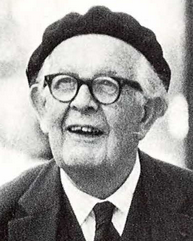
Jean William Fritz Piaget (UK: /piˈæʒeɪ/, US: /ˌpiːəˈʒeɪ,pjɑːˈʒeɪ/; French: [ʒɑ̃pjaʒɛ]; (9 August 1896 – 16 September 1980) was a Swiss psychologist known for his work on child development. Piaget's theory of cognitive development and epistemological view are together called genetic epistemology.
Piaget placed great importance on the education of children. As the Director of the International Bureau of Education, he declared in 1934 that "only education is capable of saving our societies from possible collapse, whether violent, or gradual". His theory of child development has been studied in pre-service education programs. Nowadays, educators and theorists working in the area of early childhood education persist in incorporating constructivist-based strategies. (Full article...)
Did you know (auto-generated) - load new batch


- ... that Fortnite's Tilted Towers was described by critics as the equivalent of "psychological torture" and being "dropped into a meat grinder"?
- ... that diverse fields study the mind, including psychology, neuroscience, cognitive science, and philosophy?
- ... that bereavement support groups are one of the most common services offered for grief but have little evidence of improving psychological outcomes?
- ... that the 2024 psychological horror game Mouthwashing utilises non-diegetic scene transitions that mimic glitches and crashes?
- ... that the psychological inner space genre was a rebellion against the traditional focus of science fiction on literal outer space?
- ... that fashion psychology is an interdisciplinary field that studies the interaction between human behavior, psychology, and fashion?
Subcategories


Related portals


More did you know - show different entries
- ...that Julian Rotter developed the locus of control theory, which has been widely used in the psychology of personality?
- ...that the effects of head trauma on memory can be seen by the post-operative results of HM, a patient who has been unable to form any new long-term memories since a surgical procedure performed in the 1950s?
Psychology topics



Recognized content


Associated Wikimedia
The following Wikimedia Foundation sister projects provide more on this subject:
-
Commons
Free media repository -
Wikibooks
Free textbooks and manuals -
Wikidata
Free knowledge base -
Wikinews
Free-content news -
Wikiquote
Collection of quotations -
Wikisource
Free-content library -
Wikiversity
Free learning tools -
Wiktionary
Dictionary and thesaurus


- Portals with untriaged subpages from June 2018
- All portals with untriaged subpages
- Portals with no named maintainer
- Random portal component with fewer available subpages than specified max
- Random portal component with 31–40 available image subpages
- Random portal component with 11–15 available subpages
- Pages with French IPA
- Random portal component with 6–10 available subpages