|
VOOZH | about |
|
VOOZH | about |
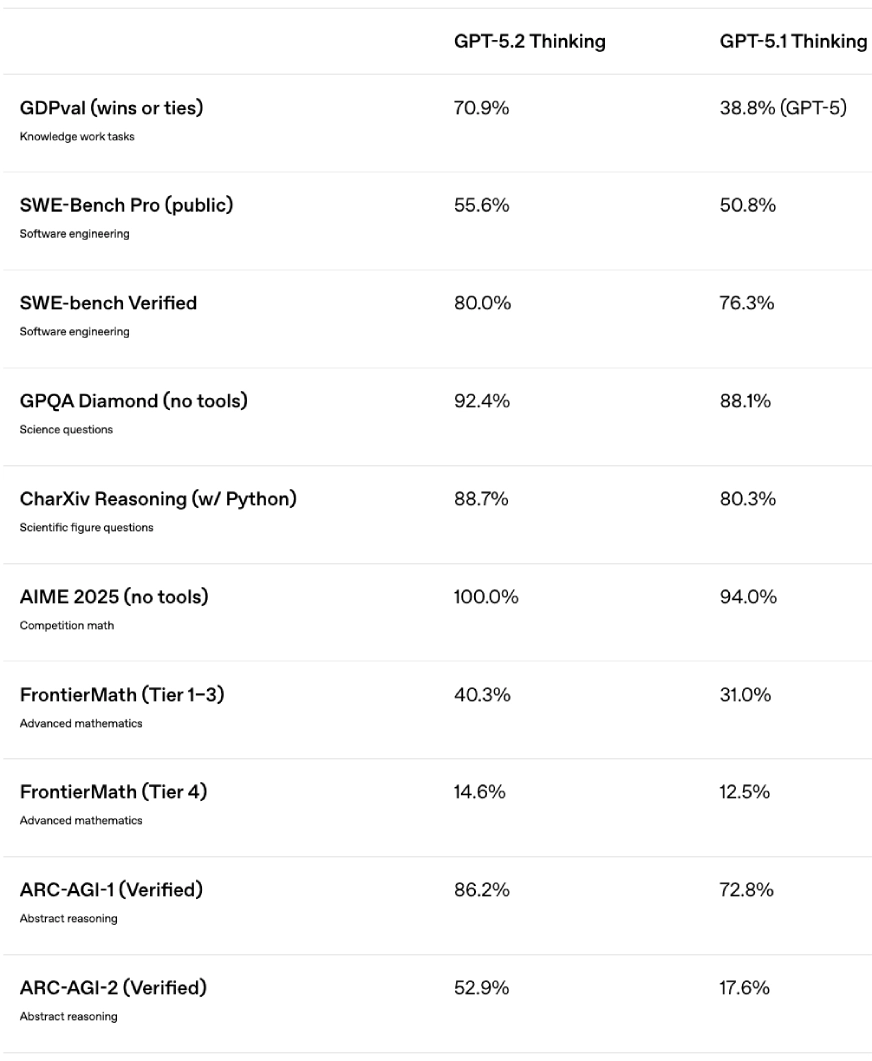
This is the second update to OpenAI’s flagship model in just a month. The GPT-5.1 release landed in the latter half of November and already showed strong improvements in coding and complex reasoning tasks. Now, with GPT-5.2, OpenAI claims another step forward. This time the focus is broader. The model is positioned as better at creating spreadsheets, building presentations, writing production-ready code, understanding images, handling very long contexts, using tools reliably, and executing complex, multi-step projects end to end.
That is a big promise.
So instead of repeating the announcement, this article looks at what actually changed, how GPT-5.2 compares to earlier versions, and where it genuinely feels more capable in real workflows.
GPT-5.2 is OpenAI’s most capable general-purpose model series so far. It is designed for professional knowledge work rather than casual chat. The goal is not just to answer questions, but to complete tasks that usually require multiple tools, repeated prompting, or manual stitching of outputs.
Compared to GPT-5.1, GPT-5.2 puts more emphasis on reliability and execution. It handles longer inputs, keeps track of constraints across many steps, and produces more structured outputs. Feels less like a smart autocomplete and more like a system that can take ownership of a task from start to finish.
GPT 5.2 Models
Also Read: Gemini 3 vs GPT 5.1: Which is Better?
In this section, I am going to put the model on test across different kinds of tasks and tell you how it performed.
Whenever a new model releases, I test it out for the following task. And till now only Gemini 3 was able to Solve the problem effectively. Let’s see how GPT 5.2 does on this:
Prompt:
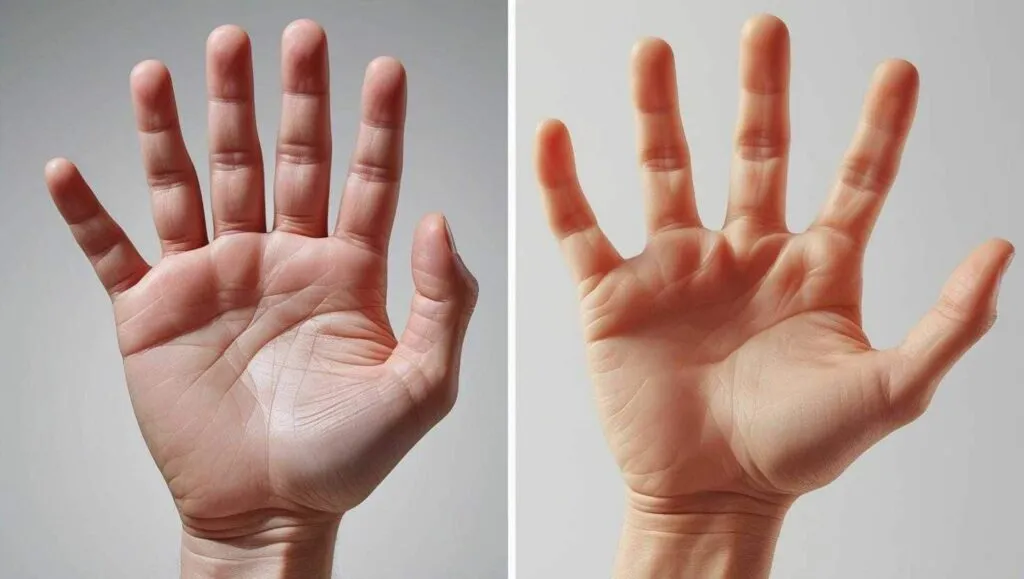
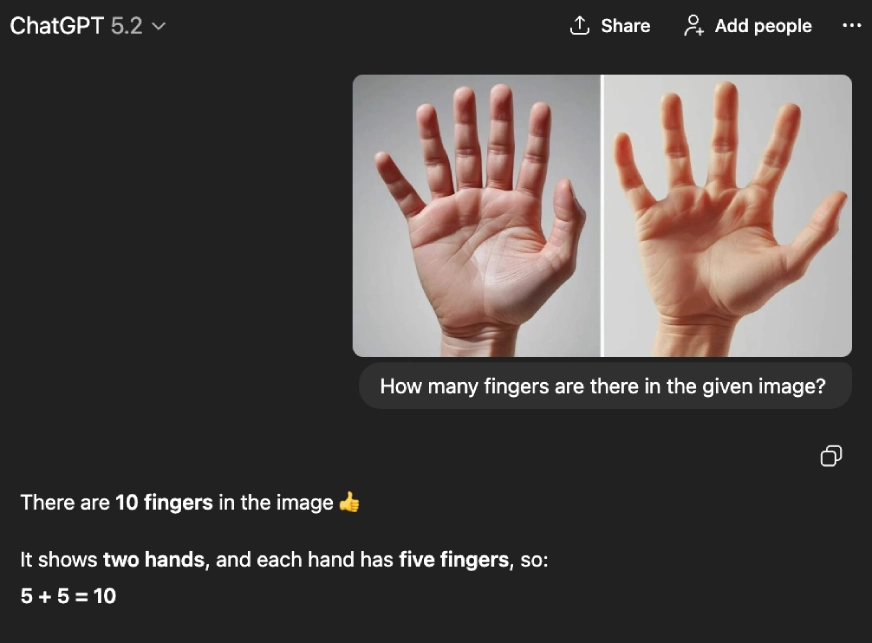
How many fingers are there in the given image?
Output:
GPT-5.2 clearly failed to interpret the image correctly. It misidentified the number of fingers, showing that visual counting remains a weak spot. I observed the same issue earlier with GPT-5.1 as well. Despite improvements in other areas, precise image understanding still needs work.
To test the context window and comprehension of GPT 5.2, I gave it all the SRTs of a course on Building reviewer agent. After that, I asked it to do some analysis and image generation for me. Let’s see how it went:
Prompt:
Go through the course SRTs and do the following task:
– Which tools are covered in the course
– What are the top 7 key takeaways from this course.
– Who should consider enrolling in this course.
– One of the SRT has the overview of the entire agent building process. Give me a diagram explaining the same.
GPT-5.2 handled the large context well and answered the analytical questions accurately. It correctly identified the tools covered, extracted clear takeaways, and summarized who the course is best suited for. However, the image generation fell short. The diagram lacked clarity and structure, especially given that the SRTs already contained a detailed overview of the agent-building process. The visual output could have been far more precise and informative.
GPT-5.2 builds on OpenAI’s existing safety framework with measurable improvements. It produces fewer hallucinations, shows better behavior in sensitive domains, and handles complex instructions more predictably.
For professional users, this translates to fewer silent failures and more consistent outputs. Human review still matters, especially for high-stakes decisions, but GPT-5.2 reduces the friction and uncertainty that often slowed down earlier models.
Also Read: Guide to OpenAI API Models and How to Use Them
GPT-5.2 feels less like a feature upgrade and more like a shift in how capable a single model can be. The gains in reasoning depth, coding reliability, vision understanding, long-context handling, and tool use add up to something meaningful.
For anyone using AI for serious work, GPT-5.2 moves closer to being a reliable collaborator rather than just a helpful assistant. It is not perfect, but the direction is clear. AI systems are starting to take responsibility for complete tasks, not just parts of them.
If you have already tried GPT-5.2, I would love to know how it compares to GPT-5.1 in your workflows.
Hello, I am Nitika, a tech-savvy Content Creator and Marketer. Creativity and learning new things come naturally to me. I have expertise in creating result-driven content strategies. I am well versed in SEO Management, Keyword Operations, Web Content Writing, Communication, Content Strategy, Editing, and Writing.
GPT-4 vs. Llama 3.1 – Which Model is Better?
Llama-3.1-Storm-8B: The 8B LLM Powerhouse Surpa...
A Comprehensive Guide to Building Agentic RAG S...
Top 10 Machine Learning Algorithms in 2026
45 Questions to Test a Data Scientist on Basics...
90+ Python Interview Questions and Answers (202...
8 Easy Ways to Access ChatGPT for Free
Prompt Engineering: Definition, Examples, Tips ...
What is LangChain?
What is Retrieval-Augmented Generation (RAG)?
Edit
Resend OTP
Resend OTP in 45s