|
VOOZH | about |
|
VOOZH | about |
Vox Populi, Vox Dei is a daily column that runs on Page 1 of The Asahi Shimbun.
March 27, 2026 at 14:09 JST
👁 Photo/Illutration
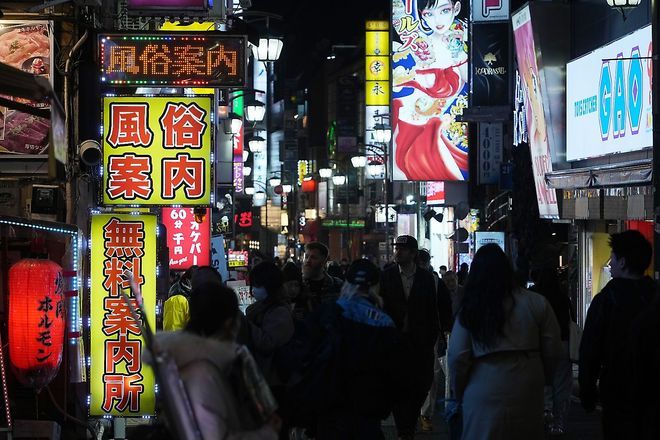
The Kabukicho district in Tokyo's Shinjuku Ward is a long-established red light district. (Asahi Shimbun file photo)
The doctor’s name is Kyojo. He is exceptionally skilled, deeply compassionate, and endowed with a strong sense of justice, loyalty and moral courage.
As head of the doctors at the Koishikawa Yojosho, a medical facility established in Edo—present-day Tokyo—by the Tokugawa Shogunate during the Edo Period (1603-1867), he takes generously from the wealthy, treats the vulnerable with tenderness and refuses payment from the poor.
Because of his stern, bearded face, the people of Edo call him “Akahige” (Redbeard).
Kyojo makes house calls to the brothel districts. There he finds women suffering from venereal disease and severe malnutrition, abandoned by employers who turn a blind eye to their misery.
Struggling to contain his fury, Akahige mutters again and again: “There are no villains in this world; there is no such thing as a villain in this world.”
Yet his words sound, paradoxically, like a lament for how much evil there truly is.
In 1958, Shugoro Yamamoto (1903-1967), a popular writer best known for his period fiction, published “Akahige Shinryotan” (The Tales of Dr. Redbeard), a collection of interconnected historical short stories about doctors and patients at the poorhouse clinic.
Japan’s anti-prostitution law had been enacted two years earlier. Nearly 70 years later, however, Japanese society is still plagued by malicious acts that strip women of their dignity and subject them to oppression.
On March 24, a panel of experts convened by the Justice Ministry began discussions on proposals to revise the law.
The central issue is whether to reconsider the current imbalance under which the person providing sexual services may be punished for soliciting, while the person purchasing those services faces no penalty. From the standpoint of protecting vulnerable people’s rights, that disparity is indeed striking.
At the same time, sexual activity lies at the core of a person’s private sphere. How far public authorities should intervene remains a troubling question, and some take a cautious view of penalizing the purchase of sex.
The idea of punishing the “evil” of buying sex is straightforward and intuitively appealing, but no simple or tidy solution presents itself.
What, then, is evil? How should we confront it?
“There is nothing as noble, beautiful, pure and reliable as a human being,” Redbeard teaches.
Yet, “there is also nothing as base, filthy, foolish, wicked, greedy and disgusting as a human being.”
Realizing that I, too, am one of them, I find myself gazing up at the sky.
—The Asahi Shimbun, March 27
* * *
Vox Populi, Vox Dei is a popular daily column that takes up a wide range of topics, including culture, arts and social trends and developments. Written by veteran Asahi Shimbun writers, the column provides useful perspectives on and insights into contemporary Japan and its culture.
VOX POPULI: Remembering the hibakusha who embraced Obama in 2016
March 26, 2026VOX POPULI: 100 years on, an anarchist’s unyielding words ring even louder
March 25, 2026VOX POPULI: The melancholic pull of 'Lemon' and 'Chainsaw Man' locations
March 24, 2026VOX POPULI: BTS is back. But just what made millions of fans ‘wait’ for them?
March 23, 2026VOX POPULI: Is pity for Japan being felt during the Takaichi-Trump summit?
March 21, 2026VOX POPULI: A fragile flower's intense mark on Japanese culture across centuries
March 19, 2026A peek through the music industry’s curtain at the producers who harnessed social media to help their idols go global.
A series based on diplomatic documents declassified by Japan’s Foreign Ministry
Here is a collection of first-hand accounts by “hibakusha” atomic bomb survivors.
Cooking experts, chefs and others involved in the field of food introduce their special recipes intertwined with their paths in life.
A series about Japanese-Americans and their memories of World War II
Some articles on this website may contain content generated by artificial intelligence programs.
Copyright © The Asahi Shimbun Company. All rights reserved. No reproduction or republication without written permission.