|
VOOZH | about |
|
VOOZH | about |
By YUKI NIKAIDO/ Staff Writer
March 27, 2026 at 16:34 JST
👁 Photo/Illutration
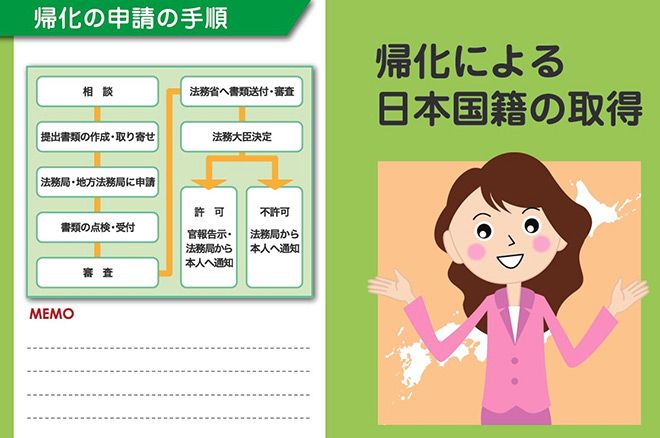
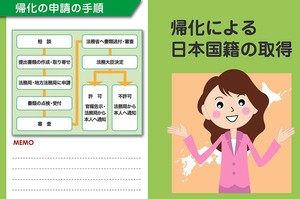
A pamphlet distributed to people wishing to acquire Japanese citizenship (Yuki Nikaido)
Japan on April 1 will tighten the residency requirement for foreigners seeking Japanese citizenship, extending the length from the current “five years or more” to “10 years or more, in principle.”
The period for confirming that taxes and social insurance premiums have been paid without delinquency will also be extended.
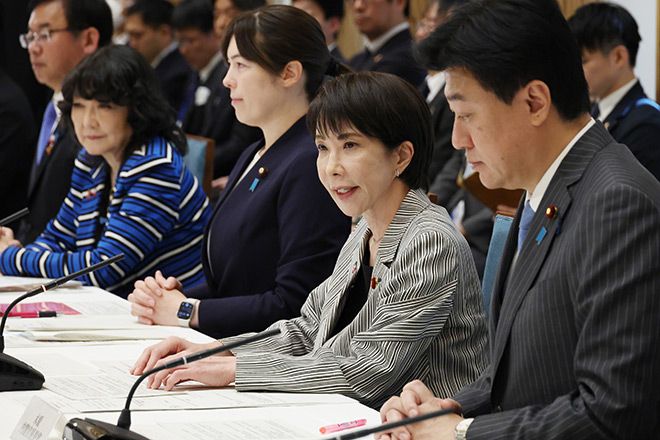
Justice Minister Hiroshi Hiraguchi announced the policy at a news conference on March 27.
Under the Nationality Law, applicants seeking the justice minister’s approval for citizenship must meet several requirements, including residing in Japan for at least five years, being 18 or older, demonstrating good conduct, and being able to make a living.
The screening process also examines an applicant’s “integration into Japanese society” and requires a level of Japanese language proficiency sufficient for daily life.
The policy change will be implemented through operational adjustments rather than legal revisions.
Exceptions to the new 10-year residency rule will be made for individuals who have made exceptional contributions to the country.
They include people who have lived in Japanese society without issue for over five years and received an internationally prestigious award, as well as those who have engaged in activities for the public interest, such as serving on a government committee, for three or more years.
The ministry noted the exceptions could apply to business executives, artists and athletes.
CLOSING A ‘PARADOX’
Under the changes, applicants for citizenship must show tax records over five years, instead of the current one year, and prove payments of social insurance premiums over three years, up from one year.
The ministry said the degree of payment delinquency that would lead to a denial of citizenship will be judged on a case-by-case basis.
This review aligns the requirements for citizenship with those for permanent residency.
The change addresses an issue raised last September by Nippon Ishin (Japan Innovation Party).
The party pointed out that “a paradoxical situation has arisen, where requirements for acquiring citizenship, a more significant legal status, are more lenient than those for permanent residency.”
According to the Justice Ministry, 9,258 people were granted Japanese nationality last year, including 3,533 from China, 2,017 Koreans, 695 from Nepal, 409 from Brazil, and 357 from Vietnam.
CONSTITUTIONAL QUESTION
The government is tightening these rules without the involvement of the Diet.
The Justice Ministry defended this approach by arguing that the Nationality Law only establishes the minimum conditions for citizenship.
“Anything beyond that is within the scope of the minister’s discretion, making a legal revision unnecessary,” the ministry explained.
It added that an operational change does not require a public notice period.
However, the ministry’s method has drawn sharp criticism.
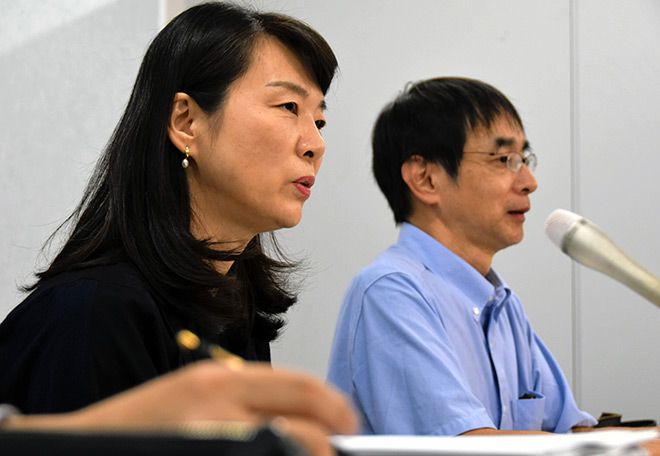
Atsushi Kondo, a professor of constitutional law at Meijo University and an expert on immigration policy, warned the move is problematic.
“This review substantially changes the minimum residency period stipulated by the Nationality Law,” he said. “To do this without a legal revision goes against the rule of law and could even be unconstitutional.”
Kondo explained that because the Constitution establishes popular sovereignty and mandates that requirements for citizenship should be set by law, the Nationality Law’s provisions carry a particularly significant weight.
He also questioned the direction of the policy, noting that Japan is moving against the trend in many other countries.
While some nations like Italy and Spain have a 10-year residency requirement, others, including Germany, France and the Netherlands, require five years. Brazil requires four years, and Canada three.
In fact, Germany, facing a high immigrant population, revised its law in 2024 to shorten the residency requirement from eight years to five. The reduction was intended to enhance immigrants’ sense of national belonging and reduce social friction, Kondo noted.
“From the perspective of promoting social integration in Japan,” he said, “we should consider setting the requirement at five years, in line with permanent residency, after establishing programs for learning the Japanese language and domestic rules.”
Japan to double required period in the country for citizenship
December 22, 2025Japanese-born professor loses legal bid for dual citizenship
September 30, 2025Number of kids under age 5 who are stateless in Japan up 3.5-fold
April 6, 2021Foreigners with permanent residency could face stricter rules
February 5, 2024Japan to clarify rules for foreign kids who want to stay and work
July 2, 2024A peek through the music industry’s curtain at the producers who harnessed social media to help their idols go global.
A series based on diplomatic documents declassified by Japan’s Foreign Ministry
Here is a collection of first-hand accounts by “hibakusha” atomic bomb survivors.
Cooking experts, chefs and others involved in the field of food introduce their special recipes intertwined with their paths in life.
A series about Japanese-Americans and their memories of World War II
Some articles on this website may contain content generated by artificial intelligence programs.
Copyright © The Asahi Shimbun Company. All rights reserved. No reproduction or republication without written permission.