DeepL pricing in 2026: every plan, every limit, and one gotcha most people miss


Last edited June 5, 2026
Table of Contents
- DeepL pricing at a glance
- The free plan -- what you get for nothing
- Individual: $8.74/month (annual)
- Team: $28.74/user/month (annual)
- Business: $57.49/user/month -- and what "unlimited" really means
- Enterprise: custom pricing, custom limits
- Write Pro: the $7.49 add-on worth knowing about
- DeepL API pricing -- a completely separate product
- Monthly vs annual billing: that 16% gap adds up
- What a real team actually pays: three examples
- Is DeepL worth it in 2026?
- Try eesel for multilingual team workflows
DeepL pricing at a glance
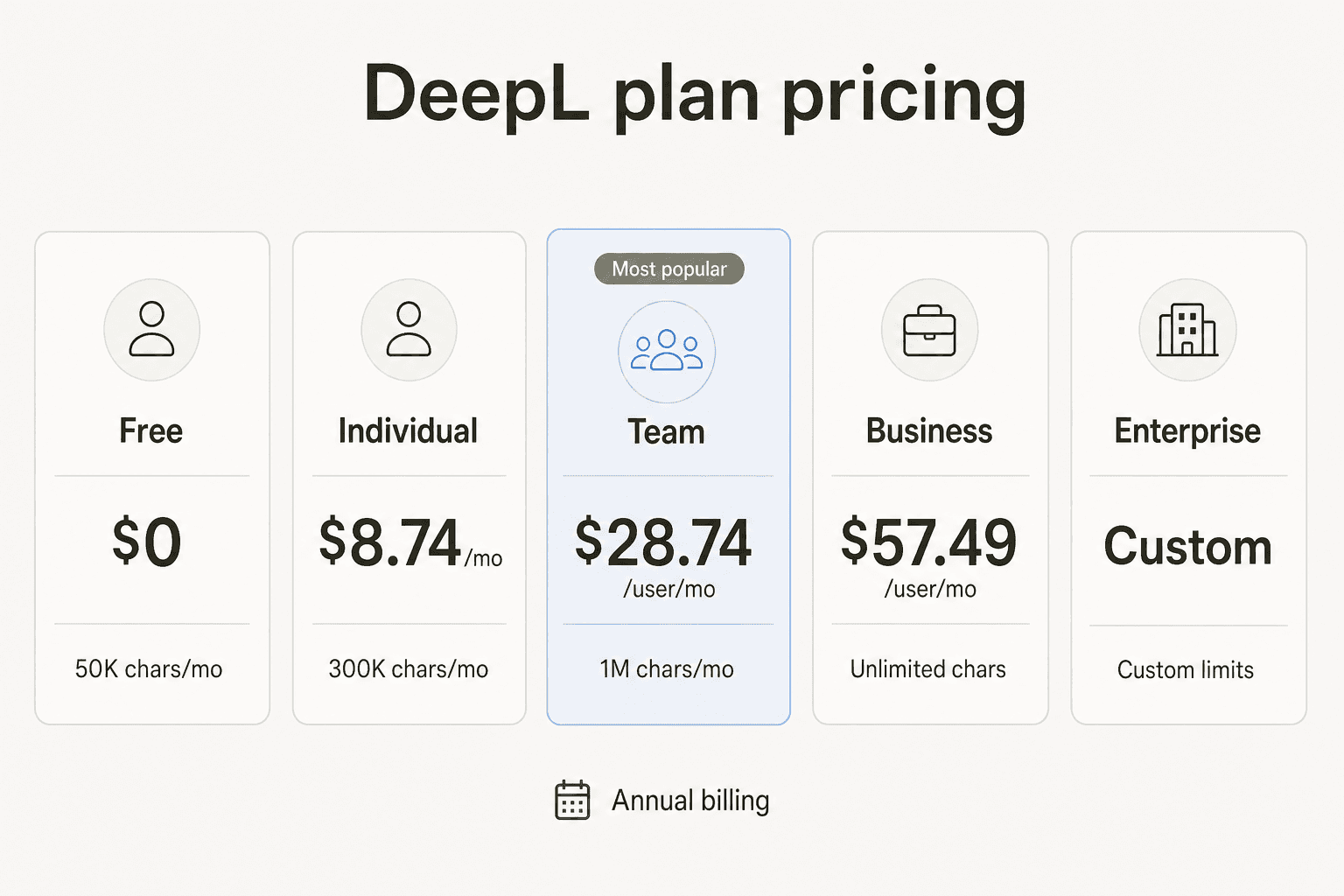
Here's the full picture across all Translator plans, before we dig into each one.
| Plan | Annual price | Monthly chars/user | File translations/month | Glossaries | Trial |
|---|---|---|---|---|---|
| Free | $0 | 50,000 | 1 (5 MB max) | 1 (5 entries) | No trial needed |
| Individual | $8.74/month | 300,000 | 3 (30 MB max) | 1 (5 entries) | 30 days |
| Team | $28.74/user/month | 1,000,000 | 20 (30 MB max) | 5 (1,000 entries) | 30 days |
| Business | $57.49/user/month | Unlimited* | 100 (30 MB max) | Unlimited* | None |
| Enterprise | Custom | Custom | Custom | Unlimited* | None |
| Write Pro add-on | $7.49/user/month | - | - | - | Included in Individual/Team trial |
*Fair usage policy applies.
Annual billing is available on all paid plans and saves roughly 16% versus paying month to month. The free tier requires no credit card.
The free plan -- what you get for nothing
The DeepL free plan gives you 50,000 characters per month, one file translation (up to 5 MB), one glossary with a maximum of five entries per language pair, and one saved translation. No credit card required.
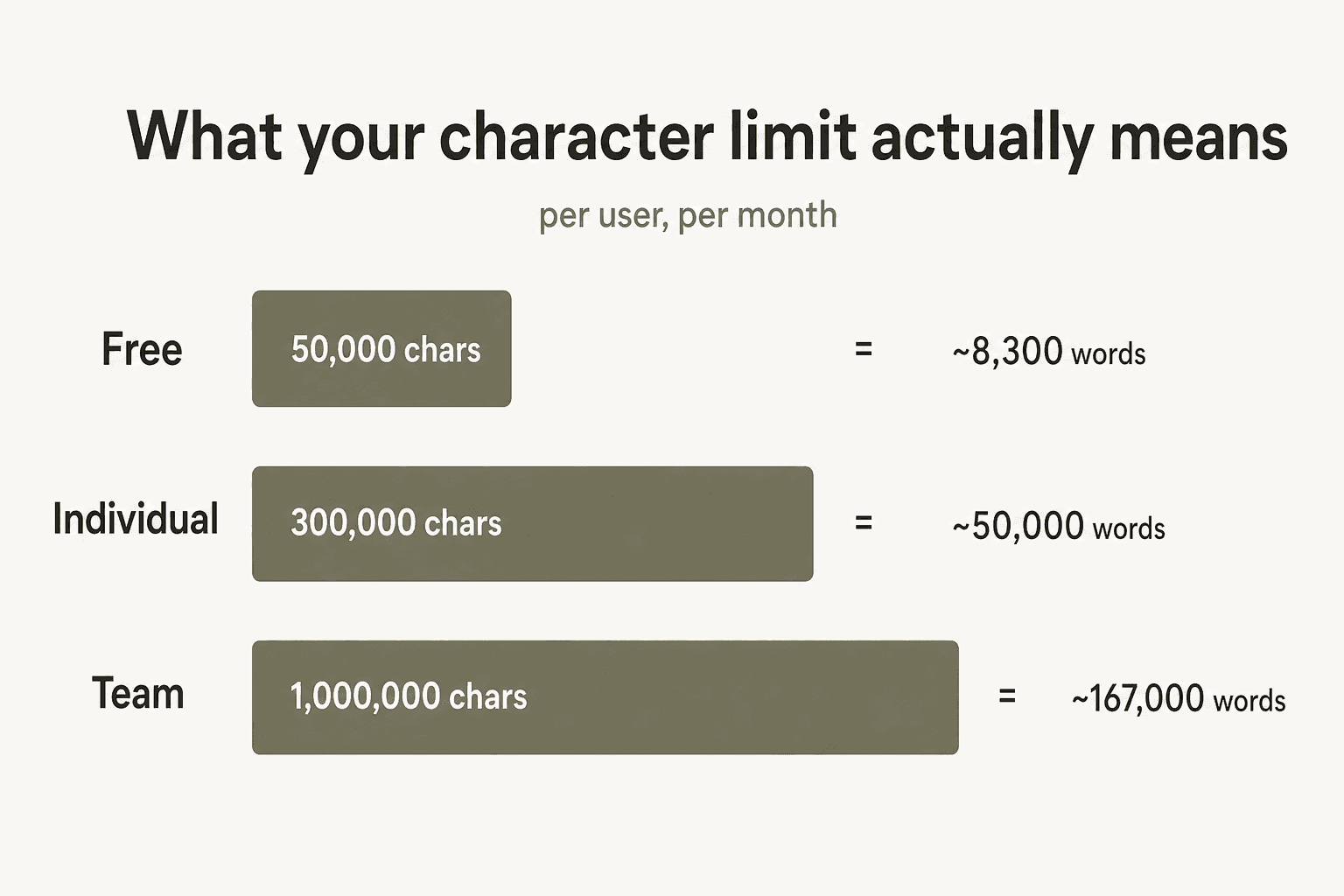
50,000 characters sounds like a lot until you do the math: at roughly 6 characters per word, that's about 8,300 words per month -- equivalent to a few long blog posts or a short report. Heavy personal users tend to hit the ceiling within a week.
The security baseline is the same as paid plans: SOC 2 Type 2, ISO 27001, TLS encryption, and no use of your text for model training. What you don't get: bulk file translation, shared glossaries, Write Pro, analytics, SSO, and team admin. For solo casual use it's genuinely useful; for anything professional, you'll feel the limits quickly.
"Dark Mode is something basic they can add but they don't want to. Who knows? Maybe it's for a paid version? I'm not paying just to flick the switch off."
r/languagelearning thread on the free tier experience

Individual: $8.74/month (annual)
At $8.74/month billed annually (or around $10.40 month to month), the Individual plan is aimed at freelancers, independent professionals, and solo users who've outgrown the free tier. You get:
- 300,000 characters/month -- enough for roughly 50,000 words, or about two full-length book chapters
- 3 file translations/month (up to 30 MB each)
- 1 glossary (still only 5 entries per language pair)
- 1 saved translation
- Full-page translation, formal/informal tone, all apps and integrations
- Write Pro available as an add-on at $7.49/user/month additional
The jump from free to Individual gives you 6x the characters and 30 MB file support, which is meaningful for regular document translation. The glossary entry limit (5 per language pair) is a real ceiling -- you'll want Team if your work depends on consistent terminology.
One important note: Individual is still a single-seat plan. No team administration, no analytics, no shared glossaries or style rule lists.
Team: $28.74/user/month (annual)
$28.74/user/month billed annually is where the product starts feeling like actual team software. The jump from Individual is significant -- you get 3x the characters and a stack of collaboration features that don't exist below this tier.
Key additions over Individual:
- 1,000,000 characters/user/month (up from 300K)
- 20 file translations/month (up from 3)
- 5 shared glossaries (up from 1), with 1,000 entries per language pair and CSV upload support
- Glossary generator (AI-assisted terminology extraction)
- 5 shared style rule lists
- 10 saved translations
- Bulk file translation
- Team administration (for 2+ users)
- Analytics and reporting
- SSO for teams of 50+
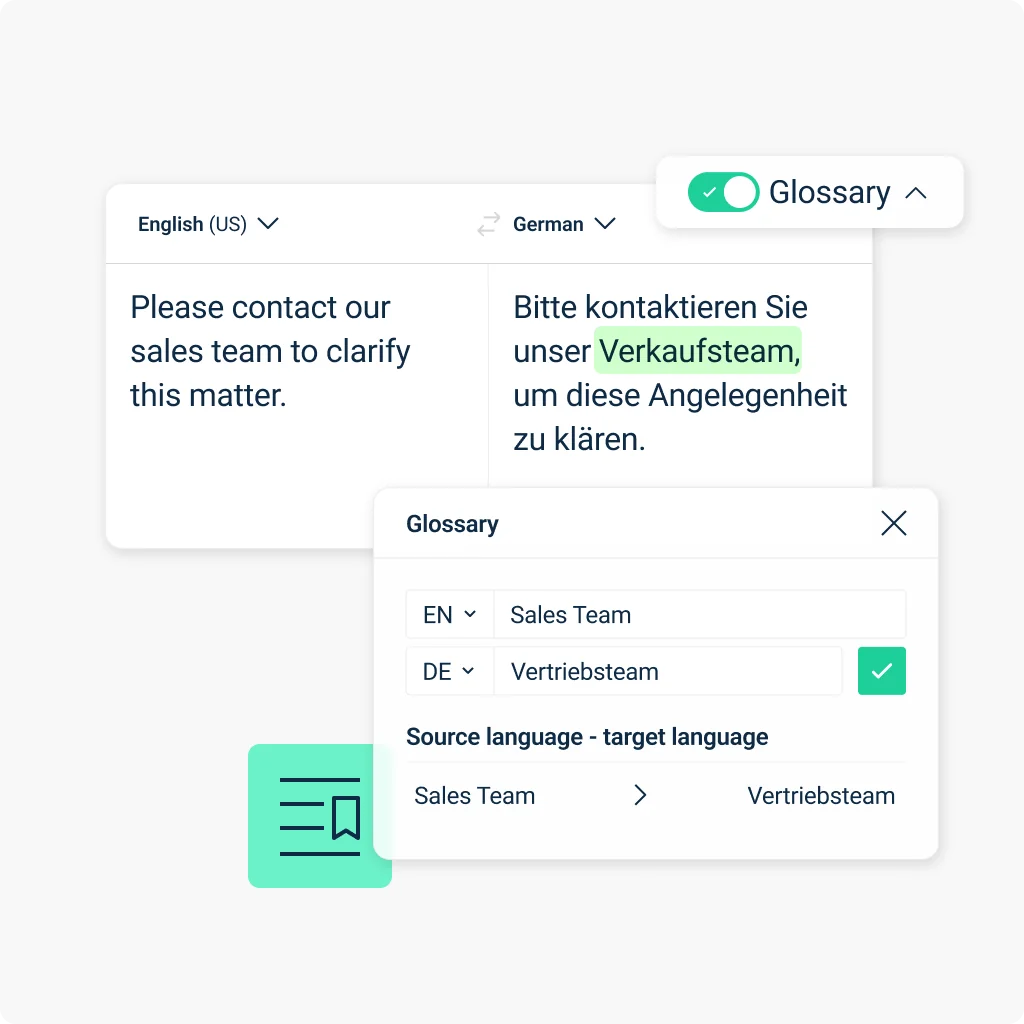
The shared glossary is the standout feature here -- it's what makes DeepL genuinely useful for companies with consistent brand terminology, product names, or legal language that shouldn't get auto-translated. A 5-person team at this tier pays $143.70/month (annual), or about $1,724/year.
If your team does any serious volume -- legal documents, marketing localization, multilingual product content -- this is probably the floor you need.
Business: $57.49/user/month -- and what "unlimited" really means
The Business plan at $57.49/user/month annual is DeepL's mid-market tier, aimed at companies managing multilingual communication at scale. The headline feature is "unlimited characters," and that is technically true -- but it comes with a fair usage policy.
What you actually get on Business:
- Unlimited characters/user/month (fair usage)
- 100 file translations/month
- 20 shared style rule lists (up from 5 on Team)
- Unlimited glossaries with unlimited entries (fair usage)
- Translation memory -- reuses previously approved segments automatically
- Unlimited saved translations (fair usage)
- SCIM user provisioning
- Domain capture
- 99.0% availability SLA (Team has no SLA)
- Write Pro included (no add-on needed)
Translation memory is the feature that moves the needle for localization teams -- every time a segment is translated and approved, it gets reused automatically in future documents. That directly reduces character consumption (and review time) at scale.
The "fair usage" label on unlimited features matters in practice. DeepL's support documentation notes that billing disputes and limit questions should be directed to customer support -- there's no published hard cap, but translate many millions of characters per month and you may be contacted.
A 10-person Business team pays $574.90/month (annual), or roughly $6,900/year. Compare that to 10 Team seats at $3,449/year -- you're paying twice as much, primarily for translation memory, SCIM, the SLA, and the glossary depth.
Enterprise: custom pricing, custom limits
Enterprise is DeepL's white-glove tier. Pricing is custom and negotiated through their sales team. On top of everything in Business, Enterprise adds:
- Customizable character and file limits
- Unlimited shared style rule lists (fair usage)
- Bring your own encryption key (BYOK)
- 99.9% availability SLA (vs 99.0% on Business)
- Dedicated account team and premium support
- Translation Flow add-on (new feature, custom pricing)
The 99.9% SLA and BYOK are the two features that tend to push regulated industries (finance, legal, government) toward Enterprise. Deutsche Bahn, for instance, reportedly manages 30,000 glossary entries across 16 languages under an enterprise arrangement.
Write Pro: the $7.49 add-on worth knowing about
Write Pro is an AI writing assistant built into the DeepL interface -- it works on standalone text (not just translations) and helps with grammar, clarity, and tone.
At $7.49/user/month (annual), it's available as an add-on for Individual and Team subscribers. Business and Enterprise users get it included.
What Write Pro actually does:
- Rewrites suggestions to improve clarity and grammar
- Formal/informal/enthusiastic/confident/diplomatic writing style controls
- Tone-of-voice customization
- Track-changes view showing exactly what it changed
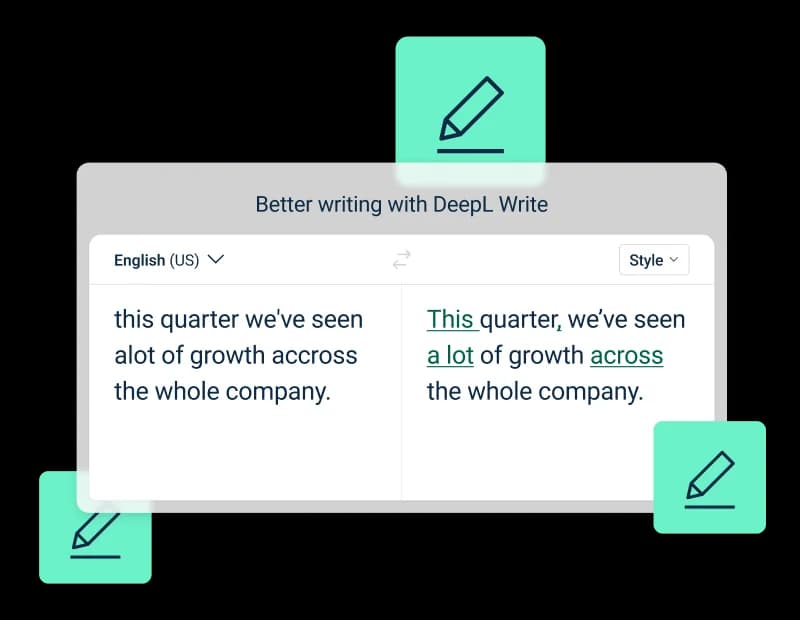
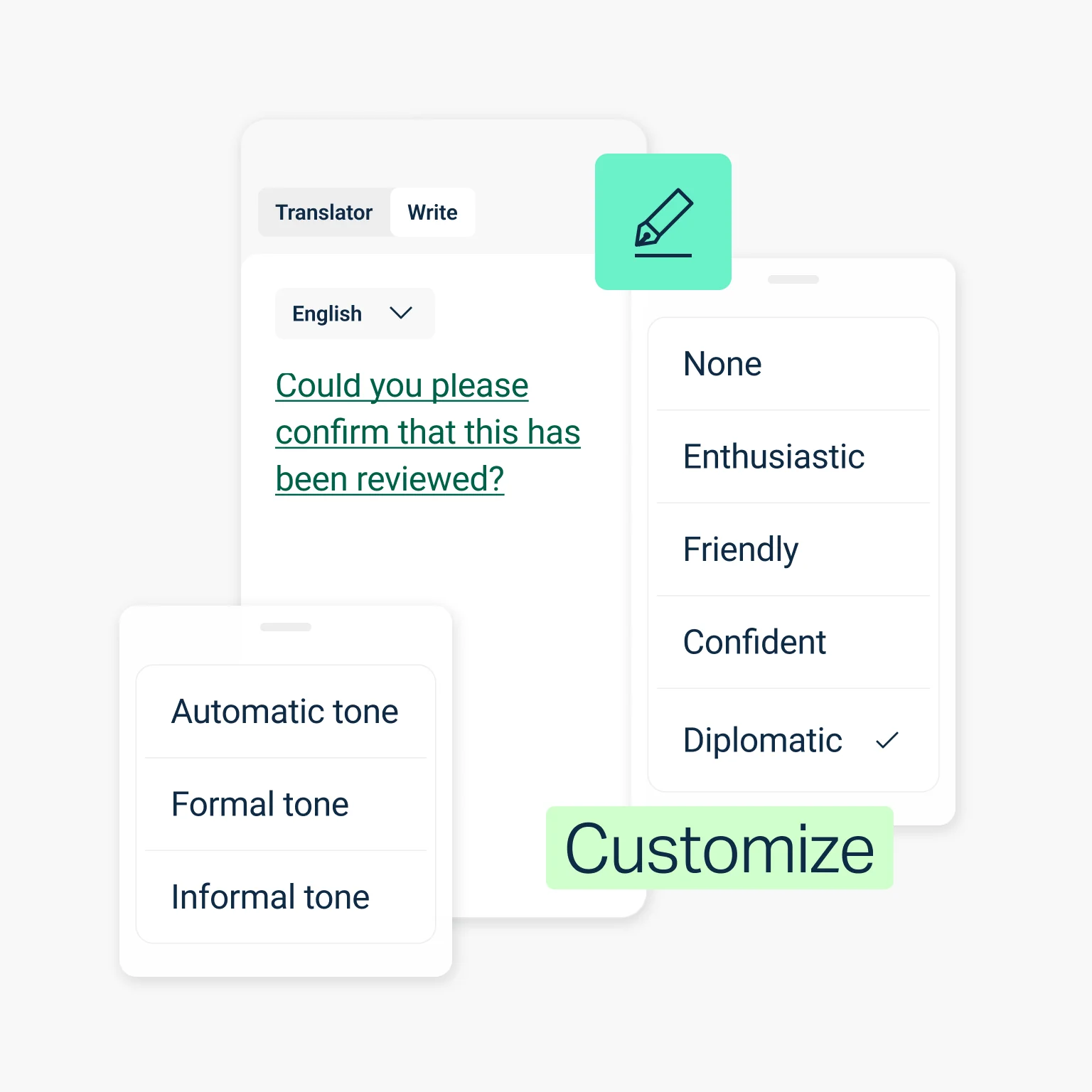
We'd reach for Write Pro if you're regularly writing business communication in a second language and need more than spell-check. If you're using DeepL purely for document translation, it's optional.
"The new Deep Write feature is fantastic. It is far superior [to Google Translate], there is no possible comparison."
Thaura G., Executive Secretary Director, Capterra review

DeepL API pricing -- a completely separate product
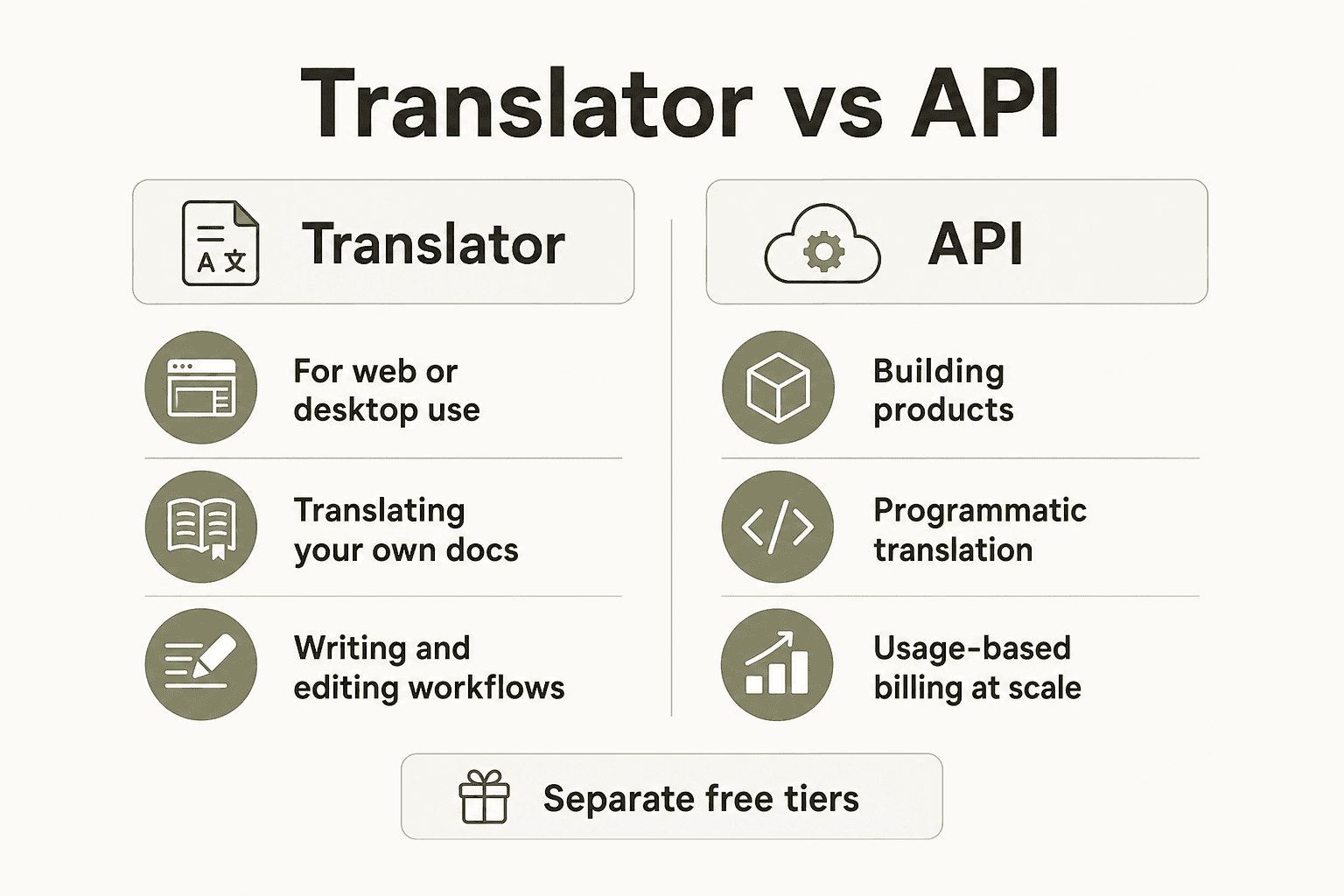
This is where a lot of people get confused: the DeepL API is not a feature of your Translator subscription. It's a separate product with its own plans, its own free tier, and different billing logic entirely.
The API is for developers building integrations -- products, workflows, automated pipelines. If you're a human translating documents from the web app, you don't need the API. If you're writing code to translate strings programmatically, this is your track.
| Plan | Price | Characters included | Overage | API keys |
|---|---|---|---|---|
| Developer (Free) | $0 | 1M total (one-time, non-resetting) | No overage | 1 |
| Growth | $26/month (annual) + usage | 12M/year (1M/month avg) | $27.50/1M chars | Up to 10 |
| Enterprise API | Custom | Custom commitment | Custom | Custom |
Key differences from the Translator free tier: the API Developer plan gives you 1 million characters total -- not per month, total, ever. Once you spend them, you upgrade or stop. The Translator Free plan, by contrast, gives you 50,000 characters every month.
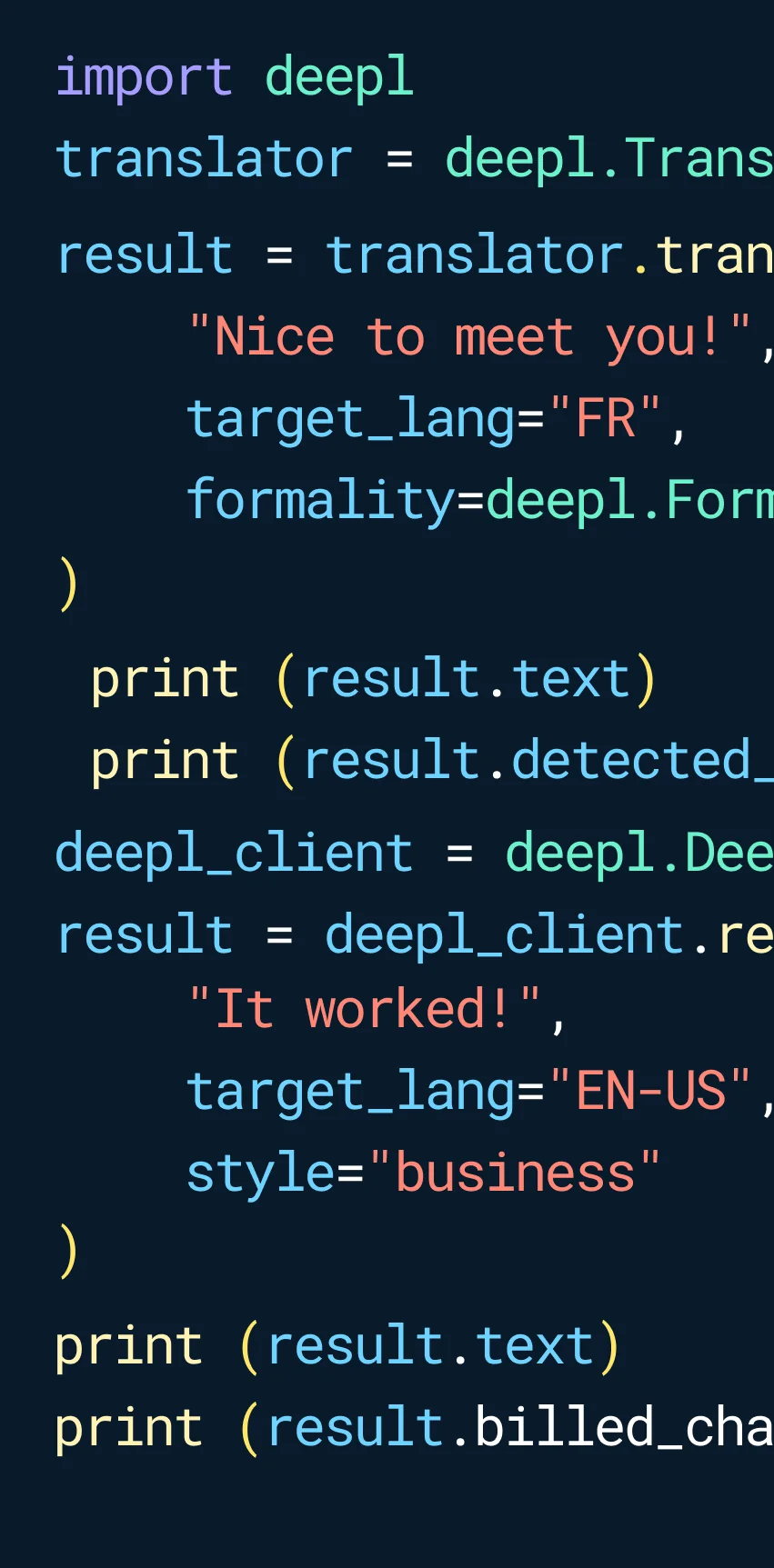
The Growth plan at $26/month includes 12 million characters per year (roughly 1M/month), with overages at $27.50 per additional million characters. It also includes 120 hours of speech-to-text per year (overage: $3.15/hour), up to 10 API keys, 2,000 glossaries, and CAT tool integration.
One specific comparison worth flagging: a developer on Reddit ran the numbers in early 2025 and found that real-time translation via the DeepL API costs around $4.05/hour, versus under $0.01/hour for Gemini Flash -- roughly 800x cheaper. That cost gap is real, though DeepL's defenders argue the quality delta (particularly for European language pairs) justifies the premium for production use. Whether that holds as LLMs continue improving is the open question in the developer community right now.
Monthly vs annual billing: that 16% gap adds up
DeepL offers a 16% discount for annual billing across all paid plans. The annual plan is paid upfront after the 30-day trial on Individual and Team.
Here's what the difference looks like for a small team:
| Plan | Annual (per user/month) | Monthly (per user/month) | Annual total for 5 users |
|---|---|---|---|
| Individual | $8.74 | ~$10.40 | $524/year |
| Team | $28.74 | ~$34.20 | $1,724/year |
| Business | $57.49 | ~$68.50 | $3,449/year |
A few billing mechanics worth knowing, per DeepL's support docs:
- Upgrading a plan takes effect immediately with a pro-rata credit applied
- Downgrading takes effect at the end of the current billing period, not immediately
- You cannot switch directly between a Translator subscription and an API subscription -- they're separate billing relationships
- Cancellation must happen at least one day before the next billing date; no pro-rated refunds
- Glossaries and custom content are deleted 90 days after account deactivation
What a real team actually pays: three examples
Solo freelance translator. A translator working primarily in German and French, translating 10-15 documents per month at 3,000-5,000 words each. At Individual ($8.74/month annual), the 300K character limit handles about 50,000 words/month -- plenty for this volume. Total: $104.88/year. If they add Write Pro: $194.76/year.
5-person content localization team. A marketing team handling multilingual campaigns across 4 languages, using shared glossaries for brand terminology. Team plan at $28.74/user/month annual: $143.70/month, $1,724/year. With Write Pro add-on ($7.49 x 5 = $37.45/month): $2,173/year. Each person gets 1M characters/month -- roughly 167,000 words per person, which covers most localization workloads.
30-person enterprise with regulated workflows. A legal or financial services firm requiring translation memory, SCIM provisioning, domain capture, and a 99.0% SLA. Business plan at $57.49/user/month annual: $1,724.70/month, $20,696/year. Write Pro is included. For 99.9% SLA and BYOK, they'd negotiate Enterprise -- budget north of $25,000/year is typical for organizations of this size.
Is DeepL worth it in 2026?
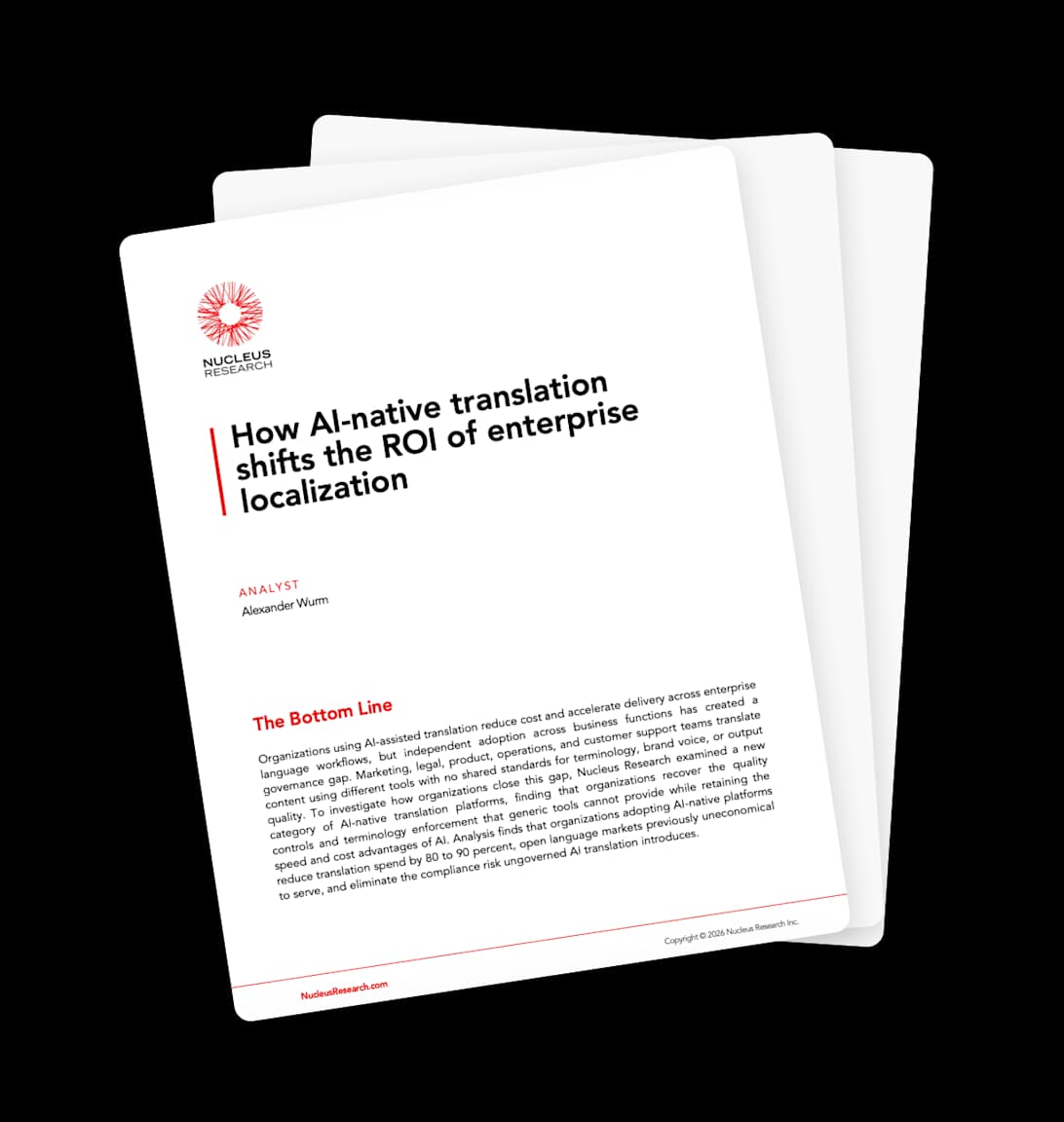
DeepL has 200,000+ business customers, including Fortune 500 companies. A Nucleus Research analysis found organizations using AI-native translation reduced translation spend by 80-90% versus traditional methods -- though that compares against human translation, not LLM APIs.
The honest answer in 2026 is: it depends which language pair you're translating.
For European languages -- German, French, Spanish, Italian, Dutch, Polish -- DeepL's quality advantage over Google Translate is still real and frequently noted by professional translators.
"DeepL provides excellent German-English translations. It's incredibly convenient that you can translate text with HTML tags intact."
G2 verified reviewer via DeepL's G2 profile

"As for English to Hungarian, DeepL incorporates words into actually beautiful sentences that sound like the sentences of a native speaker, while Google Translate often still struggles even getting a rudimentary translation."
u/LevHerceg, r/languagelearning
For East Asian languages (Japanese, Korean, Chinese), the picture is more mixed. Multiple users report real-world failures, and a structured comparison by Tyson Batino testing 5 tools with native Japanese speakers ranked DeepL last -- behind ChatGPT, Gemini, Claude, and Google Translate.
The LLM competition angle is real. The same character volume that costs $25/million via the DeepL API can be translated for under $0.03/million with Gemini Flash or similar models. For teams where translation is a commodity workflow (not their core product), the cost math is shifting fast.
Where DeepL keeps its edge: document translation with formatting preservation, glossary-enforced terminology, enterprise compliance (SOC 2, ISO 27001, GDPR, BYOK for Enterprise), and a dedicated translation interface that doesn't require prompt engineering. If those matter to your workflow, the premium is defensible. If you just need bulk text translated cheaply, the market has moved.
"I am very satisfied with DeepL overall. The interface is simple to use, and the translation quality has always been excellent... However, I am starting to notice that the gap between DeepL and AI-powered platforms is getting smaller."
Manufacturing manager, Gartner Peer Insights (December 2025)
One more note on customer support: it's consistently rated as a weak point. Capterra's customer service score is 4.2/5 -- not bad, but the specific complaint pattern (generic responses, no compensation for service failures, unresponsive for API issues) appears in enough reviews to be a real signal. A paying user in a December 2025 Capterra review rated support 1/5 after being told her reported bug was "not a priority."
Try eesel for multilingual team workflows
If you're evaluating DeepL for customer-facing team workflows -- support tickets, multilingual helpdesk, or agent-assisted responses in multiple languages -- eesel offers a different approach.
eesel deploys autonomous AI agents directly inside tools your team already uses: Zendesk, Freshdesk, Slack, and 100+ others. Those agents handle tickets in multiple languages natively, without requiring a separate translation subscription. For support teams managing multilingual queues, eesel can handle the routing, drafting, and resolution layer without adding a per-seat translation tool on top.
It's not a DeepL replacement for document translation or localization -- those remain DeepL's home turf. But for the slice of translation work that lives inside support workflows, it's worth a look. eesel starts free with a $50 credit and no credit card required.
For more on DeepL itself, see our full DeepL review and the best DeepL alternatives if you're comparing options.
Frequently Asked Questions

Share this article

Article by
Rama Adi Nugraha
Rama is a software engineer at eesel AI with two years of experience writing about B2B SaaS, AI tools, and customer support technology. Based in Bali, Indonesia, he brings a developer's perspective to product comparisons — cutting through marketing copy to what the integrations and APIs actually do.