|
VOOZH | about |
|
VOOZH | about |
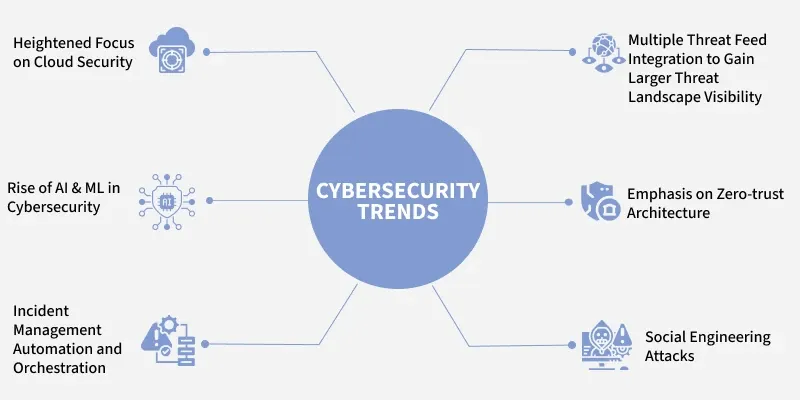
The cybersecurity landscape is changing rapidly as attackers develop smarter techniques to target businesses, governments and individual users. Modern organizations rely heavily on cloud computing, remote work environments, connected devices and artificial intelligence, creating new opportunities for cybercriminals.
Artificial Intelligence (AI) is improving modern cybersecurity by helping organizations detect threats faster, automate security operations and strengthen overall defense systems. Key Benefits of AI in Security
Ransomware continues to be a major cyber threat where attackers encrypt data and demand payment for recovery. Strong backups and endpoint security help reduce these risks. Common Ransomware Targets:
The Zero Trust model follows the principle of “never trust, always verify,” ensuring every user and device is continuously authenticated before access is granted. Core Principles of Zero Trust:
As businesses move to cloud platforms, securing cloud infrastructure and protecting sensitive data has become increasingly important. Important Cloud Security Practices:
IoT devices such as smart cameras and routers are common cyberattack targets due to weak built-in security protections. IoT Security Challenges:
Social engineering attacks manipulate users into revealing sensitive information through deceptive communication methods. Popular Social Engineering Techniques:
Supply chain attacks exploit vulnerabilities in third-party vendors or software providers to compromise larger organizations. Risks of Supply Chain Attacks: