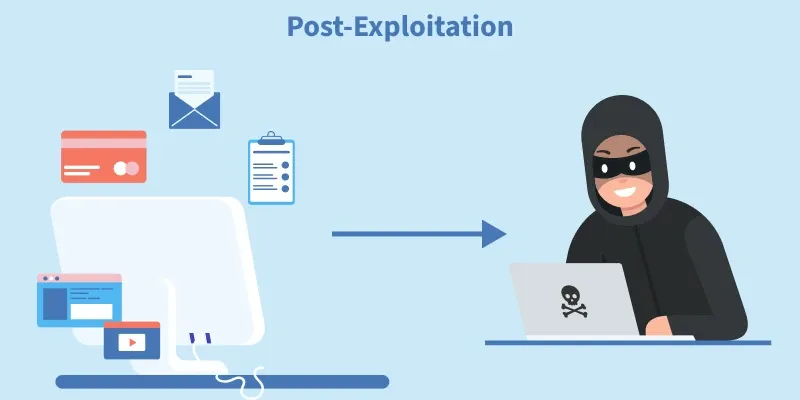
Post-exploitation is the phase that occurs after an attacker or penetration tester has successfully compromised a system. Unlike the initial exploitation stage, which focuses on gaining entry, post-exploitation is about leveraging that access to achieve specific objectives. Post- exploitation refers to all the operations that are performed after gaining initial access to the target system. It is done to further gain control of the target system and network.
Here are the main goals of Post-Exploitation explained clearly:
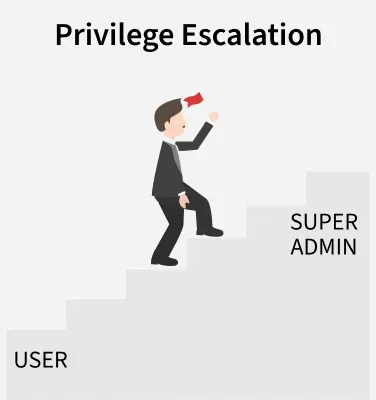
1. Privilege Escalation
Privilege escalation is the process where an attacker (or penetration tester) tries to gain higher levels of access rights on a compromised system — for example, moving from a normal user account to an administrator (Windows) or root (Linux/Unix) account. An attacker wants administrator/root access to:
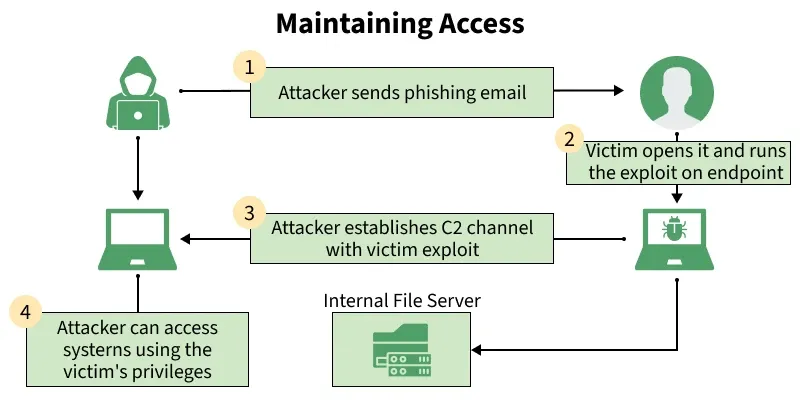
Maintaining access is the process of setting up methods that allow an attacker (or penetration tester) to return to a compromised system at any time in the future, even if the system is rebooted, updated, or the original vulnerability is fixed. The main work of maintaining access is to:
Preserve the attacker’s foothold so they don’t need to exploit the system again.
Ensure persistence through backdoors, hidden accounts, or scheduled tasks.
Enable long-term control of the system for data theft, monitoring, or further attacks.
Support lateral movement by keeping a reliable entry point into the network.
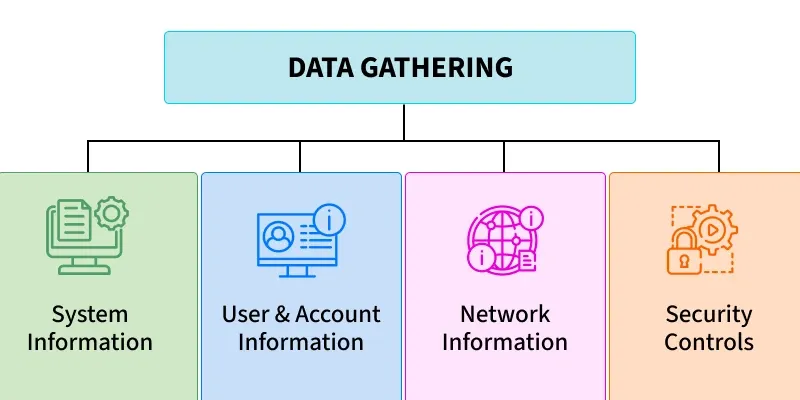
Data gathering is the process where an attacker or penetration tester collects valuable information from the compromised system and its network environment to understand what resources exist, what is valuable, and how to proceed with further exploitation. Attackers gathers most data like:
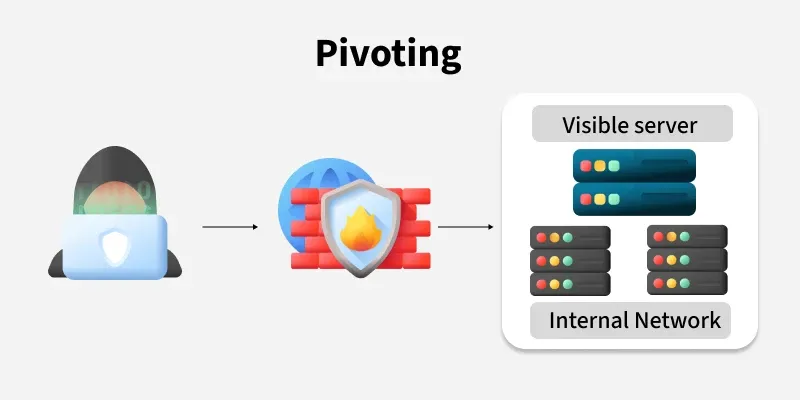
Pivoting is a post-exploitation technique where an attacker uses a compromised system as a bridge (pivot point) to access and attack other machines inside the same private or internal network that would normally be inaccessible from the outside.
Many networks are segmented and protected by firewalls.
An attacker may only break into one machine that’s exposed to the internet.
By pivoting, they use that compromised machine to move deeper into the internal network.
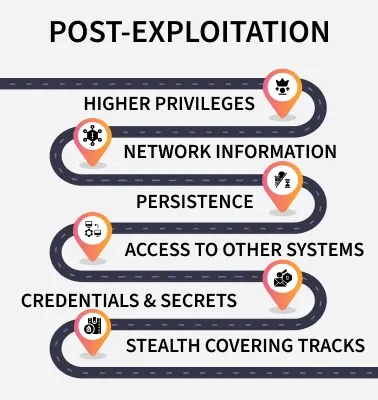
Post-exploitation is carried out to assess the real impact of gaining access to a system. It goes beyond simply proving that a system can be breached, it demonstrates what an attacker can actually accomplish once inside.
Evaluate the Value of the System: Identify whether the compromised machine holds sensitive data, admin rights, or access to other systems.
Gain Higher Privileges: Escalate from normal user access to administrator/root for full system control.
Maintain Persistence: Set up backdoors, accounts, or scheduled tasks to ensure continued access.
Gather Data and Credentials: Collect important files, configuration details, passwords, and tokens.
Explore the Network (Lateral Movement): Use the compromised machine as a stepping stone to reach other internal systems.
Demonstrate Business Impact: In penetration testing, show the organization what real damage could occur (data theft, disruption, financial loss).