Cybersecurity frameworks help organizations protect digital assets and manage evolving cyber risks through a structured and consistent approach. They provide a ready foundation for implementing security practices, enabling more efficient and controlled management of information systems.
Provides a reusable security foundation, reducing the need to design systems from scratch.
Helps minimize system complexity through structured implementation.
Supports efficient use of time and organizational resources.
Enhances reliability and performance of security measures.
Promotes scalability of security practices as organizations grow.
Process of Cybersecurity Frameworks
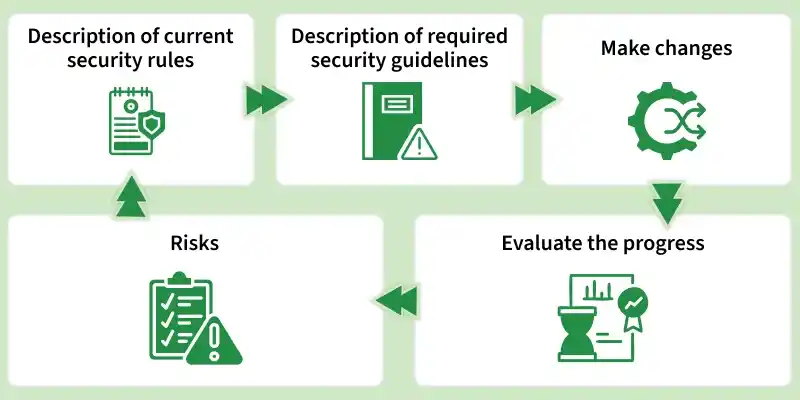
Cybersecurity frameworks aim to strengthen an organization's security posture through continuous improvement.
Description of Current Security Rules: Understand the existing security policies, tools and controls in an organization. Identify protections are already in place and how effective.
Description of Required Security Guidelines: Organizations define what security standards and guidelines are needed.
Make Changes: Necessary improvements and updates are implemented. Install new security tools, updating policies or fixing vulnerabilities.
Evaluate the Progress: Organizations then monitor and assess whether the changes are effective. Checking performance, testing security measures and ensuring goals are met.
Risks: Identifying and analyzing potential threats and vulnerabilities. Understanding risks helps in taking preventive actions to protect systems and data.
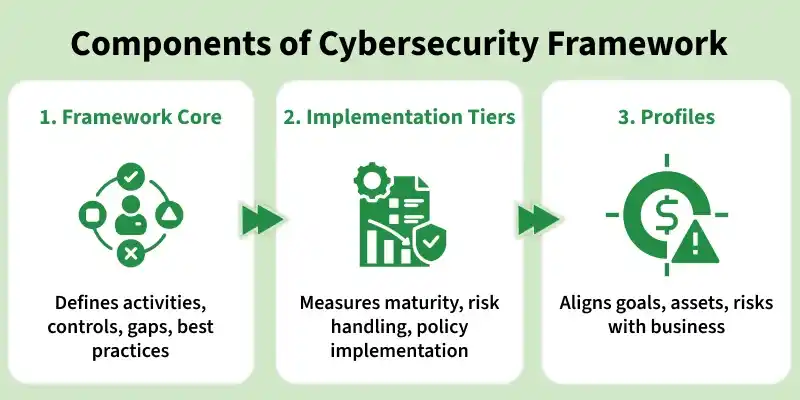
Components of Cybersecurity Framework
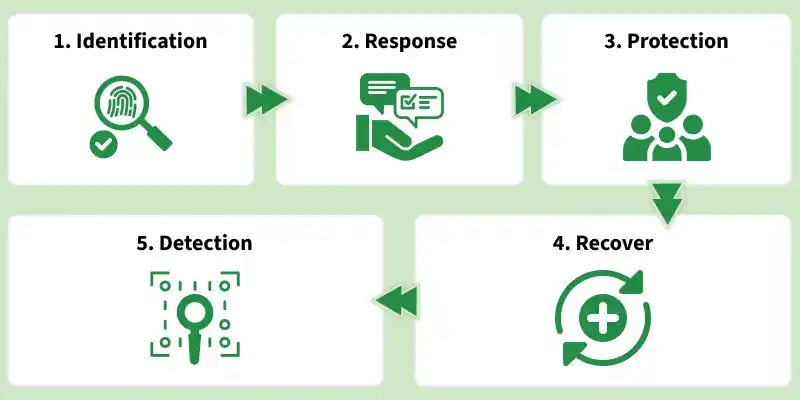
Every cybersecurity framework consists of three essential components:
Identify: Understand assets, systems and risks. Identify vulnerabilities and threats.
Protect: Implement safeguards to secure systems. Includes access control, encryption and policies.
Detect: Monitor systems to identify security incidents. Enables early breach detection.
Respond: Take action after a cyber incident. Includes communication and containment.
Recover: Restore systems and operations. Improve resilience against future attacks.
Common Cybersecurity Frameworks
NIST Cybersecurity Framework: Risk-based security guidelines for organizations.
ISO 27001/27002: International standards for information security management.
FISMA: U.S. federal information security compliance framework.
SOC2: Security and privacy controls for service organizations.
HIPAA: Protects healthcare data and privacy.
Types of Cybersecurity Frameworks
1. Risk Management Frameworks
These frameworks help organizations identify, assess and manage cybersecurity risks by evaluating threats and vulnerabilities and applying appropriate controls.
Examples:
NIST Risk Management Framework (RMF): Integrates security and risk management into system development.
ISO/IEC 27005: Provides guidelines for information security risk management aligned with ISO 27001.
2. Compliance Frameworks
Organizations meet legal, regulatory and industry security requirements. They help protect sensitive data, avoid penalties and maintain trust through defined rules and audit standards.
Examples:
GDPR: Focuses on data privacy and protection in the EU.
HIPAA: Sets standards for protecting healthcare information in the U.S.
3. Control Frameworks
Provide structured security controls and best practices to protect systems, networks and data.
Examples:
CIS Controls: Prioritized actions to defend against common cyber threats.
Align cybersecurity and IT strategy with business objectives. They focus on accountability, decision-making structures and effective management of IT resources and risks.
Examples:
COBIT: Framework for IT governance and enterprise management.
ITIL: Best practices for IT service management and value delivery.
5. Incident Response Frameworks
Guide organizations in preparing for, detecting, responding to and recovering from cybersecurity incidents. They help minimize damage and improve resilience.