|
VOOZH | about |
|
VOOZH | about |
Sports Analytics is the use of data and technology to improve decision-making in sports. Instead of relying only on experience or intuition, teams now analyze player performance, team strategies, injury risks and fan behavior using statistics, sensors and machine learning. This helps coaches, players and organizations make better choices both on and off the field.
Performance analytics focuses on quantifying and improving individual and team performance. Metrics such as sprint speed, fatigue levels, heart rate variability and shot accuracy are tracked using advanced sensors and wearable devices. These insights help coaches optimize training loads, identify skill gaps and monitor progress in real time.
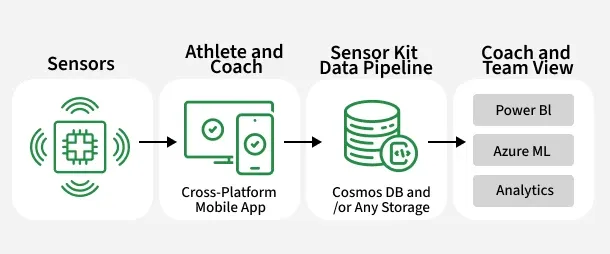
Tools Used: Wearables (GPS trackers, accelerometers), smart stadiums with camera systems and performance dashboards.
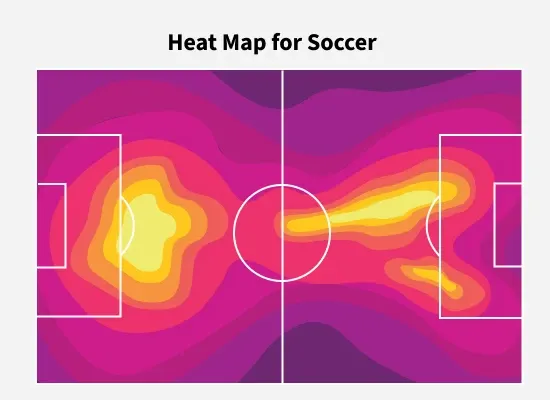
Data supports decision making for in-game strategies and opponent preparation. Techniques like heatmaps, xG (Expected Goals) models and pass maps reveal how teams move, control space and create scoring opportunities. Simulation tools model different outcomes to guide tactical planning.
Tools Used: Video analysis, spatial-temporal tracking systems, tactical modeling software.
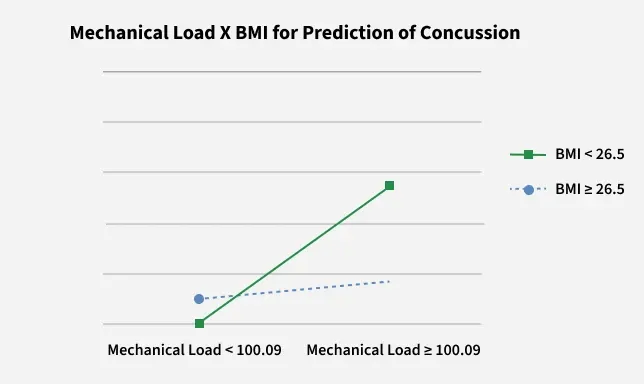
Injuries are very costly events for teams, Analytics in this domain combines biomechanical data with machine learning models to forecast injury risks before they occur. Monitoring workload patterns and physiological markers helps intervene early and design safer training regimens.
Tools Used: Motion-capture systems, AI-based injury prediction models, load management platforms.
Analytics also powers business growth and deeper fan engagement. Data from ticket sales, social media interactions and merchandise purchases helps teams understand their audience. Recommender systems personalize content, offers and experiences for fans across digital platforms.
Tools Used: CRM platforms, marketing analytics, NLP-based sentiment analysis.
Injury prediction is one of the most practical and high-impact applications of machine learning in sports. With the rise of wearable sensor technology, sports organizations now collect real-time biomechanical, physiological and neuromuscular data from athletes. These signals are analyzed to identify patterns and deviations that may indicate elevated injury risk allowing fitness and medical teams to intervene before injuries occur.
Models used :
These models process data such as BMI, movement load, heart rate and muscle fatigue helping fitness teams proactively adjust player workloads.
Accurately valuing a player’s market worth and performance potential is a major focus of sports analytics, especially for teams working within strict budgets. By applying machine learning, analysts can assess a player’s effectiveness, consistency, injury history and fit within a team’s tactical setup.
Models used :
These models generate a estimated market value helping clubs decide whether to buy, sell or extend contracts. Smaller clubs benefit the most by uncovering undervalued talent through data-driven scouting.
Sports teams can leverage data analytics to analyze their own performance and that of their competitors. This data-driven approach aids in tailoring strategies, from formation adjustments to game tactics.
Models used :
Predicting ticket churn is essential for sports teams to retain fans and ensure steady revenue streams. By understanding the likelihood of fans renewing their season tickets, teams can adjust marketing efforts and engagement strategies.
Models used :
Dynamic ticket pricing is essential for maximizing revenue and fan engagement. By analyzing various factors, teams can adjust ticket prices in real-time to reflect demand and optimize sales.
Models used :
Sports betting analytics uses real-time data to adjust odds and predict outcomes, providing bettors with updated information and fair odds. The growing demand for more accurate predictions has led to a rise in betting algorithms.
Models used :
1. Modeling Approach : In sports analytics, complex models like neural networks offer high accuracy but lack transparency. Mimic Learning addresses this by training simpler models (like decision trees) to replicate the output of neural networks, combining both accuracy and transparency.
2. Dataset : Large datasets are key in sports analytics, containing data on player movements, actions and game context. These datasets help predict game outcomes and evaluate player performance.
3. Target Variable : In sports analytics, key target variables include:
4. Mimic Learning : Mimic Learning involves using simpler, interpretable models to approximate complex models, offering accurate predictions while making results more understandable for analysts and coaches.
5. Action Replacement : Action Replacement is a technique where one action is swapped with another (e.g., replacing a shot with a pass) to help the model generalize better and improve prediction accuracy across various scenarios.
6. Heuristics and Tree Construction : Heuristics like Sorting with Variance Reduction help efficiently build and prune decision trees, ensuring scalability and reliable predictions, even with large datasets.
7. Evaluation : Model performance is evaluated using metrics like RMSE and fidelity, which measure how closely the simpler model matches the complex model. Feature importance analysis highlights the key variables influencing predictions, providing insights for improvement.