|
VOOZH | about |
|
VOOZH | about |
Docker swarm is a container orchestration tool. Swarm Mode in Docker was introduced in version 1.12, enabling the ability to deploy multiple containers on multiple Docker hosts. For this Docker uses an overlay network for the service discovery and with a built-in load balancer for scaling the services.
One of the key advantages of docker swarm is that the configuration of the docker services such as volume and network can be modified without the need to manually restart the service Docker will update the configuration, stop the service tasks with the out-of-date configuration and create new ones matching the desired configuration.
In Docker Swarm, a Service is a higher-level abstraction used to define how containers should be deployed, managed, and scaled across a swarm of Docker nodes. It includes specifications like the number of replicas, networking, and load balancing.
A Task is an individual instance of a container that is created and managed by a service. Each task represents a single unit of work and is scheduled to run on one of the nodes in the swarm. Tasks are the actual running containers that fulfill the requirements specified by the service.
When you want to deploy a container in the swarm first, you have to launch services. Service consists of multiple containers of the same image. These services are deployed inside a node so to deploy a swarm at least one node has to be deployed. As you see below diagram the manager node is responsible for the allocation of the task, dispatch the tasks, and schedule the tasks. API in the manager is the medium between the manager node and the worker node to communicate with each other by using the HTTP protocol. The service of one cluster can be used by the other. All the execution of the task is performed by the worker node.
To initialize the docker swarm cluster we use the command called "docker swarm init". For converting the docker engine to the swarm manager we will use this command after converting into the swarm mode then you will able the manager and the worker nodes then the swarm will distribute the work across them.
There are two types of nodes in Docker Swarm:
A single manager node can be created but the worker node can not be created without a manager node. The ideal number for the count of the manager node is seven. Increasing the number of the manager node does not mean that the scalability will increase.
The following are the features of Docker Swarm:
Docker swarm is a container orchestration tool that is used to Docker containers and scale them. Instead of a single host with the help of Docker Swarm, we can manage multiple nodes which are called clusters where we can deploy and maintain our containers in multiple hosts.
Simply Docker Swarm is mainly used to deploy, scale and manage the containers and nodes which are available in the cluster.
Docker Swarm mainly consists of two modes they are:
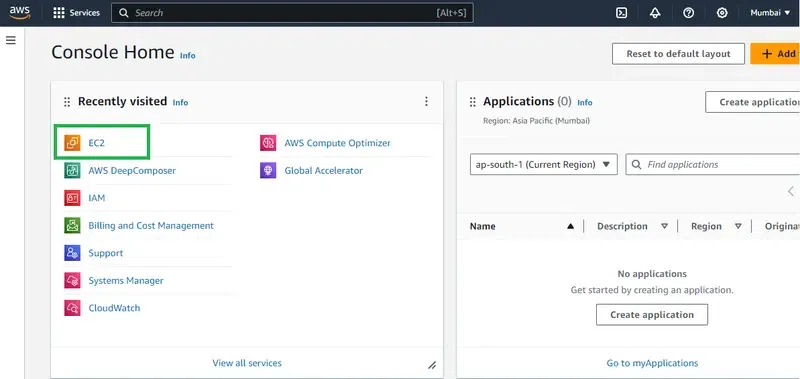
Step 1: Login to AWS Console
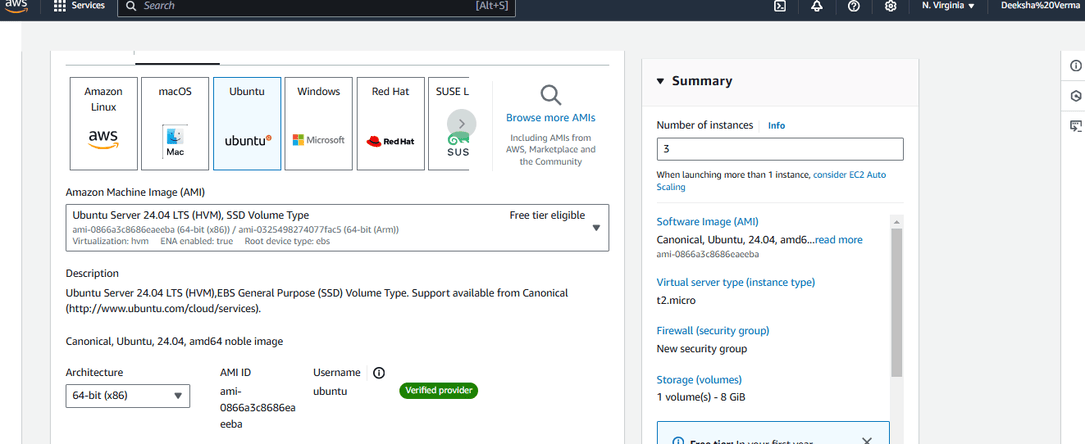
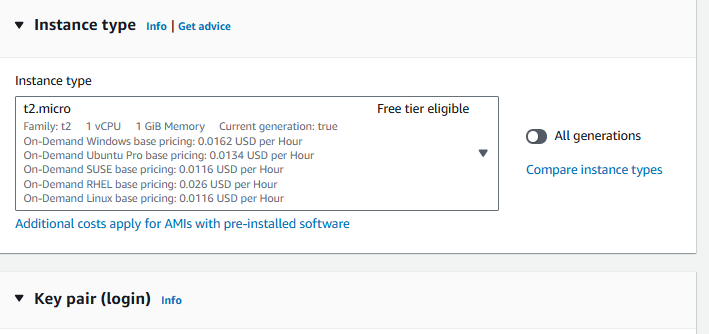
Step 2: Launch the EC2 Instances
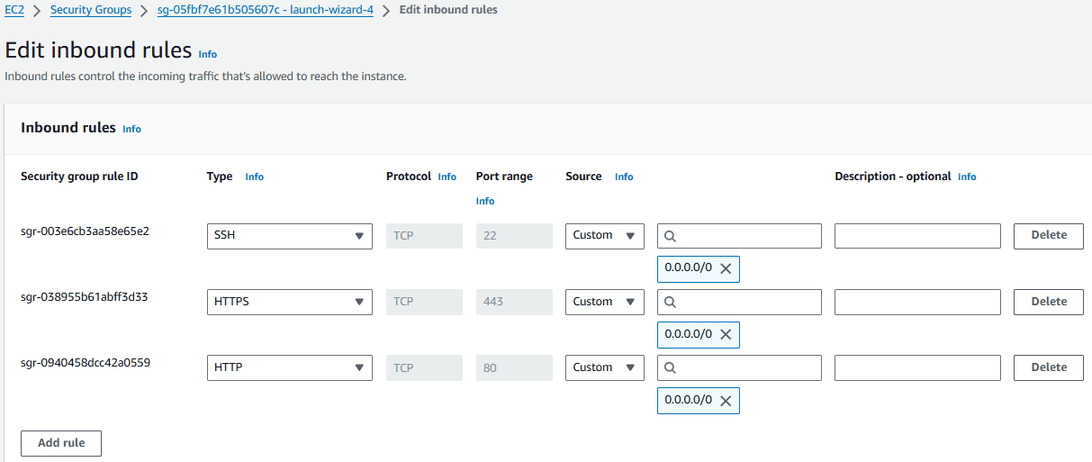
Step 3: Specify the inbound Security rules
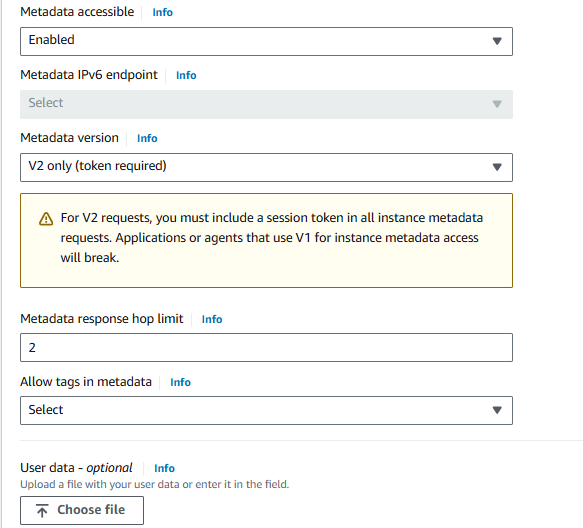
Step 4: Specify the Metadata to instances to automate the docker setup process to all the nodes at once.
( or )
#!/bin/bash

# Update package lists and install dependencies
sudo apt-get update -y && sudo apt-get install -y \
 apt-transport-https \
 ca-certificates \
 curl \
 software-properties-common

# Add Docker’s official GPG key
curl -fsSL https://download.docker.com/linux/ubuntu//gpg | sudo apt-key add -

# Set up the stable repository for Docker
sudo add-apt-repository -y \
 "deb [arch=amd64] https://download.docker.com/linux/ubuntu/ \
 $(lsb_release -cs) \
 stable"

# Update the package database with Docker packages from the newly added repo
sudo apt-get update -y

# Install Docker
sudo apt-get install -y docker-ce

# Start Docker service
sudo systemctl start docker

# Enable Docker to start on boot
sudo systemctl enable docker

# Install Docksal
sudo curl -fsSL ger.docksal.io | bash

# Add the current user to the docker group
sudo usermod -aG docker "${USER}"
Step 5: Specify the names to the instances after once they created as shown in the below figure:
Step 6: Start Docker Swarm
docker swarm initStep 7: Joining Docker Swarm Nodes
Step 8: Create a Task in Docker Swarm
docker service create --name myjavawebapp -p 8080:8080 bnvschaitanya/java-web-appStep 9: Create a Replica to Task
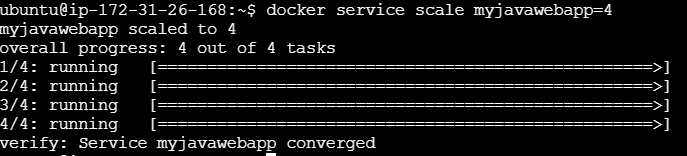
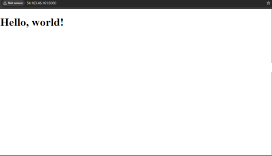
docker service scale myjavawebapp=4Step 10: Access the application through browser using any of your cluster instance ip with 8080 port as follows:
http://54.163.46.161:8080Follow the steps mentioned below to get familiar with the docker swarm mode.
Step 1: In the first step we need to initialize the docker engines of swarm mode.
Step 2: After initializing the swarm mode know add the nodes into the docker swarm cluster. When you initialize the swarm mode it will generates two tokens one is for the manger node and another is for the worker node by using following command you can join the nodes according to the requirement.
docker swarm init <Token> Step 3: Know you can start deploying the you application in the form of containers in docker swarm. Docker swarm will take care of deployment of application an scaling of the application across the worker nodes.
Step 4: WIth the help od docker swarm cli you can manage the swarm like adding or removing the worker nodes scaling the services and inspecting the swarm state.
A stack is nothing but a collection of one or more services deployed as a single unit. The stack is deployed by using compose file in which you can mention the service of the stack and all the required configurations to deploy the stack.
With the help of stack, it is very easy to deploy and maintain complex containers like multi-containers in the Docker swarm. We can deploy with the help of a single file called Docker Compose. yaml we can define all the necessary configurations. You can be assured that they deployed and scaled together.
If we deploy the new version of the application and the end users find any bugs while using it you can roll back to the previous version of the application by using Docker Swarm.
Note: Stack is mainly used to deploy the multi-container application with ease.
The following are the docker swarm mode key concepts:
The following are the docker swarm filters:
The following are the docker swarm mode CLI commands:
docker swarm init [OPTIONS]docker swarm join [OPTIONS] HOST:PORTdocker service create [OPTIONS] IMAGE [COMMAND] [ARG...]docker service inspect [OPTIONS] SERVICE [SERVICE...]docker service ls [OPTIONS]docker service rm SERVICE [SERVICE...]The following are the difference between Docker Container and Docker Swarm:
| Docker Container | Docker Swarm |
|---|---|
Docker Container is an executable package that consists of all the code and dependencies. | Docker Swarm is the container orchestration tool that manages all the containers available in the Swarm cluster. |
| The container can be run on any OS as Docker is an underlying runtime. | Docker Swarm will manage the cluster which consists of Docker nodes. |
A single, isolated, and self-contained unit called a "Docker container" is capable of running an application. | You may manage many Docker containers across various servers in a cluster using the technology known as Docker Swarm. |
Docker containers are more suitable for microservices applications than monolithic applications. | Docker Swarm will scale, deploy and balance the containers. |
The following are the docker swarm and Kubernetes:
Kubernetes | Docker Swarm |
|---|---|
| Kubernetes is an open-source platform used for maintaining and deploying a group of containers | Docker Swarm is designed to be a simple and lightweight container orchestration. |
| In practice, Kubernetes is most commonly used alongside Docker for better control and implantation of containerized applications. | With Docker swarm, multiple containers run on the same hardware much more efficiently than the VM environment & productivity of Docker is extremely high. |
| Applications are deployed as a combination of pods, Deployment, and services. | Apps are deployed in the form of services. |
| It supports auto-scaling of the container in a cluster. With more efficient | Docker Swarm does support auto-scaling but is not as efficient as docker swarm. |
| The health check is of two kinds: liveness and readiness. | Health checks are limited to service. |
| Hard to set up and configure. | Docker swarm setup and installation are easy. |
It does not have extensive documentation but is quite less than Docker Swarm. But it does include everything from installation to deployment. | Docker swarm documentation is more effective, more extensive, and has even more capabilities & it includes everything from installation to deployment & quick-start instructions as well as a more detailed tutorial. |
Kubernetes installation is provided to be quite difficult than Docker swarm and even the command for Kubernetes is quite more complex than Docker swarm. | Docker swarm installation is quite easier, by using fewer commands you can install Docker in your virtual machine or even on the cloud. |
| Azure, buffer, intel, Evernote, and Shopify Using Kubernetes. | Citizens Bank, and MetLife companies using Docker swarm. |
The following are the differences between docker service and docker task:
| Aspect | Docker Service | Docker Task |
|---|---|---|
| Definition | A higher-level abstraction that defines how to run containers as a group | An individual instance of a container created by a service |
| Purpose | Manages the deployment and scaling of a group of containers | Executes a single unit of work within a service |
| Management | Handles orchestration, load balancing, and scaling | Represents the actual work being performed by a container |
| Scalability | Easily scaled up or down to manage load | Cannot be individually scaled; scaling is done at the service level |
| State | Desired state defined (e.g., number of replicas) | Current state of a specific container instance |
| Failure Handling | Automatically reschedules tasks if a container fails | Does not manage failures; relies on service for rescheduling |
The following are the benefits of Docker Swarm: