|
VOOZH | about |
|
VOOZH | about |
A Docker Image is a lightweight, standalone and executable software package that includes everything needed to run an application: the code, a runtime, system tools, libraries and settings.
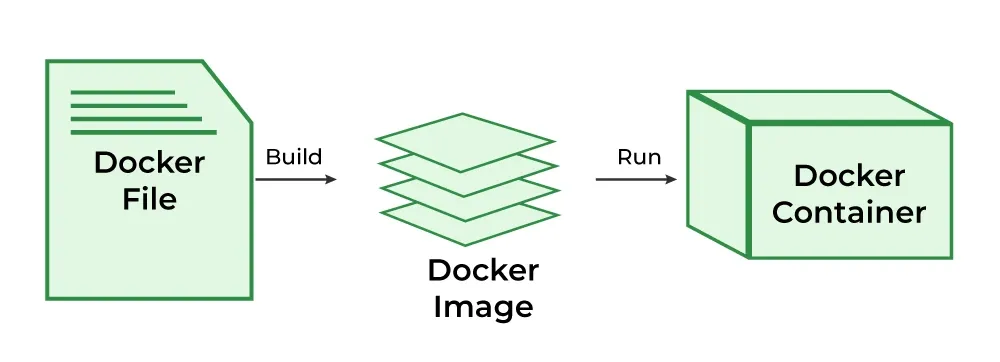
If a Dockerfile is the recipe, then a Docker Image is the perfectly packaged, ready-to-use meal created from that recipe. This package is completely portable, meaning it will run the exact same way on your laptop, a teammate's computer, or a production server.
A Docker image isn't one large, monolithic file. It's cleverly constructed from a series of layers and stored in a registry.
An image is composed of a stack of read-only layers. Each instruction in a Dockerfile (like FROM, COPY, RUN) creates a new layer on top of the previous one.
Dockerfile, Docker only rebuilds that specific layer and the ones that follow it. This makes builds incredibly fast.FROM ubuntu:22.04), those layers are only stored once on your system.This is the foundational layer of your image, specified by the FROM instruction in a Dockerfile. It can be a minimal operating system like alpine, a programming language runtime like python:3.9-slim, or an application like nginx.
A Docker Registry is a storage and distribution system for Docker images. It's a library where you can pull official images, find images shared by the community, and push your own.
The following are the some of the commands that are used for Docker Images:
Command | Description |
|---|---|
docker image build | This command is used for building an image from the Dockerfile |
docker image history | It is used for knowing the history of the docker image |
docker image inspect | It is used for displaying the detailed information on one or more images |
docker image prune | It used for removing unused images that are not associated with any containers |
docker image save | This command helps in saving the docker images into a tar archived files |
docker image tag | It helps in crating a tag to the target image that refers to the source image. |
Docker image prune is a command used in the docker host to remove the images that are not used or Docker image prune command is used to remove the unused docker images.
docker image pruneAll the unused images are also know as dangling images which re not associated with any containers
The Following is the command which is used to build the docker image.
docker build -t your_image_name:tag -f path/to/DockerfileDocker tags are labels for container images, used to differentiate versions and variants of an image during development and deployment. Docker tags will help you identify the various versions of docker images and help distinguish between them. Docker image will help us to build continuous deployment very quickly
The following are the difference between Docker Image and Docker Container:
| Docker image | Docker container |
|---|---|
| The Docker image is the Docker container's source code. | The Docker container is the running instance of the Docker image. |
| Dockerfile is a prerequisite to Docker Image. | Docker Image is a pre-requisite to Docker Container. |
| Docker images can be shared between users with the help of the Docker Registry. | Docker containers can't be shared between the users. |
| To make changes in the docker image we need to make changes in Dockerfile. | We can directly interact with the container and can make the changes required. |
The layers of software that make up a Docker image make it easier to configure the dependencies needed to execute the container.
Follow the below steps to create a Docker Image and run a Container:
Step 1: Create a Dockerfile.
Step 2: Run the following command in the terminal and it will create a docker image of the application and download all the necessary dependencies needed for the application to run successfully.
docker build -t <name>:<tag> This will start building the image.
Step 3: We have successfully created a Dockerfile and a respective Docker image for the same.
Step 4: Run the following command in the terminal and it will create a running container with all the needed dependencies and start the application.
docker run -p 9000:80 <image-name>:<tag> The 9000 is the port we want to access our application on. 80 is the port the container is exposing for the host to access.
This is the complete process of building and running a Python application inside a Docker container
# Use the official Python image as a base
FROM python:3.9-slim

# Set the working directory in the container
WORKDIR /app

# Copy the current directory contents into the container at /app
COPY . /app

# Install any needed dependencies specified in requirements.txt
RUN pip install --no-cache-dir -r requirements.txt

# Make port 80 available to the world outside this container
EXPOSE 80

# Define environment variable
ENV NAME World

# Run app.py when the container launches
CMD ["python", "app.py"]Filename: requirements.txt
Flask==2.1.0
Werkzeug==2.1.2 # Ensure this is compatible with Flask 2.1.0Filename: app.py
from flask import Flask

app = Flask(__name__)

@app.route('/')
def hello_world():
 return 'Hello, World!'

if __name__ == '__main__':
app.run(debug=True, host='0.0.0.0', port=80) docker image build -t mypython-app:v1 .docker imagesdocker run -dit -p 80:80 --name mycontainer1 mypython-app:v1The following are the some of the Docker Image Commands that are widely used:
docker imagesExample
$ docker ls

REPOSITORY TAG IMAGE ID CREATED SIZE
nginx latest 0d9c6c5575f5 4 days ago 126MB
ubuntu 18.04 47b199b0cb85 2 weeks ago 64.2MBdocker image pull <image-name>Example
$ docker pull alpine:3.11

3.11: Pulling from library/alpine
Digest: sha256:9f11a34ef1c67e073069f13b09fb76dc8f1a16f7067eebafc68a5049bb0a072f
Status: Downloaded newer image for alpine:3.11docker image prunedocker image ls -f "reference=mypython-app"docker rmi <id-of-image>Example
$ docker rmi <image_id>

Untagged: <image_id>
Deleted: sha256:<image_id>docker search ubuntuExample
$ docker search ubuntu
NAME DESCRIPTION STARS OFFICIAL AUTOMATED
ubuntu Ubuntu is a Debian-based Linux operating s... 4458 [OK]
ubuntu-upstart Upstart is an event-based replacement for ... 62 [OK]
tutum/ubuntu Simple Ubuntu docker images with ssh access 49 [OK]
ansible/ubuntu14.04-ansible
The following are the some of the troubleshooting common issues related to docker images: