|
VOOZH | about |
|
VOOZH | about |
SVG Gradient is used to smooth transition one color to another color within a shape. SVG provides two types of gradients.
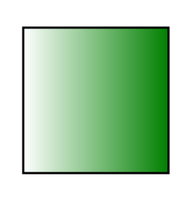
Linear Gradients: The linear-gradient() CSS function is used to create an image which consist a progressive transition between two or more colors along a straight line.
Syntax:
<linearGradient gradientUnits ="units to define contents of gradient" gradientTransform = "definition of an additional transformation from the gradient coordinate system onto the target coordinate system" x1="x-axis co-ordinate" y1="y-axis co-ordinate" x2="x-axis co-ordinate" y2="y-axis co-ordinate" spreadMethod="indicates method of spreading the gradient within graphics element" xlink:href="reference to another gradient" > </linearGradient>
Attribute:
Example:
Output:
👁 ImageRadial Gradients: The radial-gradient() CSS function is used to create an image which consist of a progressive transition between two or more colors that radiate from an origin. Its shape may be a circle or an ellipse.
Syntax:
<radialGradient gradientUnits ="units to define co-ordinate system of contents of gradient" gradientTransform = "definition of an additional transformation from the gradient coordinate system onto the target coordinate system" cx="x-axis co-ordinate of center of circle." cy="y-axis co-ordinate of center of circle." r="radius of circle" fx="focal point for the radial gradient" fy="focal point for the radial gradient" spreadMethod="indicates method of spreading the gradient within graphics element" xlink:href="reference to another gradient" > </radialGradient>
Attribute:
Example:
Output:
👁 Image