|
VOOZH | about |
|
VOOZH | about |
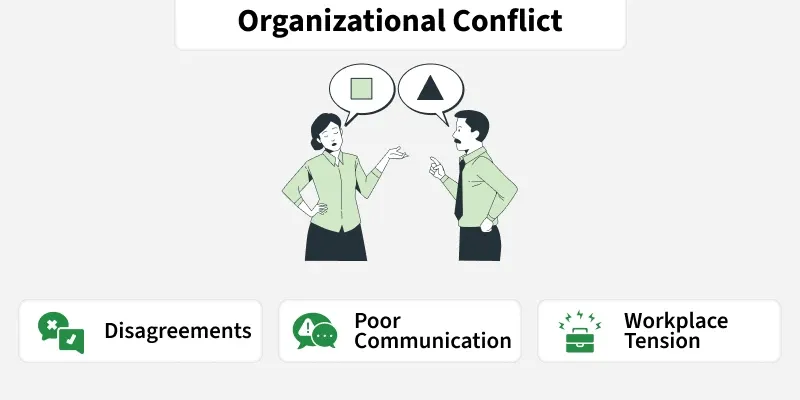
Organisational conflict arises due to differences in opinions, communication gaps, and workplace tensions. Organisations are composed of individuals and groups with diverse backgrounds, goals, values, and expectations. When people work together, such differences in interests, perceptions, and viewpoints are bound to emerge, making conflict an inevitable part of organisational life.
Organisational conflict can occur at any level of an organisation and may involve individuals, groups, or departments. Earlier management theories viewed conflict as undesirable and believed it should be eliminated to maintain harmony and efficiency. However, modern management recognises that conflict is not always harmful; when managed constructively, it can encourage creativity, improve decision-making, and contribute to better organisational outcomes. On the other hand, poorly managed conflict can lead to stress, reduced cooperation, low employee morale, and decreased performance. Therefore, understanding organisational conflict is essential for managers, as it helps them identify its causes, understand its development, and implement appropriate strategies for effective resolution. Proper conflict management fosters a positive work environment and enhances long-term organisational effectiveness
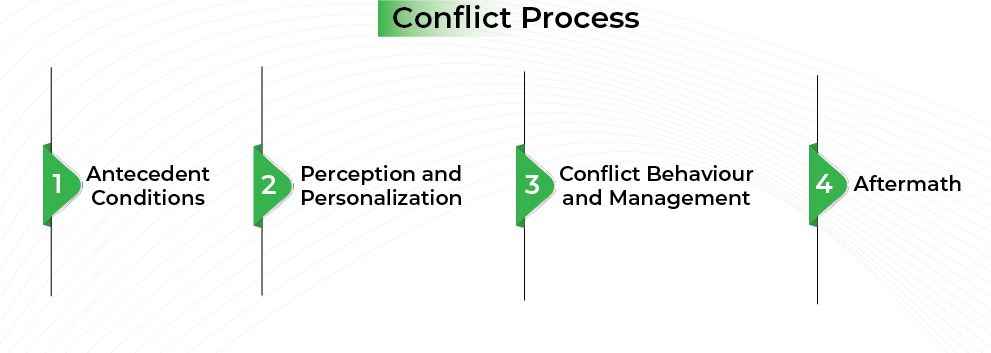
The process of organisational conflict is a dynamic sequence of events that unfolds in a particular manner. It involves various stages, including antecedent conditions, cognition, personalization, conflictive behaviour, conflict management behaviour, and aftermath:
Antecedent Conditions: Conflict arises when certain conditions create opportunities for conflict. These conditions can include scarcity of resources, diverse goals, and differences in values. However, the presence of these conditions doesn't automatically mean conflict will occur.
Perception and Personalization: Whether conflict develops or not depends on how individuals perceive the situation. If they see it as highly threatening, conflict may arise. At this stage, conflict may remain hidden or become personal when individuals start feeling threatened, hostile, mistrustful, or fearful.
Conflict Behaviour and Management: In this stage, one party consciously tries to block the other party's goals. This behaviour is called manifest behaviour and can range from subtle interference to more aggressive actions, like strikes. Conflict management styles, such as resignation, compromise, or collaboration, also come into play, depending on how people choose to handle the conflict.
Aftermath: The consequences of conflict depend on how people behave and manage the conflict. These consequences can affect satisfaction levels, relationships, and group performance, and even lead to changes in structure and policies. The aftermath can also influence the likelihood of future conflicts, as it may plant the seeds for new conflicts to arise.
Inevitable in Organisations: Organisational conflict is an unavoidable part of organisational life because employees differ in their backgrounds, attitudes, values, personalities, and work styles. When individuals with diverse perspectives interact and work together to achieve organisational goals, disagreements and misunderstandings are bound to arise. Even in well structured and well managed organisations, conflict cannot be completely eliminated.
Exists at Multiple Levels: Conflict can arise at different levels within an organisation. It may occur between individuals due to personal differences, between groups or departments because of competing goals or resource allocation, or between employees and management over policies and decisions. Each level of conflict has a different impact and requires appropriate management strategies.
Functional and Dysfunctional: Organisational conflict can be either functional or dysfunctional. Functional conflict promotes healthy discussion, innovation, and better decision making by encouraging different viewpoints. Dysfunctional conflict, however, creates hostility, reduces cooperation, increases stress, and negatively affects employee morale and productivity.
Dynamic in Nature: Conflict is not static and keeps changing over time. It may begin as a minor disagreement and escalate if ignored, or it may reduce when addressed constructively. The intensity and impact of conflict depend on organisational conditions, leadership behaviour, and communication practices.
Involves Emotional and Rational Elements: Organisational conflict involves both emotional and rational aspects. Emotional elements include feelings such as anger, frustration, and resentment, while rational elements involve differences in opinions, goals, roles, or methods of work. Effective conflict management requires understanding and addressing both these dimensions.
There are different perspectives on organisational conflicts, each offering a unique viewpoint. These three are the common views:
Traditional View: The traditional view sees conflicts as undesirable and harmful to organisations. It believes that conflicts bring turbulence, agitation, destruction, and irrationality. According to this view, conflicts indicate problems in the organisation and result from poor management. The traditional view suggests that effective management should eliminate conflicts by addressing underlying issues and fostering harmony between employees and the organisation.
Behavioural View: The behavioural view takes a more nuanced stance, recognizing that conflicts are bound to happen in organisations due to the diverse goals, values, and perceptions of individuals. This perspective understands that conflicts can arise naturally when employees have different priorities or conflicting ideas about resources and work methods. While conflicts may cause disruptions, the behavioural view suggests that they can also lead to innovative solutions and positive outcomes. However, it emphasizes the importance of resolving conflicts through effective policies, structures, and communication to minimize their negative impacts.
Interactionist View: The interactionist view sees conflicts as not only inevitable but also potentially beneficial for organisations. It argues that a prolonged period of harmony and cooperation can lead to complacency and resistance to change. Therefore, a certain level of conflict is necessary to stimulate innovation, critical thinking, and organisational growth. However, the interactionist view also highlights the need to manage conflicts appropriately to prevent them from becoming excessively harmful. It emphasizes regulating conflicts to ensure they contribute positively to the organisation's performance.