|
VOOZH | about |
|
VOOZH | about |
12 min
read
Compare Airtable vs Notion across 12 key factors like features, ease of use, automation, and collaboration to find the best productivity tool for you
By
Jesus Vargas
Updated on
May 29, 2026
.
Reviewed by
Real-World Experience with No-Code Tools: With over 320 apps built, we know firsthand what works—and what doesn't—when using no-code platforms like Glide, Bubble, FlutterFlow and Webflow.
Expert Team with 40+ Years of Combined Experience: Our team has deep technical knowledge, with experts who use no-code tools to solve real-world problems for clients every day, ensuring our advice is actionable and reliable.
Detailed Guides Based on Actual Projects: We don’t just talk about no-code; we use it daily to solve real business problems for our clients, from MVPs to complex automations.
Take a deeper look at our editorial guidelines
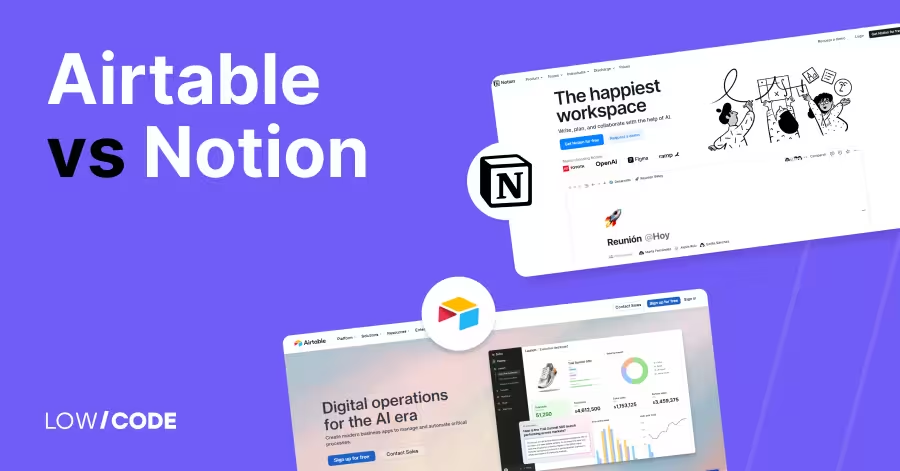
Airtable and Notion are two of the most popular productivity tools used by millions worldwide. Airtable supports over 200,000 teams and is known for its powerful database capabilities combined with an easy-to-use spreadsheet interface. It helps businesses manage complex workflows, projects, and data-driven tasks with ease.
Notion, on the other hand, has grown rapidly to over 20 million users and is loved for its flexible all-in-one workspace. It combines note-taking, task management, and lightweight databases in a simple interface.
Whether you want structured data management or a versatile space for notes and projects, both tools offer unique strengths. In this guide, we’ll compare Airtable and Notion across key features to help you decide which tool suits your needs best.
| Feature | Airtable | Notion |
|---|---|---|
| Primary Use | Database management and structured data | All-in-one workspace for notes and tasks |
| Ease of Use | Spreadsheet-style, moderate learning curve | Flexible and intuitive, easy for beginners |
| Task & Project Management | Strong with automation and custom views | Versatile with simple task tracking |
| Collaboration | Real-time editing, comments, permissions | Shared pages, comments, mentions |
| Automation | Built-in automation and Zapier integration | Limited native automation, relies on Zapier |
| Integrations | Many native integrations plus API | Integrations via third-party tools |
| Templates & Resources | Professional templates for databases | Extensive templates and active community |
| Best For | Data-heavy workflows and complex projects | Content-focused teams and personal use |
Airtable and Notion are both popular productivity tools, but they serve different purposes.
Airtable is like a powerful spreadsheet combined with a database. It lets you organize data in tables with rich features like filters, sorting, and linked records. It’s great for managing projects, inventories, or any data-driven work where structure and relationships matter.
Notion, on the other hand, is an all-in-one workspace for notes, documents, tasks, and databases. It’s more flexible for writing, collaboration, and creating knowledge bases. Notion’s strength lies in its ability to mix text, media, and databases in one place, making it ideal for personal planning, team documentation, and project management with a focus on content.
In summary, Airtable is best when you need a structured, database-driven system, while Notion excels as a flexible workspace for notes and collaboration.’
Let’s explore how Airtable and Notion differ in their key features and strengths.
Airtable offers powerful database features with a spreadsheet-like interface that is easy to use. You can create multiple linked tables, set up filters, group data, and automate workflows. It supports various field types like attachments, checkboxes, and dropdowns.
Airtable’s strength is managing complex data and relationships, making it great for project tracking, inventory, or CRM. It also integrates with many apps, allowing you to extend its functionality. Overall, Airtable is designed for structured data and detailed organization.
Notion is excellent for note-taking, combining rich text, images, and multimedia in a flexible workspace. Its databases are simpler than Airtable’s but still powerful enough for task lists, simple tables, and kanban boards.
Notion focuses on blending notes with data, making it ideal for personal planning, documentation, and collaboration. While it handles light data management well, it’s not designed for complex relational databases like Airtable. Notion’s strength is in combining content and data smoothly in one place.
Let’s see how both Airtable and Notion help you organize and manage tasks and projects.
Airtable’s task management is strong because it combines database power with flexible views like grids, calendars, and kanban boards. You can assign tasks, set deadlines, add attachments, and link related records. Automations help send reminders or update statuses automatically.
This makes Airtable great for teams handling complex projects with many moving parts. Its ability to customize workflows and connect with other tools adds to its effectiveness for project management.
Notion offers versatile task and project management with to-do lists, kanban boards, calendars, and timelines inside a single workspace. You can combine notes, meeting minutes, and task tracking all in one place. Notion’s flexible pages let teams collaborate easily, adding comments and updates directly.
While it doesn’t have built-in automation like Airtable, its simplicity and content focus make it ideal for smaller teams or projects that mix task tracking with documentation.
Collaboration tools are key for teamwork, so let’s compare how Airtable and Notion support this.
Airtable offers real-time collaboration with shared workspaces, commenting, and activity tracking. Team members can edit records simultaneously, assign tasks, and leave notes directly on entries. It also supports permission levels to control who can view or edit data.
Airtable integrates with communication tools like Slack to keep teams connected. These features make it easy for teams to stay organized, share updates, and work together on complex projects with clear visibility.
Notion provides a flexible workspace where teams can collaborate on documents, databases, and projects. It supports inline comments, mentions, and shared pages that update in real time. Teams can create shared knowledge bases, meeting notes, and project plans all in one place.
Notion’s simple interface encourages collaboration by combining content creation with task management, making it easy for teams to communicate without switching apps. Its strong focus on documentation helps keep everyone aligned.
Automation helps save time and reduce errors, so let’s see what each platform offers.
Airtable includes built-in automation tools that let you create custom workflows without coding. You can set triggers like record changes, dates, or form submissions to automatically send emails, update fields, or notify team members.
It also integrates with services like Zapier and Make for even more automation options. These features help streamline repetitive tasks, improve efficiency, and keep your projects moving smoothly, especially in complex workflows.
Notion’s automation features are limited compared to Airtable. It does not have native automation tools but supports basic reminders and task notifications. For advanced workflows, users rely on third-party services like Zapier or Make to connect Notion with other apps.
While Notion is excellent for organizing and collaborating, its automation abilities are weaker, making it less ideal for teams seeking deep workflow automation directly within the platform.
Read more about:
Integrations help you connect your tools and expand what each platform can do.
Airtable integrates with many popular apps and services like Slack, Google Drive, Dropbox, and Microsoft Teams. It also works with automation tools like Zapier, Make, and Integromat, allowing you to connect Airtable with hundreds of other apps.
This flexibility helps you automate workflows, sync data, and extend Airtable’s capabilities. You can also use Airtable’s API to build custom integrations, making it highly extensible for businesses of all sizes.
Notion supports integrations with tools like Slack, Google Drive, and Zoom through native and third-party connectors. For automation and more advanced workflows, Notion relies heavily on Zapier, Make, and other middleware to link with other apps.
While it doesn’t have as many direct integrations as Airtable, Notion’s open API and growing ecosystem make it possible to extend its functionality as needed. It’s best for users who want flexible content management combined with essential app connections.
Developer tools and APIs allow you to customize and build on top of each platform.
Airtable offers a robust REST API that lets developers access and manipulate data in bases programmatically. You can create custom apps, automate workflows, or integrate Airtable with other systems using the API.
Airtable also provides SDKs and developer documentation to help build extensions and custom interfaces. Its API is well-documented, making it easier for developers to build scalable solutions or connect Airtable with internal tools and services.
Notion provides a public API that enables developers to read, write, and update content within Notion workspaces. You can use it to build integrations, sync data, or automate tasks. The API supports accessing pages, databases, and users.
Notion also offers SDKs and detailed documentation to help developers create custom workflows or connect Notion with other apps. While powerful, Notion’s API focuses mainly on content management and is still growing in features compared to Airtable.
Read more about:
Templates and resources can speed up your setup and improve how you use the platform.
Airtable offers a wide range of professionally designed templates for project management, marketing, sales, and more. These templates are fully customizable and help users get started quickly with structured databases.
Airtable also provides an extensive knowledge base, video tutorials, and a vibrant community forum. Users can find guides on best practices and automation tips. These resources make it easier to learn and maximize Airtable’s powerful features.
Notion has a vast library of free and paid templates covering everything from personal planners to team workflows and knowledge bases. Its user community is very active, sharing templates, tips, and tutorials online.
Notion also offers a detailed help center and video tutorials. The flexibility of Notion’s pages allows users to create and share custom templates easily, making the ecosystem rich with creative solutions for many use cases.
Performance and ease of access on different devices are important for working on the go.
Airtable’s mobile app is well-designed, offering most desktop features in a clean, easy-to-use interface. It supports real-time syncing across devices, so changes update instantly whether you’re on mobile, desktop, or web.
The app works smoothly on both Android and iOS, allowing you to view, edit, and comment on records anywhere. Offline access is limited, but overall, Airtable provides a reliable experience for users who need access to their data anytime and anywhere.
Notion’s mobile app is intuitive and closely mirrors its desktop experience, making it easy to create and edit notes, databases, and tasks on the go. It syncs seamlessly across iOS, Android, and desktop platforms, keeping your work updated in real time.
While the app can be slower with large or complex pages, Notion generally performs well and supports offline editing for notes. Its accessibility across devices makes it a solid choice for flexible, anywhere productivity.
Read more about:
File handling is important for organizing documents and media within your workspace.
Airtable allows you to attach files directly to records, including images, documents, and videos. Storage limits depend on your plan, with the free version offering up to 2GB per base and paid plans increasing this limit significantly.
Files are stored securely in the cloud and can be previewed or downloaded within Airtable. Large files or heavy usage may require upgrading your plan, but overall, Airtable handles file storage efficiently for most business and project needs.
Notion lets you upload files such as images, PDFs, and videos directly into pages. The free plan has a file upload limit of 5MB per file, which can be restrictive for large files. Paid plans remove this limit, allowing unlimited file uploads.
Files are stored securely in Notion’s cloud and can be easily accessed or embedded within documents. Notion is suitable for managing mixed content, but users with heavy file storage needs may want to consider paid options.
Security and privacy are critical when choosing a platform to protect your data and users.
Airtable uses strong security measures like encryption for data in transit and at rest. It supports two-factor authentication (2FA) and offers role-based access controls to manage who can view or edit data.
Airtable regularly undergoes security audits and complies with standards like SOC 2 and GDPR. These features make it a secure choice for businesses handling sensitive information while ensuring user privacy and data protection.
Notion also provides robust security with encryption for data both in transit and at rest. It supports two-factor authentication and granular permission settings for team collaboration. Notion complies with privacy regulations like GDPR and conducts regular security assessments.
While suitable for both personal and business use, users should be mindful of sharing sensitive data and set proper access controls to maintain security within their teams.
Read more about:
Knowing when to pick each tool helps you match your workflow and business needs.
Airtable is best if your work relies on structured data, complex workflows, and database management. It excels at organizing projects, tracking inventory, or managing customer relationships with rich features like linked records and automation.
Choose Airtable if you need strong data organization, advanced filtering, and integration options to connect with other business tools. It’s ideal for teams handling detailed, data-driven projects that require precision and collaboration.
Notion is a better fit if you want a flexible all-in-one workspace that combines note-taking, project management, and simple databases. It’s perfect for teams or individuals focusing on content creation, documentation, and collaboration in one place.
If your priority is organizing information, writing, and easy sharing with less emphasis on complex data structures, Notion offers a more intuitive and versatile environment.
Last updated on
May 29, 2026
.
Jesus Vargas
-
Founder
Jesus is a visionary entrepreneur and tech expert. After nearly a decade working in web development, he founded LowCode Agency to help businesses optimize their operations through custom software solutions.
Custom Automation Solutions
Save Hours Every Week
We automate your daily operations, save you 100+ hours a month, and position your business to scale effortlessly.
Our AI — trained on 300+ shipped products — tells you what to build, what to skip, and what it'll actually cost. No fluff.
Assess My Idea"Working with LowCode Agency was the best decision I made in 2025"
Franklin Frith
CEO at HRM
Airtable is beginner-friendly for those familiar with spreadsheets but may require some learning for advanced database features. Its visual interface helps users get started quickly, and many tutorials are available to ease the learning curve.
Yes, Notion can replace many project management tools by combining notes, tasks, calendars, and simple databases in one flexible workspace, making it popular for teams that want an all-in-one solution.
Yes, Airtable includes built-in automation features that let you set triggers and actions, like sending notifications or updating records. It also integrates with Zapier and other tools for more advanced workflows.
Notion supports simple databases but is not designed for complex relational data like Airtable. It works best for light task tracking and content management rather than heavy data workflows.
Both platforms offer integrations with popular apps like Slack, Google Drive, and Zapier. Airtable has more native connections for data-driven workflows, while Notion relies more on third-party tools for integration.
Both Airtable and Notion use strong encryption, two-factor authentication, and comply with privacy standards like GDPR. They provide secure environments for personal and business data when best practices are followed.
Bubble
Comparison
Bubble vs Backendless | 10 Factors to Decide the Best One
Compare Bubble vs Backendless across 9 factors like UI, logic, API, and scalability to find the best no-code platform for your app’s needs
Business Automation
Comparison
Zapier vs Pabbly | 9 Factors to Decide the Best One
Compare Zapier vs Pabbly on pricing, features, app integrations, and ease of use. Learn which automation tool is best for your business in 2025
Bubble
Comparison
Bubble vs Thunkable | 9 Factors to Decide the Best One
Compare Zapier vs Workato across ease of use, automation power, integrations, and security to find the best no-code platform for your automation needs
Airtable
Comparison
Airtable vs Retool | 13 Factors to Decide the Best One
Compare Airtable vs Retool on APIs, automation, UI building, and performance. Choose the right no-code or low-code tool for your team’s internal tools
Comparison
Xano vs Supabase | 11 Factors to Decide the Best One
Compare Xano vs Supabase across 11 key factors to choose the right backend for your app—no-code simplicity or developer control with real-time power
Comparison
Airtable
Airtable vs AppSheet | 10 Factors to Decide the Best One
Airtable excels at flexible databases and collaboration; AppSheet wins on mobile-first apps and Google Workspace integration. Here's exactly when to pick each one.





.avif)