|
VOOZH | about |
|
VOOZH | about |
16 min
read
Learn how procurement automation boosts efficiency, cuts costs, and improves control. Compare tools, workflows, and build a business case with ease
By
Jesus Vargas
Updated on
May 29, 2026
.
Reviewed by
Real-World Experience with No-Code Tools: With over 320 apps built, we know firsthand what works—and what doesn't—when using no-code platforms like Glide, Bubble, FlutterFlow and Webflow.
Expert Team with 40+ Years of Combined Experience: Our team has deep technical knowledge, with experts who use no-code tools to solve real-world problems for clients every day, ensuring our advice is actionable and reliable.
Detailed Guides Based on Actual Projects: We don’t just talk about no-code; we use it daily to solve real business problems for our clients, from MVPs to complex automations.
Take a deeper look at our editorial guidelines
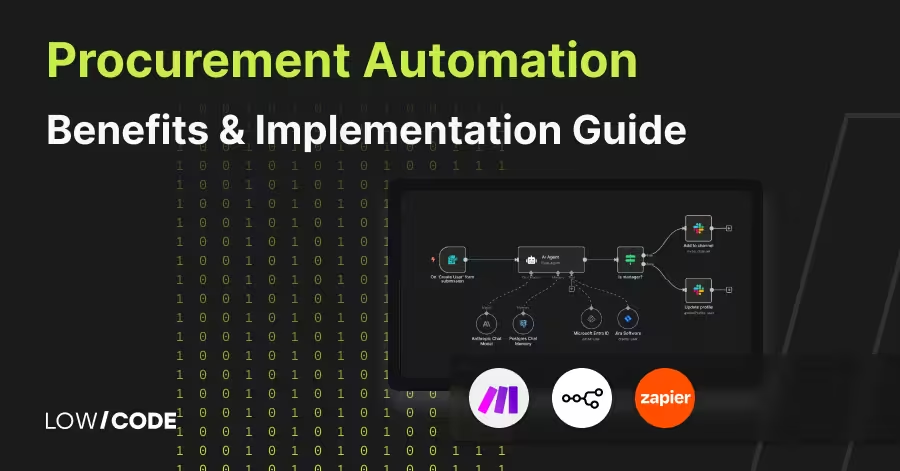
Procurement automation means using digital tools to handle tasks like creating purchase orders, approving requests, and managing suppliers without doing them manually. It replaces slow, paper-based steps with fast and accurate workflows. This makes the buying process quicker, smoother, and easier to track.
With automation, your team does not need to email every request or manually update spreadsheets. Instead, software does the work in the background.
Here’s how it improves traditional procurement:
Procurement automation saves time, cuts costs, and gives full visibility into your process. Whether you use custom tools or no-code platforms, it is a smart move for any growing business.
At LowCode Agency, we don't just build software; we solve problems that slow your business down. From procurement automation to full-scale operational systems, we design and build automation systems that create measurable impact.
We've helped 330+ companies streamline their operations, reduce manual work, and scale smarter. Whether you're automating procurement workflows or modernizing internal processes, we bring clarity, focus, and a proven methodology to every project. No distractions. Just real results, built with intention.
Ready to eliminate procurement chaos and gain control over your purchasing process? Book a free discovery call with our team to discuss how we can transform your procurement operations into a competitive advantage.
Read more | LowCode Agency Case Studies
Read more | Business Process Automation Benefits
Read more | Business Process Automation Challenges
Manual procurement takes a lot of time. Every request, approval, and order needs to be done by hand. This often leads to delays and higher labor costs.
Automated procurement speeds up the entire process. Software tools can handle orders, approvals, and tracking with little effort. This reduces the time needed and saves money on extra staffing or paperwork.
Over time, automation lowers both direct and hidden costs while keeping everything more organized.
Manual processes often lead to mistakes like duplicate orders, wrong data, or missed approvals. These errors can create big problems in budgets and supply chains.
Automated systems reduce these risks by using set rules and clear steps. This means fewer human errors, better record keeping, and real-time tracking. Automation also adds built-in checks to catch problems early.
As a result, businesses see fewer disruptions and more confidence in their procurement system.
Read more | Business Process Automation Detailed Guide
Manual workflows are hard to manage, especially as a business grows. They rely on people remembering tasks and following up.
With automation, workflows follow set paths every time. This makes the system more reliable and easier to control. Automated procurement tools can also scale with your business.
As orders grow, the system can handle more work without needing more staff. This helps businesses grow faster while keeping operations smooth and under control.
Read more | Business Process Automation Examples
n8n stands out in procurement automation for teams that deal with complex internal rules. It lets you set up multi-branch workflows with conditions like approval tiers based on order value, vendor categories, or department.
You can connect internal systems (like ERP or databases) with Google Workspace, email, and Slack to automate approvals and status updates. n8n also supports looping, error handling, and advanced logic, which most tools limit.
If your procurement process needs custom checks before an order is approved or posted to accounting, n8n gives you full control. Since it's open-source, you can run it privately, which is ideal for procurement teams that handle sensitive financial data and want full data ownership.
Read more | Business Process Automation in Healthcare
Make is best for visualizing and managing multi-step procurement workflows without writing code. Its drag-and-drop interface allows you to design smart automation paths like auto-creating purchase orders from Google Forms, checking them against Google Sheets inventory, and routing for manager approval.
You can auto-send reminders if requests are not approved within a set time. Make supports 2,000+ apps and lets you set filters, routers, and delays, perfect for vendor onboarding flows or contract renewal reminders.
Unlike simpler tools, Make handles dynamic data mapping, so you can include real-time pricing or stock info in messages. It’s ideal for procurement teams who need both flexibility and structure in automation.
Read more | Zapier vs Make
Zapier is perfect for fast-moving procurement teams that rely on popular SaaS tools. You can auto-generate purchase orders from Typeform submissions, update supplier data in Airtable, and notify your team in Slack when a request is approved—all without code.
While it’s best for simpler workflows, Zapier’s multi-step Zaps and filters make it powerful enough for automating repetitive procurement tasks like order confirmations or tracking delivery status. You can also use Paths to send requests to different approvers based on department or region.
Zapier is great if your procurement workflow is tool-based, like combining DocuSign for contracts and QuickBooks for payments. It helps you move faster without building a full app.
Read more | Zapier vs IFTTT
Bubble lets you build a complete custom procurement app, not just workflows. You can create approval forms, supplier dashboards, pricing logs, and real-time order tracking—all fully tailored to your process.
For example, you can build a tiered approval system where managers only see requests from their teams. Bubble’s database lets you manage vendor profiles with contract dates, risk scores, and payment terms. You can also build an internal marketplace for team purchases and link it with APIs like SAP or NetSuite.
Unlike task-based automation tools, Bubble replaces spreadsheets or off-the-shelf tools entirely. It’s best for businesses that want to own their procurement platform with full logic, UI, and integrations.
Read more | Bubble.io Capabilities and Limitations
Glide is ideal for turning your procurement spreadsheets into lightweight internal apps. If your team tracks vendors, RFQs, and orders in Google Sheets, Glide helps you turn that into a PWA or desktop app in minutes. You can build procurement request forms with logic to auto-assign them to the right team, show approval history, and restrict access by role.
What makes Glide special is its built-in data editor, which updates live with your sheet. For teams working in the field or across departments, this real-time visibility is a game-changer.
You can also create vendor-facing views to check order status or respond to RFQs. It's perfect for small procurement teams who need speed, not complexity.
Read more | Bubble vs Glide
FlutterFlow is best for mobile-first procurement apps where staff needs to raise or approve requests on the go. You can design custom UIs for procurement forms, connect to Firebase for live updates, and build logic like threshold-based approvals or urgent purchase alerts.
With Firebase Auth, you can set user roles—for example, only team leads can approve orders above $30,000. FlutterFlow also supports API integration, so you can pull vendor data, pricing, or delivery timelines from external systems.
Unlike other tools, you can publish your app to iOS and Android directly, making it ideal for construction, logistics, or field teams needing procurement access from mobile. It’s powerful if you want custom design with backend logic in one place.
Read more | FlutterFlow Scalability
Start by mapping your full procurement workflow. List how purchase requests are made, approved, and fulfilled. Identify where delays happen, what steps are manual, and where errors often occur.
Look at tools in use, the number of people involved, and vendor communication gaps. This audit helps you spot inefficiencies and decide what tasks should be automated.
Without a clear understanding of your current process, you risk automating broken workflows. This step builds the foundation for smarter, more focused automation decisions.
Next, set clear goals. Do you want faster approvals, fewer manual entries, better vendor tracking, or full cost control?
Decide which steps to automate, such as purchase order creation, vendor onboarding, or invoice matching. Also define what success looks like.
This could mean saving 10 hours a week, cutting processing time in half, or reducing errors. Clear goals help you choose the right tools and track ROI later. Align goals with your business size, team skill level, and existing tools.
Read more | Business Process Automation Types
Once your goals are clear, select a no-code tool that matches your needs. If you want quick automation using existing tools, consider Make or Zapier—they're ideal for connecting common apps like Google Sheets, Slack, or CRMs.
For building a fully custom procurement system with centralized dashboards, approval flows, and vendor records, choose Bubble, Glide, or FlutterFlow. These give you total design and logic control.
If you want AI-driven decision-making in your workflows, like automated risk scoring, approval routing based on past behavior, or smart vendor matching, n8n is a great pick. It allows complex logic, built-in AI integrations, and works well for teams with privacy and security needs.
Not sure where to begin? LowCode Agency can help you plan, build, and launch the right system tailored to your business.
Before launching company-wide, test your automation on a small scale. Choose one team, department, or vendor workflow to automate first. Monitor how the system performs.
Use this test to collect feedback and fix bugs. A pilot helps avoid major disruptions later and shows early success. It also helps staff get comfortable with the new system. Keep the pilot simple, measurable, and tied to a key pain point you want to solve.
Once your pilot is successful, expand step by step. Train your team, update internal guides, and slowly phase out manual steps. Set up role-based access, add more workflows, and connect new departments.
Monitor performance using metrics like request-to-order time, vendor response rate, or budget accuracy. Continue refining your automation as your needs grow. If you used Bubble, Glide, or FlutterFlow, you can scale easily with full control.
For expert help, LowCode Agency can guide the full rollout, support your team, and make updates over time.
Read more | Low-code business process automation
Read more | What is no-code automation?
Procurement automation helps you score and monitor supplier risk in real time. You can set rules to track late deliveries, contract violations, or missing documents. If a vendor shows repeated issues, the system can flag them automatically.
This helps your team avoid high-risk or non-compliant suppliers. You can also link vendor data to risk profiles using custom dashboards. With this, you stay proactive instead of reacting late to supply chain problems or policy breaches.
Automated procurement systems can detect fraud by tracking patterns in requests, amounts, and approvals. For example, the system can flag if one team approves the same vendor too often or if a purchase request skips normal steps.
With built-in alerts, these issues are caught early. Some platforms even use AI to identify irregular behavior across departments. By setting approval thresholds and role-based permissions, you reduce the chances of duplicate payments, false invoices, or insider fraud.
Procurement automation creates detailed audit trails that track every action from request to payment. You get a full timeline showing who did what and when. This is key for financial reviews, policy checks, or legal compliance. Automated logs cannot be changed, which ensures data integrity.
If your business needs to follow government rules or internal policies, having these records ready makes reporting and audits faster and more reliable. It also builds trust with regulators and stakeholders.
Read more | AI business process automation guide
Custom Automation Solutions
Save Hours Every Week
We automate your daily operations, save you 100+ hours a month, and position your business to scale effortlessly.
Procurement automation is no longer a nice-to-have—it is a must for growing businesses. Manual processes slow teams down, increase errors, and create hidden costs.
Automation solves these problems by speeding up approvals, reducing risks, and giving full visibility into every purchase. It also ensures compliance, improves supplier relationships, and frees your team to focus on strategic work instead of chasing paperwork.
Whether you need simple workflows or a fully custom procurement system, no-code tools can make it happen faster and cheaper than traditional methods.
If you're ready to upgrade your procurement system or need help deciding the right path, reach out to LowCode Agency. We’ll help you build a smart, scalable solution tailored to your business.
Last updated on
May 29, 2026
.
Jesus Vargas
-
Founder
Jesus is a visionary entrepreneur and tech expert. After nearly a decade working in web development, he founded LowCode Agency to help businesses optimize their operations through custom software solutions.
Custom Automation Solutions
Save Hours Every Week
We automate your daily operations, save you 100+ hours a month, and position your business to scale effortlessly.
Our AI — trained on 300+ shipped products — tells you what to build, what to skip, and what it'll actually cost. No fluff.
Assess My Idea"Working with LowCode Agency was the best decision I made in 2025"
Franklin Frith
CEO at HRM
Procurement automation uses technology to streamline purchasing workflows like vendor selection, approvals, and invoice processing. It works by automating each step using digital forms, approval rules, and system integrations. With procurement automation tools, businesses reduce manual effort, speed up approvals, and maintain full control over their procurement process from request to payment.
You can automate purchase requisitions, order creation, invoice matching, vendor onboarding, budget tracking, contract alerts, and compliance documentation. Procurement automation platforms also support multi-level approvals and supplier performance monitoring. By starting with the most time-consuming tasks, you create a smart, scalable procurement workflow that boosts efficiency and accuracy across your entire purchasing process.
Procurement automation helps businesses reduce costs, speed up order processing, and improve compliance with audit trails. It also enhances supplier communication, eliminates errors, and gives real-time spending visibility. Companies often save 40–70% of time on admin tasks. With better control and reporting, procurement automation transforms purchasing into a strategic advantage.
Yes, procurement automation for small and medium businesses (SMBs) offers fast ROI. No-code tools like Glide and Make help automate approvals, orders, and invoices without needing developers. These systems are affordable, starting under $100/month, and scale easily. SMBs can improve accuracy, save time, and manage vendors better with minimal setup and no IT burden.
No-code procurement automation uses visual tools to build workflows without coding. Unlike traditional software, it is easier to set up, costs less, and fits your current process. You can launch fast, update quickly, and scale as needed. Platforms like Bubble or FlutterFlow offer enterprise-level control without the complexity of custom procurement software.
With no-code platforms, procurement automation setup takes 4–6 weeks for most businesses. Basic approval flows can go live in days, while complex systems with vendor portals or ERP integration take 8–12 weeks. Start with one team or workflow, test it, and expand gradually to ensure fast success and smooth adoption.
Business Automation
Automated Social Media Scheduling Pipeline Guide
Learn how to create an automated social media scheduling pipeline to save time and improve content consistency effectively.
Business Automation
Build an AI Helpdesk Chatbot for Your Team Easily
Learn how to create an AI internal helpdesk chatbot to improve team support and efficiency with simple steps and best practices.
Business Automation
Auto-Triage Bug Reports Efficiently Before Backlog
Learn how to auto-triage bug reports to streamline your workflow and reduce backlog clutter effectively.
Business Automation
Auto Sync UTM Data to Tracking Spreadsheet Easily
Learn how to automatically sync UTM data to your tracking spreadsheet for accurate campaign analysis and time-saving updates.
Business Automation
Zapier Webhooks Guide: Use Without Coding Easily
Learn how to set up and use Zapier webhooks without coding. Automate tasks with simple steps and no programming skills required.
Business Automation
Automate Content Repurposing Across All Channels Easily
Learn how to automate content repurposing from one post to multiple channels efficiently and save time.