|
VOOZH | about |
|
VOOZH | about |
We use cookies to improve your experience on our site. By using our site, you are agreeing to the collection and use of data as described in our Privacy Policy.
Cookie Settings×Table of contents
As you begin building AI agents for your product or your internal workflows, you’ll need a comprehensive and robust approach to monitoring their activities.
Otherwise, you risk sensitive data leaks, persistent issues, and missed opportunities for improvement.
To help you manage any of your AI agents effectively, we’ll break down how, exactly, you can go about observing them over time.
But to start, let’s align on a definition for AI agent observability and the benefits it provides.
It’s the specific measures you put into place for monitoring your AI agents.
This can include several components:
There are several benefits to observing your AI agents. Here are just a few worth calling out.
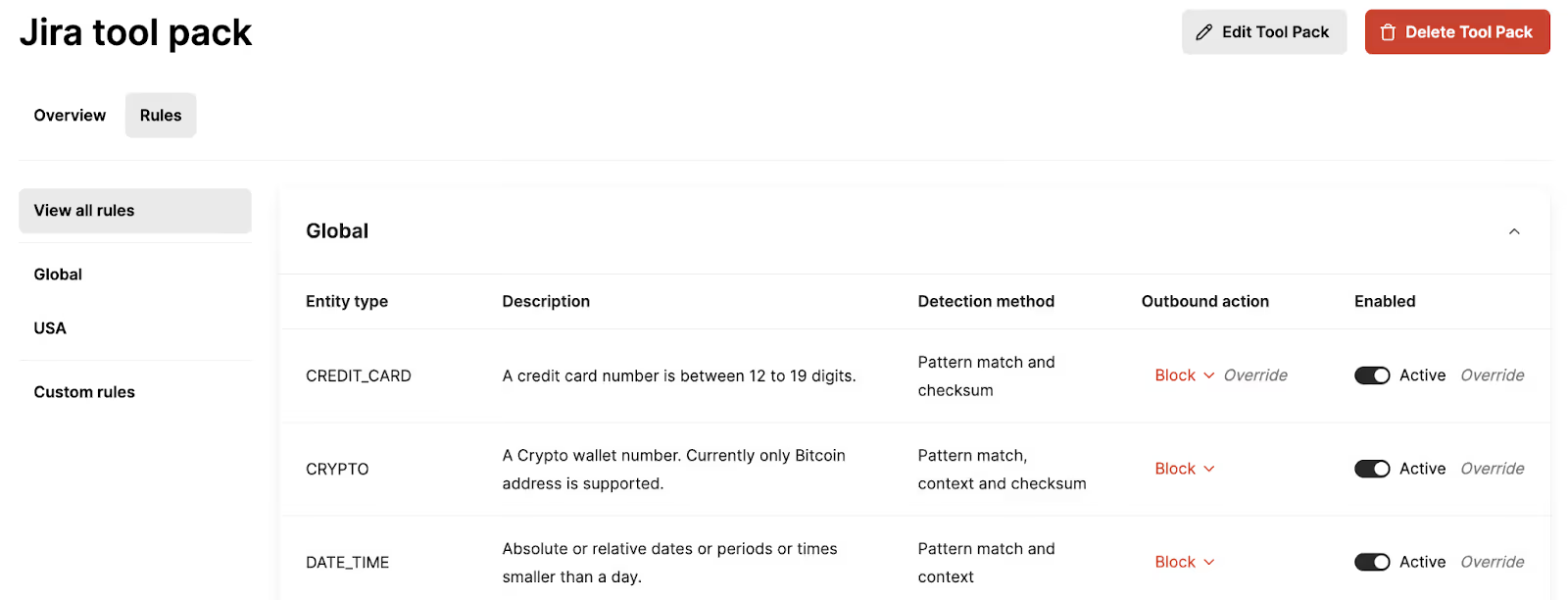
Using an observability platform for AI agents, you can set up a rule that blocks AI agents from receiving social security numbers, phone numbers, addresses, and other personally-identifiable information (PII).
You can also establish rules that block the AI agents from sharing data externally—or at least redacts certain parts of the data. For instance, you can implement a rule that allows AI agents to share customers’ credit card information but the credit card number itself is redacted—with the exception of the last few numbers.
Since your AI agents are making decisions on the fly, a wide range of issues can come up.
An AI agent can call the wrong tool, pass invalid or malformed parameters to a tool, fail to handle tool errors or third-party API outages gracefully—and the list goes on.
An AI agent observability tool can help your engineers detect and diagnose these issues through its logs, enabling your team to then address the issue as quickly as possible.
More and more companies will offer AI agents in their products.
Case in point: The market size for AI agents is set to grow at a compound annual growth rate of 45% through 2034.
One of the best ways for your AI agents to stand out from competitors' is by demonstrating the observability measures you've implemented for them.
This assures prospects that regardless of their agentic use cases with your product, their data will remain secure and compliant with frameworks like GDPR.
Even when your agents aren’t experiencing issues, your observability tooling can help surface optimization opportunities.
You can refine an AI agent’s logic so that it calls a more efficient tool for a given task, discover unnecessary tool calls, see which tools lead agents to experience slow response times—and potentially reroute the tool calls or space them out—and more.
By maintaining records of what data was accessed, the actions performed on that data, which agent performed those actions and when they did so, you can easily demonstrate compliance with a wide range of data privacy and protection frameworks, like GDPR, SOC 2 Type II, and ISO 27001.
Here are all of the ways that you can observe and manage your AI agents. For the best results, you’ll want to combine these approaches.
If your AI agents are part of dynamic workflows, they can make on-the-fly decisions that put sensitive data at risk. For example, they can decide to add an employee's social security number to their profile in an HRIS solution—where it's visible to anyone at the organization.
To prevent harmful or unintended actions, you can configure rules for all AI agents, specific groups of agents, or individual ones to control how they receive and share sensitive information.
For example:
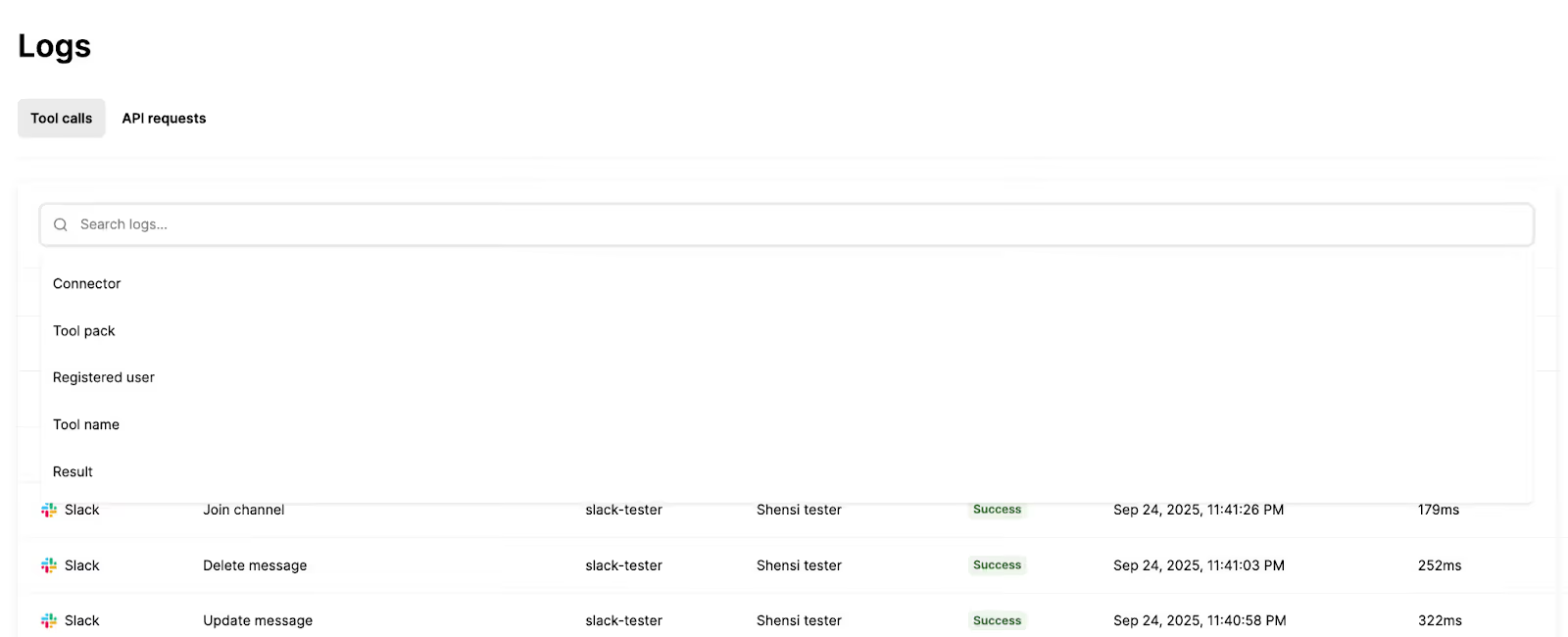
Logs let you review all of the tool calls that have been made, whether they were successful, and—if they were—how long the AI agent took to make them.
An AI agent observability solution can even provide filters that let you drill down on specific tool calls.
To help your team debug issues and optimize the AI agents’ performance, you can filter the logs by:
Related: A guide to building integrations for AI agents
If and when your AI agents violate any of the rules you set, your team needs to know as soon as possible so that they can work to remedy the issue before it impacts your business and your customers.
And to keep your AI agents performing smoothly, you’ll also need to build alerts for critical performance issues, such as tool failures.
To account for both scenarios, you can set up alerts for any rule violation and for certain performance issues (e.g., a tool call failing) across your AI agents.
You should also set up the rules that govern how a particular alert gets sent. This can include who on your team receives the alert, what the alert says, and where they receive it.
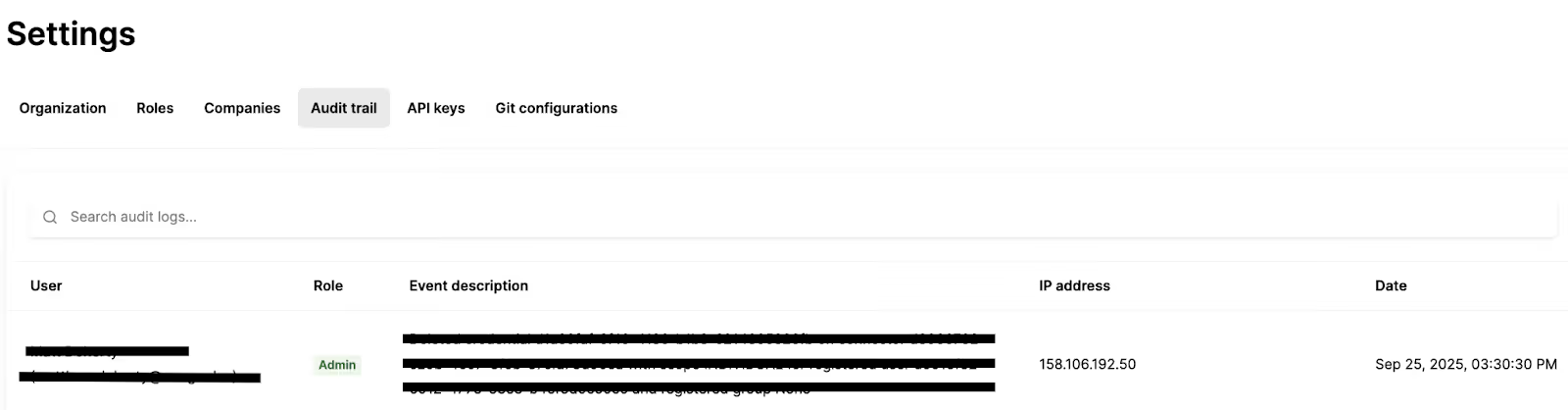
As your admin(s) monitors the AI agents through a 3rd-party tool(s), they’ll likely give colleagues access to the tool to manage the AI agents relevant to them.
To see if these additional users perform harmful activities and to help the admin address it on time, the admin can use an audit trail that describes who performed an action on an agent(s), what that action was, where they performed it from, and when.
{{this-blog-only-cta}}
In case you have any more questions on AI agent observability, we’ve answered several below.
You can use tools that are custom built for monitoring AI agents, like Langfuse and Arize AI. And you can use more general purpose platforms, like Datadog, New Relic, and Dynatrace.
Your best option will depend on factors like your specific observability requirements and how well a vendor meets them, your budget constraints, and the ease of integrating the tool into your existing tech stack and workflows.
There are several challenges. Here are just a few worth highlighting:
AI agent observability tools help solve these challenges by providing a centralized platform that surfaces all the insights needed to monitor, debug, and optimize your AI agents.
Integration observability is a more holistic term. It encapsulates AI agent observability and it can refer to monitoring other types of integrations, whether they’re driven by APIs, files, or custom scripts.
Merge Agent Handler also lets you securely connect your agents with thousands of tools.
.avif)


.png)