We use cookies to improve your experience on our site. By clicking “Accept”, you are agreeing to the collection and use of data as described in our Privacy Policy.
We use cookies to improve your experience on our site. By using our site, you are agreeing to the collection and use of data as described in our Privacy Policy.
StackOne offers unified APIs that let you connect your product with hundreds of applications across nearly a dozen categories—from CRM to marketing automation to identity and access management.
StackOne also offers “AI Agent Actions” to help customers integrate their AI agents with their clients’ applications.
To help you determine whether StackOne is the best integration solution for your product(s), we’ll compare it directly with the best alternative options.
Note: This article was written on 6/16/2025. Anything that’s included on this page is subject to change in the future.
Merge
Like StackOne, Merge also offers unified APIs to help you add hundreds of integrations to your product. In addition, Merge offers an MCP server to help facilitate agentic use cases.
Top features
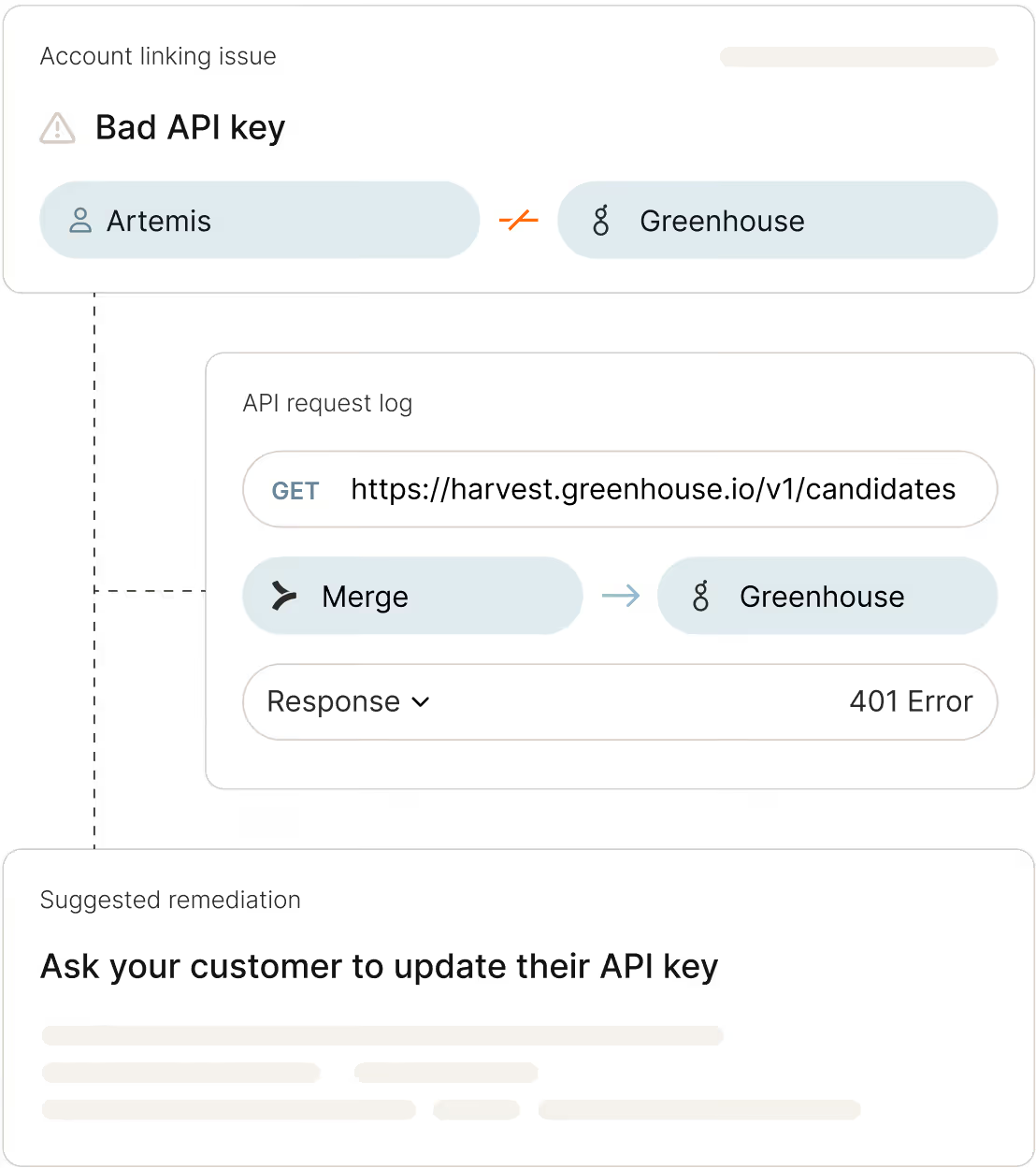
Integration observability features: Merge offers fully-searchable logs of API requests and responses, automated issue detection functionality for common errors (e.g., expired API keys), and a dashboard to track overall integration adoption and health
Merge can not only detect and diagnose issues but also provide steps for remediating them
Advanced syncing features: Merge lets you sync any custom data (beyond their existing Common Models, or normalized data models) through features like Field Mapping and Authenticated Passthrough Request
Go-to-market support: Merge’s post-sales teams include integration experts who can determine the best strategy for pricing your integrations, enable sales to demo them, empower support to manage them, and equip marketing with proven tactics for raising awareness of them
When to choose Merge over StackOne
You need production-ready, battle-tested integrations. Merge’s integrations are used by enterprise companies like BILL, AngelList, Ramp, among countless others. This has allowed the Merge team to address edge cases and ensure that the integrations work effectively at sale.
StackOne, on the other hand, primarily works with startups and many of their integrations aren’t actually available.
While StackOne promotes having accounting integrations, none of them are actually available
You're looking for better-implemented unified APIs. Unlike Merge,StackOne bundled their file storage and knowledge base integrations into a single category (“Documents”). Given that implementation, their Documents integrations lose specialized permission models, have incomplete metadata for knowledge base workflows, and don't provide category-specific filters
You need comprehensive integrations. StackOne’s integrations often lack the endpoint support you need—especially when compared to Merge’s Unified APIs. For example, for their CRM integrations, they only normalize 10 endpoints while Merge normalizes more than 50
Broad unified API coverage: You can integrate with ecommerce apps, file storage solutions, ATS tools, and much more
Embedded integration marketplace: The product lets you implement and maintain an integration marketplace on your site more easily, which, in turn, lets you raise awareness and adoption of your integrations
Their integration marketplace lets your customers and prospects upvote integrations, which can help your team prioritize them
Comprehensive SDK support. To help you build to their unified APIs quickly, they offer SDKs in several languages, including Java, Python, and PHP
When to choose Apideck over StackOne
You want to test the integrations before making a commitment. Apideck’s pricing is relatively flexible and allows for little risk on your end. For example, you can work with them on a month-to-month basis and test their endpoints for free (up to 2,500 calls)
You need help with building your integration marketplace. In case you have limited developer resources or want your developers focused on your core product(s), you can—unlike StackOne—outsource this work to Apideck
You need to integrate with e-commerce platforms. Apideck integrates with apps like Shopify, Walmart, and Magento, while StackOne doesn’t offer any support for this category
Workato offers several integration and automation-related products, including a traditional integration platform as a service (iPaaS) for internal use cases and an embedded iPaaS for customer-facing scenarios.
Top features
Thousands of pre-built API connectors: Their API connectors can be used as is or customized to meet your syncing needs. In either case, your team can save countless time in developing the integrations
Variety of automation templates: Workato offers numerous automation templates across their connectors that can be used as is or modified. Many of these templates also support key business processes, such as order to cash
AI-powered support: Workato offers a suite of AI products to help you build integrations and workflow automations faster. For instance, you can use plain text to describe an automation you want and their copilot can build it for you (in Workato's recipe-builder interface) within a few seconds
You have several integration needs across the business. In addition to supporting product integrations, Workato can cover your internal teams’ integration needs, whether they fall under IT, sales, customer support, and so on
Your team already has experience with Workato. If your engineers already use Workato’s iPaaS offering, the time to get them onboarded onto Workato’s embedded offering will be significantly shorter
You want a proven, enterprise-grade integration solution. Workato has been around significantly longer than StackOne and more enterprise brands use their embedded solution, including Zendesk, Epicor, and Autodesk
Hotglue is an embedded iPaaS that lets you build integrations and workflow automations through their workflow builder interface.
Top features
Webhook support: Hotglue offers webhooks to help facilitate real-time syncs. This can prove invaluable for time-sensitive processes, like routing leads into your product
Embeddable white-label component: You can whitelabel the integrations, making it seem as though your team built and maintains them
Hundreds of connectors: Hotglue offers connectors in 17 software categories. They also let you filter by connectors that allow you to sync data bidirectionally and/or in real-time on their site
You want to participate in a free trial. Hotglue’s pricing plans include a free trial, so you can test the platform and determine whether it meets your integration requirements before making any investment
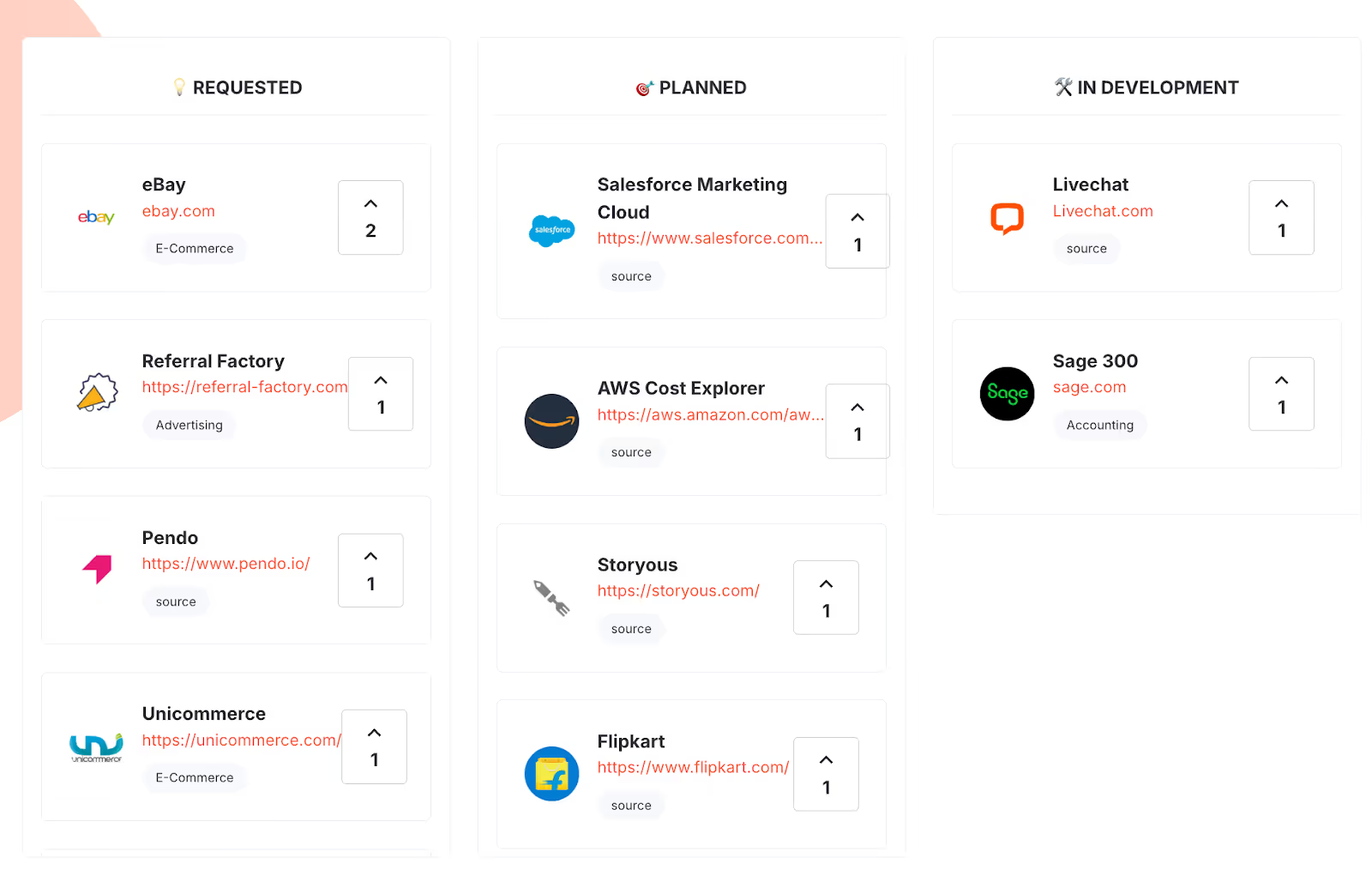
You want a solution that offers transparent integration roadmap plans. Hotglue has laid out the integrations that are planned and in development. You can also upvote any integration on their roadmap to help their team understand which are worth prioritizing over others
You need to integrate with extensive categories. Hotglue supports significantly more categories than StackOne, so if you need to connect your product with event management apps, databases, advertising platforms, customer support solutions, and other types of tools, it’ll likely be a better fit
Tray.ai
Like Workato, Tray.ai has been around for many years and offers both an internal and an embedded iPaaS.
Top features
Merlin Agent Builder: You can design, deploy, and manage AI agents that work with your internal applications
Integration marketplace: Tray.ai not only lets you show off your integrations on your site but also lets you decide which integration connectors and automation templates get shown to specific users in your product, allowing you to provide a personalized UX
API management: Tray.ai lets you collaborate on, implement and modify API endpoints through their API management platform
When to choose Tray.ai over StackOne
You want a proven integration solution. Like some of the other integration solutions on this list, Tray.ai has a longer track record of supporting enterprise companies for their embedded solution, such as Eventbrite, Hackerone, and Typeform
Your team already uses their iPaaS. If this is the case, the process of getting onboarded to their embedded integration solution can be relatively easy (the workflow builder is nearly identical)
You want AI-powered support each step of the way. Tray.ai provides more AI tooling and capabilities to support your integrations and automations—from development to maintenance
Jon Gitlin is the Managing Editor of Merge's blog. He has several years of experience in the integration and automation space; before Merge, he worked at Workato, an integration platform as a service (iPaaS) solution, where he also managed the company's blog. In his free time he loves to watch soccer matches, go on long runs in parks, and explore local restaurants.

.jpg)




.png)