|
VOOZH | about |
|
VOOZH | about |
TrueFoundry recognized in Gartner Hype Cycle for Platform Engineering 2026. Read the full report →
Join our VAR & VAD ecosystem — deliver enterprise AI governance across LLMs, MCPs & Agents. Become a Partner →
Get instant access to a live TrueFoundry environment. Deploy models, route LLM traffic, and explore the full platform — your sandbox is ready in seconds, no credit card required.
Blazingly fast way to build, track and deploy your models!
While organizations have successfully implemented AI in isolated use cases, the real challenge lies in creating connected, context-aware AI systems that can seamlessly interact with existing business tools and data sources. Traditional approaches require building custom integrations for every AI model and business system combination, creating what's known as the "N×M problem" where complexity grows exponentially with each new integration.
Model Context Protocol (MCP) automation platforms have emerged as the solution to this integration nightmare. By providing a standardized, open protocol for AI models to connect with external tools and data sources, MCP platforms enable enterprises to build scalable, maintainable AI ecosystems without the burden of custom integrations. These platforms transform AI from isolated applications into integrated business capabilities that can access real-time data, trigger actions, and maintain context across complex workflows.
Model Context Protocol (MCP) automation represents a paradigm shift in how AI systems interact with the broader enterprise ecosystem. At its core, MCP is an open standard developed by Anthropic that defines how AI models communicate with external tools, data sources, and services through a unified JSON-RPC interface.
Unlike traditional API integrations that require custom code for each connection, MCP provides three standardized primitives that enable AI models to interact with external systems. This is the core difference in MCP vs API discussions: APIs expose endpoints, while MCP exposes discoverable tools, resources, and prompts that agents can reason over dynamically.
The automation aspect of MCP platforms extends far beyond simple connectivity. Modern MCP automation platforms provide intelligent orchestration capabilities that can dynamically discover available tools, enforce security policies, manage authentication, and provide comprehensive observability across all AI interactions. This means enterprises can deploy AI agents that automatically adapt to new tools and data sources without requiring code changes or manual configuration.
MCP's client-server architecture enables unprecedented scalability and flexibility. For teams evaluating MCP vs A2A, the practical distinction is that MCP standardizes how models interact with tools, while A2A focuses on how autonomous agents communicate with each other across workflows. MCP clients (typically AI applications) can connect to multiple MCP servers simultaneously, each providing access to different business systems or data sources. This architecture eliminates the traditional point-to-point integration model, replacing it with a hub-and-spoke approach that dramatically reduces complexity and maintenance overhead.
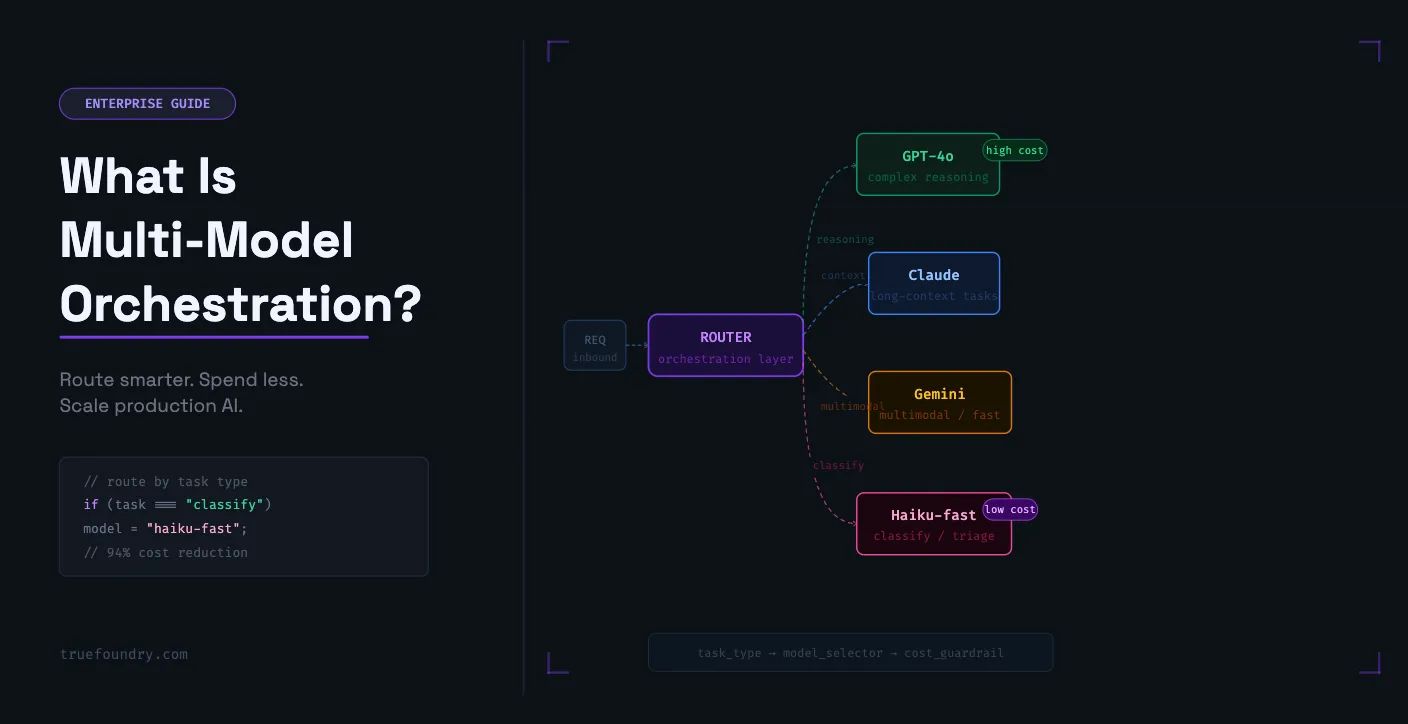
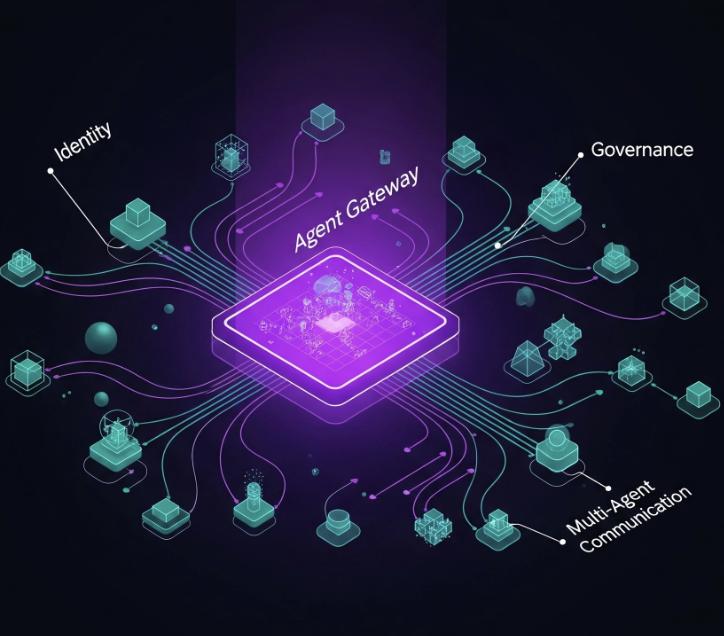
This diagram illustrates the fundamental advantage of MCP architecture. Traditional approaches require N×M custom integrations between each AI application and business system, creating exponential complexity. MCP's hub-and-spoke model centralizes these connections through a single gateway, dramatically reducing integration overhead.
The protocol's AI-native design sets it apart from traditional integration approaches. While conventional APIs were optimized for static, predefined interactions, MCP supports dynamic capability discovery, allowing AI agents to learn about available tools at runtime and adapt their behavior accordingly. This enables truly autonomous AI workflows that can evolve as business requirements change.
The enterprise imperative for MCP automation platforms stems from fundamental challenges that traditional integration approaches cannot effectively address at scale.
Key Metrics for Evaluating Gateway
| Criteria | What should you evaluate ? | Priority | TrueFoundry |
|---|---|---|---|
| Latency | Adds <10ms p95 overhead for time-to-first-token? | Must Have | ✅ Supported |
| Data Residency | Keeps logs within your region (EU/US)? | Depends on use case | ✅ Supported |
| Latency-Based Routing | Automatically reroutes based on real-time latency/failures? | Must Have | ✅ Supported |
| Key Rotation & Revocation | Rotate or revoke keys without downtime? | Must Have | ✅ Supported |
| Key Rotation & Revocation | Rotate or revoke keys without downtime? | Must Have | ✅ Supported |
| Key Rotation & Revocation | Rotate or revoke keys without downtime? | Must Have | ✅ Supported |
| Key Rotation & Revocation | Rotate or revoke keys without downtime? | Must Have | ✅ Supported |
| Key Rotation & Revocation | Rotate or revoke keys without downtime? | Must Have | ✅ Supported |
Selecting the right MCP automation platform requires a systematic evaluation framework that balances technical capabilities with enterprise requirements and strategic objectives.
TrueFoundry stands as the leading purpose-built MCP automation platform, specifically designed to address the complex requirements of enterprise AI deployments at scale. What distinguishes TrueFoundry is its comprehensive approach to MCP orchestration, combining a unified MCP Gateway with enterprise-grade governance, security, and observability in a single, cohesive platform.
The platform's MCP Gateway serves as a centralized control plane for AI-tool interactions. In more advanced architectures, this gateway can operate as an MCP hub, orchestrating discovery, routing, and governance across distributed MCP servers. For organizations looking to deploy an enterprise AI gateway with MCP, this unified layer eliminates fragmented integrations while ensuring centralized governance, authentication, and observability across all AI workloads.This eliminates the complexity of managing multiple point-to-point integrations while providing dynamic tool discovery, unified authentication, and comprehensive policy enforcement across all MCP interactions. TrueFoundry's implementation extends the open MCP standard with enterprise capabilities including granular RBAC, immutable audit logging, and real-time compliance monitoring.
Performance leadership is a key differentiator, with TrueFoundry delivering sub-10ms latency and handling 350+ requests per second on a single vCPU. This performance advantage enables real-time AI applications and ensures scalability as enterprise usage grows. The platform achieves this through optimized message handling, intelligent caching, and efficient resource management.
Enterprise integration capabilities are comprehensive, featuring pre-built MCP servers for popular business tools like Slack, Confluence, Sentry, and Datadog. The platform also supports "bring your own MCP server" functionality, enabling organizations to quickly onboard custom or proprietary services without extensive development work. Security features include federated identity through enterprise providers (Okta, Azure AD, Google Workspace), OAuth 2.0 with dynamic token management, and centralized policy enforcement.
The observability and monitoring capabilities provide complete visibility into MCP interactions, including structured telemetry for latency, error rates, usage patterns, and cost tracking filtered by team, user, or business unit. This enables data-driven optimization and troubleshooting across the entire MCP ecosystem.
GitHub Copilot's MCP integration represents a breakthrough in developer productivity, enabling AI-powered development workflows that seamlessly connect with enterprise development infrastructure. The platform provides native MCP server support that extends Copilot's capabilities beyond code generation to include repository management, issue tracking, and end-to-end development workflow automation.
Key enterprise features include comprehensive policy controls that allow organizations to enable or disable MCP functionality at the enterprise level, ensuring compliance with security requirements. The platform supports both OAuth authentication and personal access token (PAT) configurations, providing flexibility for different security models and enterprise identity management systems.
Development workflow integration is seamless, enabling developers to create issues, manage pull requests, and access repository context directly from the IDE without switching tools. This integration reduces development friction and accelerates the software delivery lifecycle. The platform's agent mode can automatically triage issues, implement code changes, and create pull requests based on natural language instructions.
Enterprise deployment is straightforward with support for both remote and local MCP servers, enabling organizations to maintain control over sensitive development environments. The platform integrates with existing GitHub enterprise features including advanced security scanning, compliance reporting, and audit logging.
Visual Studio's MCP implementation provides deep IDE integration that enhances GitHub Copilot's agent mode with custom tool capabilities, making it particularly valuable for Microsoft-centric enterprise environments. The platform supports the full range of MCP capabilities including tools, prompts, resources, and authentication.
Enterprise management features include centralized configuration through group policies, enabling IT administrators to control MCP availability across the organization. The platform supports both local and remote MCP servers with flexible authentication options including OAuth providers for enterprise identity integration.
Technical capabilities are robust, supporting stdio, HTTP, and server-sent events (SSE) transport protocols for maximum compatibility with different MCP server implementations. The platform provides comprehensive tool permission management and dynamic tool discovery, enabling AI agents to adapt to available capabilities automatically.
Integration with Microsoft ecosystem provides unique advantages for enterprises already invested in Microsoft technologies, including seamless integration with Azure DevOps, Microsoft Teams, and Office 365. This tight integration enables comprehensive workflow automation across the entire Microsoft enterprise stack.
Amazon SageMaker's MCP integration leverages AWS's mature machine learning infrastructure to provide scalable MCP automation capabilities for enterprises heavily invested in the AWS ecosystem. The platform supports FastMCP for rapid prototyping and FastAPI for complex routing scenarios, enabling flexible deployment architectures.
AWS ecosystem integration is comprehensive, providing seamless connectivity with AWS services including IAM for security, CloudWatch for monitoring, and Lambda for serverless execution. This deep integration enables enterprises to leverage existing AWS investments while adding MCP capabilities to their AI workflows.
Enterprise features include IAM-based access controls, comprehensive audit logging through CloudTrail, and integration with AWS Config for compliance monitoring. The platform supports multi-model endpoints and inference components that optimize resource utilization and reduce costs.
Scalability and reliability are hallmarks of the AWS platform, with auto-scaling capabilities, multi-region deployment options, and enterprise-grade SLA guarantees. However, organizations should consider potential vendor lock-in and the need for AWS-specific expertise when evaluating this option.
Azure Machine Learning provides comprehensive MLOps capabilities with growing MCP integration support, particularly valuable for organizations in Microsoft-centric environments. The platform offers unique cost advantages by charging only for underlying compute, storage, and networking without additional platform licensing fees.
Enterprise strengths include native CI/CD integration with Azure DevOps and GitHub Actions, hybrid cloud support through Azure Arc, and responsible AI capabilities with bias detection and explainability features. The platform's integration with the broader Microsoft ecosystem provides workflow advantages for Office 365 and Teams-based organizations.
Security and compliance features are enterprise-grade, with comprehensive governance tools, role-based access control, and compliance certifications for major regulatory frameworks. The platform also provides strong data residency controls for organizations with strict data sovereignty requirements.
Google Cloud's Vertex AI offers advanced AI and ML capabilities with emerging MCP integration support, particularly strong for organizations focused on data analytics and machine learning innovation. The platform provides end-to-end ML lifecycle management with AutoML, custom training, and MLOps pipelines.
Data analytics integration is exceptional, with native BigQuery connectivity enabling AI models to access and analyze massive datasets in real-time. The platform's Kubernetes Engine integration provides container-native deployment options that many enterprises prefer for scalability and portability.
Innovation capabilities include access to Google's latest AI research and foundation models, Tensor Processing Units (TPUs) for high-performance training, and cutting-edge generative AI tools through Generative AI Studio. The platform is particularly strong for organizations requiring advanced AI capabilities and open-source tool integration.
Zapier's MCP server provides no-code automation capabilities with access to over 6,000 integrated applications, making it valuable for business users and rapid prototyping scenarios. The platform enables AI models to trigger workflows and access data from popular business applications without custom development.
Enterprise considerations include the platform's cloud-hosted nature and pre-built connectors for popular SaaS applications. While not purpose-built for enterprise MCP deployments, Zapier can serve as a valuable component in broader MCP automation strategies, particularly for connecting AI workflows with business process automation.
K2view's MCP server specializes in real-time enterprise data delivery with entity-based data virtualization capabilities. The platform provides granular data privacy and security controls while enabling low-latency access to operational data across multiple enterprise systems.
Enterprise features include built-in data transformation capabilities, comprehensive data governance, and support for both on-premises and cloud deployments. The platform is particularly valuable for organizations requiring real-time access to complex, multi-source enterprise data while maintaining strict security and privacy controls.
Vectara's MCP server focuses on semantic search and retrieval-augmented generation (RAG) capabilities, providing relevance-ranked context delivery to AI models. The platform includes automated embedding generation, multi-language query support, and API-first architecture for flexible integration.
Technical strengths include custom and domain-specific embeddings, advanced semantic search capabilities, and comprehensive RAG framework optimization. The platform is particularly valuable for enterprises requiring sophisticated information retrieval and knowledge management capabilities in their AI workflows.
Selecting the optimal MCP automation platform requires a structured decision-making process that aligns technical capabilities with business objectives and organizational constraints.
The enterprise AI landscape in 2025 demands sophisticated infrastructure that enables connected, context-aware AI systems while maintaining the security, governance, and operational excellence that business leaders require. Model Context Protocol automation platforms have emerged as the critical infrastructure layer that transforms AI from isolated applications into integrated business capabilities.
TrueFoundry leads the enterprise MCP market with its purpose-built platform combining technical excellence, comprehensive enterprise features, and proven performance at scale. However, the right choice depends on your specific context—GitHub Copilot + MCP for development-centric organizations, Microsoft Visual Studio + MCP for Microsoft ecosystem enterprises, or AWS/Azure/GCP solutions for cloud-native deployments.
The key to success lies in taking a systematic approach to platform evaluation that prioritizes capabilities aligned with your business objectives rather than following technology trends. Organizations that invest in proper MCP automation infrastructure today will be positioned to capitalize on the AI opportunities of tomorrow, while those that delay risk falling behind in an increasingly AI-driven business landscape.
The future belongs to enterprises that can deploy AI systematically, safely, and at scale. MCP automation platforms provide the foundation to make that future a reality, enabling the next generation of intelligent, connected business capabilities.
MCP automation uses the Model Context Protocol, an open standard, enabling AI systems to communicate with external tools and data seamlessly. This eliminates complex custom integrations, allowing AI models to dynamically discover available tools and capabilities, reducing the need for custom point-to-point integrations at scale.
The best MCP platform for your use case depends on your needs — key features to evaluate include breadth of pre-built MCP server integrations, support for both local (stdio) and remote (HTTP+SSE) transports, authentication and access control, observability, and how well it fits into your existing AI stack. TrueFoundry provides MCP integration as part of its broader LLMOps platform, making it a strong option for enterprises that want unified routing, observability, and scalable AI infrastructure alongside MCP support.
Many modern AI systems and integrations leverage MCP automation platforms to connect. These platforms serve as a bridge, allowing various AI models to interact seamlessly with external tools and data sources. TrueFoundry offers solutions that help US enterprises build scalable, maintainable AI ecosystems with robust MCP integration.
MCP automation platforms address major enterprise challenges like complex AI integration, technical debt from custom connections, and governance gaps. They provide a standardized way for AI models to interact with business systems, enabling more consistent security implementation across integrations, ensuring scalability, and simplifying the deployment of powerful, integrated AI solutions across your organization.
TrueFoundry AI Gateway delivers ~3–4 ms latency, handles 350+ RPS on 1 vCPU, scales horizontally with ease, and is production-ready, while LiteLLM suffers from high latency, struggles beyond moderate RPS, lacks built-in scaling, and is best for light or prototype workloads.
Product
Company
Resources



.webp)
.webp)





.webp)
.webp)
.webp)
.webp)
.webp)
.webp)

.webp)
.webp)