
It's no secret that Nvidia hasn't been offering good value or sufficient VRAM these past few years. The only positives coming out of the Team Green camp were DLSS 4's upscaling features and, to some extent, Multi Frame Generation. However, FSR 4 came and bridged the gap to a great extent in that department. Superior ray tracing performance remained the sole reason to buy Nvidia GPUs, but even that has been losing its status as Nvidia's biggest USP, thanks to AMD's strides and the fact that decent RT performance is unaffordable for Nvidia buyers.

Nvidia's RTX 50 series is disappointing, and we are the ones to blame
We might be mad at Nvidia for the RTX 50 series, but we're the real culprits here.
High-end SKUs are out of reach of most gamers
The ones with actually impressive ray tracing
Don't get me wrong: Nvidia still leads AMD in terms of ray tracing performance. However, that stark difference is only apparent on its high-end models, such as the RTX 5090, RTX 5080, and even the RTX 5070 Ti. These GPUs span price points ranging from $750 to $2,000 (MSRP), and cost even more in the real world. To access the impressive ray tracing performance Nvidia keeps boasting of, you need to spend over $800 (at least).
High-end Nvidia GPUs have never been cheap, but this generation has worsened the situation with poor generational gains. The RTX 50 series doesn't deserve to be priced the way it is, considering how little performance has improved compared to the RTX 40 series. AMD doesn't have high-end RX 90 series GPUs (yet), but most people are happy to buy the mid-range stuff Team Red has put out. They aren't exactly lining up to grab $1,400 RTX 5080s or $2,700 RTX 5090s.

4 ways the RTX 5090 is actually worth the money
Assuming you can pick one up at list price.
Mainstream Nvidia GPUs aren't competitive anymore
AMD's latest GPUs offer much more value
Moving to the mid-range segment, Nvidia only has the RTX 5070 to offer. Although the 70-class card offers a 20% performance uplift over the RTX 4070, it's not enough to make this GPU remotely impressive. Firstly, the $550 RTX 5070 is barely faster than the $600 RTX 4070 Super, and the gulf between its ray tracing performance and that of the RTX 5070 Ti is too much to bear. It also fumbles in the VRAM department, still stuck with a 12GB framebuffer, despite costing over $600 at most retailers.
This kind of performance and VRAM aren't competitive anymore, considering AMD's RX 9070 XT is around 20% faster for only $50 more. The current prices of the RX 9070 XT models haven't dropped below $700 yet, but it's only a matter of time. Plus, there's also the fact that the AMD card offers 16GB of VRAM, a 33% increase over that of the RTX 5070. AMD's ray tracing performance has taken a giant leap with RDNA 4, and the gap between Nvidia and AMD isn't huge anymore.
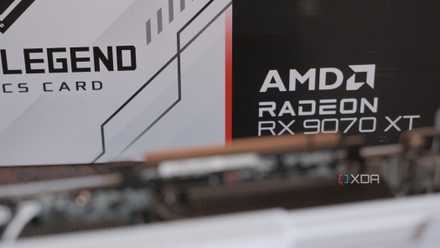
ASRock Radeon RX 9070 XT Steel Legend
- Memory Clock Speed
- 2518 MHz
- Architecture
- RDNA 4
- Process
- 5 nm
- Shader Units
- 128
AMD's RX 9070 XT is one of the best value cards on the market right now, if you can find it at MSRP.
Here's why I don't miss Nvidia after upgrading to an AMD Radeon RX 9070 XT
I'm finally leaving team Green altogether in favor of AMD's new Radeon RX 9070 XT, and I'm not looking back.
Budget Nvidia cards are becoming less and less relevant
Unimpressive ray tracing performance
Finally, the lowest-tier Nvidia GPUs aren't worth buying if you're interested in ray tracing performance, since the raw performance here isn't enough to sustain the RT hit. Even with the might of Multi Frame Generation, the base framerate remains woefully low for AI-generated frames to deliver a playable experience. Ray tracing isn't the selling point here; the cheaper price of admission is. That said, you aren't getting great value in this segment when you compare cards like the RTX 5060 Ti 16GB to the RX 9060 XT or Arc B580.
True budget cards are only being produced by Intel right now, but even if you keep the Battlemage lineup aside for a moment, Nvidia's cheapest GPUs, i.e., the RTX 5060 and RTX 5050, already feel out of date. They lack solid performance and enough VRAM to compete with offerings from AMD and Intel, and ray tracing isn't really a factor in this price segment. One by one, all of Nvidia's competitive pillars have fallen, and ray tracing seems like the latest one to bite the dust.
ASRock AMD Radeon RX 9060 XT Challenger 16GB OC
- Memory Clock Speed
- 2518MHz
- Architecture
- RDNA 4
- Process
- TSMC N4P
- Shader Units
- 2048
The RX 9060 XT offers dependable 1440p performance while offering 16GB of VRAM, and being easily available for around $300.

Why buy Nvidia anymore?
The writing was on the wall for a long time, but perhaps this is the year when consumers will realize they should give their money to someone other than Nvidia. AMD's latest GPUs offer much-improved ray tracing and upscaling performance than ever, and don't skimp on VRAM. For the entry-level buyer, Intel's Battlemage GPUs offer phenomenal value, if you can find them at or around MSRP. Nvidia remains king of the hill in the high-end segment, but its prices mean that most of the market can't even think about its top-tier SKUs.