
Nvidia's "SUPER" cards were never all built the same. Some were genuine mid-gen glow-ups, and they bridged an entire market segment, making the base models feel outdated. On the other hand, some others were little more than a polite refresh with a few extra frames and a few higher clocks. For those, their name was way more exciting than the performance leap they came with.
The difference is simple: the SUPER cards that mattered effectively replaced the vanilla cards instead of just improving upon them. They fixed the spec imbalance, patched the value problem, and in a few cases, made the next-tier card look overpriced overnight.
7 older GPUs that still hold their own against the RTX 50 series
Most gamers are considering upgrading, but only those without these GPUs.
The GTX 1650 SUPER justified its name
The jump in memory type was nothing short of significant
The base GTX 1650 never performed like the $150 card it was supposed to be. Plus, thanks to AIB partners and their prices, it was always close to the $200 mark, making it basically a $200 GPU cosplaying as budget-friendly. The GTX 1650 SUPER, however, actually felt like the card Nvidia should've launched first. The jump to GDDR6, a 60 MHz boost bump, and the massive leap in core resources finally gave the 1650 family some teeth.
This was a card that swung forward instead of just being an incremental upgrade. For just $10 more, we got 43% more cores and texture units, and 50% more bandwidth. In real games, the GTX 1650 SUPER could hang around AMD's RX 580 8GB in plenty of 1080p matchups, which is honestly ridiculous when you remember it was doing that with half the VRAM. That's a proper SUPER.
|
Factor |
GTX 1650 |
GTX 1650 SUPER |
Why it mattered |
|
Memory Type |
GDDR5 |
GDDR6 |
Major uplift in throughput |
|
CUDA cores |
896 |
1280 (+43%) |
Real performance jump |
|
Memory Bandwidth |
128 GB/s |
192 GB/s (+50%) |
Huge for 1080p |
|
MSRP |
$149 |
$159 |
$10 more — no-brainer |
The GTX 1660 Super was equally worthy
This is my generation's 1080 Ti
It was a strange time six years ago when we saw the GTX 1660 GPU have not one or two, but three different tiers: the base card, the Ti, and the SUPER. Both the Ti and Super upgraded the memory type to GDDR6 from the vanilla GTX 1660's GDDR5. The boost clock may have never moved an inch, and even the core count remained the same, but the GTX 1660 SUPER ended up being the card everyone wished they'd bought first.
And that's because this thing absolutely blew the doors off the base 1660 with pure bandwidth. The GTX 1660 SUPER offered 75% more bandwidth than the base card, and even 17% more than the 1660 Ti, all while being just $10 pricier than the vanilla GPU, and a full $50 cheaper than the GTX 1660 Ti. In fact, it landed so close to 1660 Ti performance that OC'ing the SUPER basically landed it neck-and-neck with the Ti in real gameplay, turning the Ti into an expensive typo. Even today, the GTX 1660 SUPER is the kind of card that refuses to die in a 1080p/1440p hybrid setup, and my partner's PC proves that every day.
|
Factor |
GTX 1660 |
GTX 1660 SUPER |
Why it mattered |
|
Memory Type |
GDDR5 |
GDDR6 |
Major uplift in throughput |
|
Memory Clock |
8 Gbps |
14 Gbps |
Massive memory upgrade |
|
Bandwidth |
192 GB/s |
336 GB/s (+75%) |
Biggest uplift in family |
|
MSRP |
$219 |
$229 |
Minuscule price bump |
6 GPUs that are officially too old in 2025
These GPUs can no longer bring it in modern titles
The RTX 2060 Super was its generation's biggest upgrade
It punched way above its weight class
The RTX 2060 SUPER arrived right when VRAM demands in games were starting to climb, and it fixed the base 2060's biggest weakness in one swing: more memory, wider bus, and more bandwidth. That extra 2GB of VRAM was the difference between feeling comfortable at higher settings, and constantly riding the edge of a stuttery cliff.
Plus, the spec bump was genuinely class-changing. The 2060 SUPER jumped to a 256-bit bus from the base card's 192-bit, and then came the 33% rise in bandwidth, all for about $50 more. The next step up was a full $100 jump to the RTX 2070, and yet, the RTX 2060 SUPER could hold its own shockingly well. In fact, it often landed uncomfortably close to a base RTX 2070 in actual gameplay. The 2060 SUPER delivered roughly 10–15% more FPS across the board, but more importantly, it felt like you were buying into a higher tier without paying higher-tier money.
|
Factor |
RTX 2060 |
RTX 2060 SUPER |
Why it mattered |
|
VRAM |
6GB |
8GB (+33%) |
Huge longevity boost |
|
Bus Width |
192-bit |
256-bit |
True "tier" upgrade |
|
Bandwidth |
336 GB/s |
448 GB/s (+33%) |
Big real-world uplift |
|
Performance |
Baseline |
~10–15% faster |
Nearly 2070-level |
RTX 2070 Super is one of the GOATs
Easily the best card from the first RTX generation
I said it: the RTX 2070 SUPER is genuinely one of the greatest Nvidia GPUs of all time, and yeah, I'm biased because I owned one, and it never gave me a single reason to regret it. I picked mine up off Facebook Marketplace at the peak of the pandemic, and it stayed with me for over two years before I jumped to the 40-series. It was just that dependable.
What made the RTX 2070 SUPER so special was that it wasn't "a slightly better 2070." It was basically Nvidia dropping you into 2080 territory while being $200 cheaper. Better yet, it launched at the same price as the base 2070, making the vanilla card instantly pointless. The VRAM didn't change, sure, but you got 11% more CUDA cores and texture units than the base GPU. Moreover, the 2070S used the same silicon class as the RTX 2080, replacing the RTX 2070 instead of just upgrading it, and that's what a SUPER should do.
|
Factor |
RTX 2070 |
RTX 2070 SUPER |
Why it mattered |
|
CUDA Cores |
2304 |
2560 (+11%) |
Legitimate uplift |
|
Texture Units |
144 |
160 (+11%) |
Big gaming boost |
|
Price at launch |
$499 |
$499 |
Base card obsolete |
|
Tier Target |
2070 class |
Near 2080 |
"Cheap 2080" vibe |

Here's when it's worth paying $2,000 for the RTX 5090
Yes, the RTX 5090's price might be bonkers for 99% of us, but for the right consumer, it makes an awful lot of sense
The RTX 4070 Ti Super is an enviable upgrade
The card I wish I had in my rig
The RTX 4070 Ti SUPER is one of the few modern SUPER cards that actually feels like a necessary correction instead of a marketing exercise. The base RTX 4070 Ti was fast, no doubt, but it always had this awkward energy of being a "high-end" GPU that still felt slightly boxed in by its 12GB VRAM and narrower memory setup. It definitely is the one problem I have while living with my own RTX 4070 Ti, even though it doesn't provide much room for complaining on my 1440p display. The RTX 4070 Ti SUPER fixed all of that, and it did so without asking you to pay a single dollar extra for the privilege.
The 4070 Ti SUPER provided 33% more VRAM, a jump from a 192-bit bus to a 256-bit bus, and a full 33% bandwidth increase, all while adding 10% more CUDA cores on top. That's a genuine tier bridge instead of a tiny refresh, and it's the kind that makes the 4070 Ti feel like I signed up for an early access GPU. The best part is that it landed in the exact sweet spot people were begging for: performance that punches up into 4080-adjacent territory, without that "I paid too much" aftertaste. This is how you make a SUPER card, and as one of the last SUPER cards, it remains one of the best.
|
Factor |
RTX 4070 Ti |
RTX 4070 Ti SUPER |
Why it mattered |
|
VRAM |
12GB |
16GB (+33%) |
Big modern-game safety net |
|
Bus width |
192-bit |
256-bit (+33%) |
Stops being "cut down" |
|
Bandwidth |
504 GB/s |
672 GB/s (+33%) |
Massive uplift |
|
CUDA cores |
7680 |
8448 (+10%) |
Free performance bump |
|
MSRP |
$799 |
$799 |
Free upgrade |
Gigabyte RTX 4070 Ti Super AERO OC
The Gigabyte RTX 4070 Ti Super AERO OC is a big improvement over its predecessor, providing 16GB of VRAM and incredible performance for the price. Its understated white design is perfect for those building a high-end, sophisticated gaming rig.
The unnecessary SUPERS: RTX 2080S and RTX 4080S
Not all SUPERS are built the same
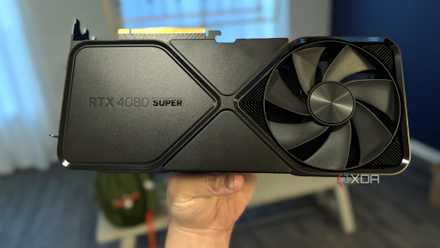
And then there are the SUPER cards that exist purely because Nvidia wanted a refresh cycle, not because gamers needed one. The RTX 2080 SUPER is the poster child for this. It barely moved the needle where it mattered, shipping with the same 8GB VRAM, having the same general market position, and only providing a small real-world gain over the base 2080. It wasn't a new tier, but just a lightly better 2080 wearing a louder name tag. Sure, it cost the same, but even then, this was barely an upgrade, and existing RTX 2080 users never gave much of a damn.
That same story repeats with the RTX 4080 SUPER: a minor bump, no meaningful spec-class change, and nothing that makes you go, "Oh, now I get it." Neither of these was a bad GPU, but they both felt like unnecessary products. They didn't fix a flaw or redefine value, and they didn't make the next tier panic. Where the 2070S replaced the base card and the 2060S made the 2070 feel overpriced, the RTX 2080 SUPER and 4080 SUPER just kind of... showed up.
Here's what I'm going to do instead of upgrading to an Nvidia RTX 50 GPU
Nvidia's RTX 50 series isn't for me, but I have 3 alternatives to consider
Nvidia may never make SUPER cards again
When Nvidia's SUPER cards mattered, they offered more than just "a bit more." They fixed the lineup, often bulldozing over the gaps instead of merely bridging them. Going forward, though, I don't think we'll see many meaningful SUPER cards again, if at all.
With RAMflation now in full effect and the worst possibly yet to come, Nvidia has already discontinued multiple RTX 50-series cards, leaving just one GPU per VRAM stack. That does simplify things, but it certainly isn't good news for anyone hoping for SUPER cards in this generation from Team Green, or in future generations, either. With tighter product stacks and silicon becoming harder to secure in the AI era, Nvidia's "mid-gen" magic might be running out.