Freshdesk vs Zendesk for SaaS support: which one actually fits in 2026?


Last edited June 12, 2026
Table of Contents
- Why SaaS teams keep comparing these two
- Freshdesk vs Zendesk at a glance
- What Freshdesk brings to SaaS support
- What Zendesk brings to SaaS support
- The AI layer is where they really differ
- Pricing: what each actually costs a SaaS team
- What real users actually say
- So which should a SaaS team pick?
- Try eesel on top of whichever helpdesk you choose
Why SaaS teams keep comparing these two
If you run support for a SaaS product, you have a specific shape of problem. Ticket volume scales with signups, not headcount. A big chunk of your queue is repetitive (password resets, billing questions, "how do I export my data"), and a smaller, nastier chunk is deeply product-specific and needs a human who knows the codebase. You want AI to clear the first pile so your team can spend time on the second.
Freshdesk and Zendesk are the two helpdesks most SaaS teams end up shortlisting, and they've both bet heavily on AI to do that triage-and-deflect job. They look similar on a feature checklist. Where they split is on price and on how that AI is sold, and that's where a SaaS team's bill is actually decided.
Freshdesk vs Zendesk at a glance
Here's the quick version before we dig in. Prices are per agent, per month, billed annually.
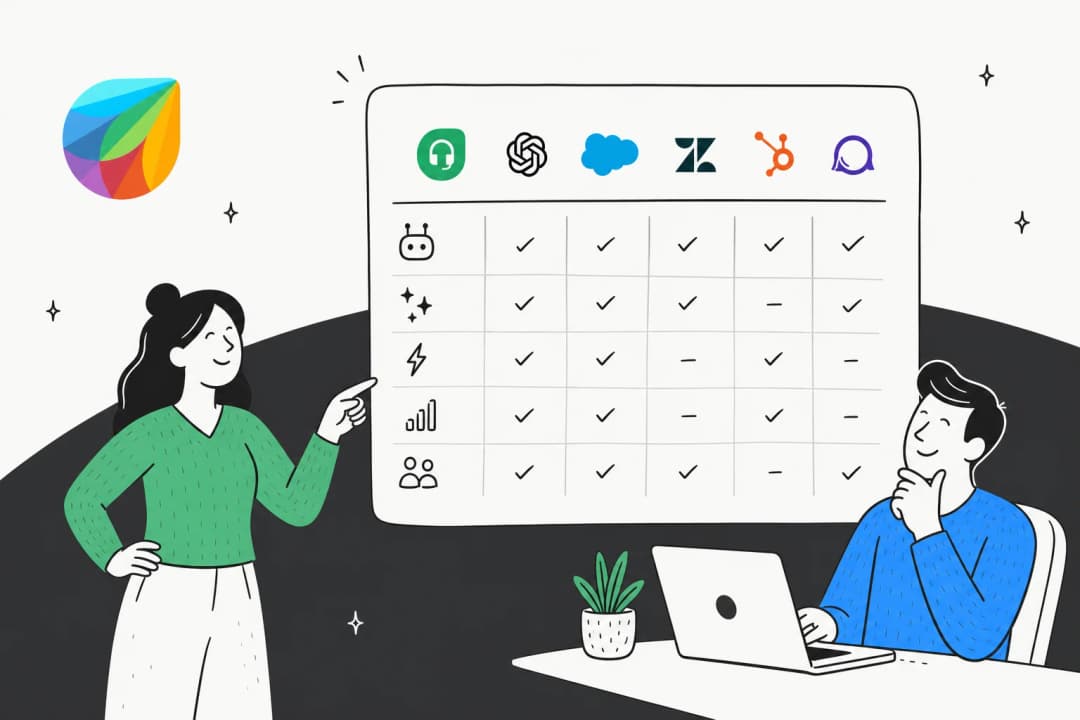
| Dimension | Freshdesk | Zendesk |
|---|---|---|
| Entry plan | Growth, $19 | Support Team, $19 |
| Mid plan ("most popular") | Pro, $55 | Suite Professional, $115 |
| Top self-serve plan | Enterprise, $89 | Suite Enterprise, contact sales |
| Free option | 1-2 agents free for 6 months | 6-month Startups program, up to 50 agents |
| AI brand | Freddy AI (Agent, Copilot, Insights) | AI Agents + Copilot |
| AI billing unit | Per session (packs that expire monthly) | Per automated resolution (no cap) |
| AI copilot for agents | Freddy AI Copilot, add-on per agent | Copilot, $50/agent/month add-on |
| Marketplace apps | Freshworks Marketplace | 1,817 apps |
| G2 rating | 4.4/5, ~3,750 reviews | 4.3/5, 6,837 reviews |
| Best for | SMB and mid-market, tight budgets | Mid-market and enterprise, complex orgs |
Now the detail, starting with each platform on its own before we put the AI side by side.
What Freshdesk brings to SaaS support
Freshdesk, built by Freshworks, is the value pick. It covers ticketing, a shared inbox, omnichannel (email, chat, messaging, phone via Freshcaller), a knowledge base, and SLA automation, and it's used by 74,000+ businesses including Bridgestone, Klarna, and PepsiCo. For a SaaS team, the appeal is straightforward: you get a capable helpdesk without the enterprise price tag, and there's a free tier for 1-2 agents to start.
Its AI story is Freddy AI, a three-part suite: Freddy AI Agent for autonomous customer-facing resolution, Freddy AI Copilot to help your human agents draft and summarise, and Freddy AI Insights for leadership analytics. Freshworks positions Freddy as resolving up to 80% of queries autonomously, with a sub-2-minute average conversational resolution time.
Where Freshdesk fits, and where it doesn't
The honest read from real users: the helpdesk is well-liked, the AI is fine for simple tickets, and Freddy gets pricey as an add-on. One support ops lead at a ~3,000-user SaaS, testing tools hands-on, put it plainly:
"Freshdesk Freddy: for early stage teams that want something simple, it covers the basics auto assignment, suggested replies, FAQ deflection. It's reliable and affordable, nothing crazy."
u/Heavy_Plan7527, r/AgentsOfAI
"Reliable and affordable, nothing crazy" is a genuinely good place to be for a small team. The catch shows up at scale and complexity. Freddy is gated as a paid add-on (some features only at higher tiers), and Freshdesk's Shopify integration sits at a modest 3.0/5 from 61 reviews, which matters if your SaaS sells through commerce channels. If your support volume is mostly clean FAQ-style tickets, Freshdesk is a comfortable home. If it's dense, product-specific debugging, expect to do more human cleanup.
What Zendesk brings to SaaS support
Zendesk now calls itself "the Resolution Platform": a ticketing core wrapped in an AI layer that spans customer-facing agents, an agent-side copilot, intelligent triage, and AutoQA. It's the more enterprise-leaning of the two, a 2025 Gartner Magic Quadrant Leader, with 1,817 marketplace apps and native support for 80+ languages. For a scaling SaaS company with a complex org and integration needs, that depth is the draw.
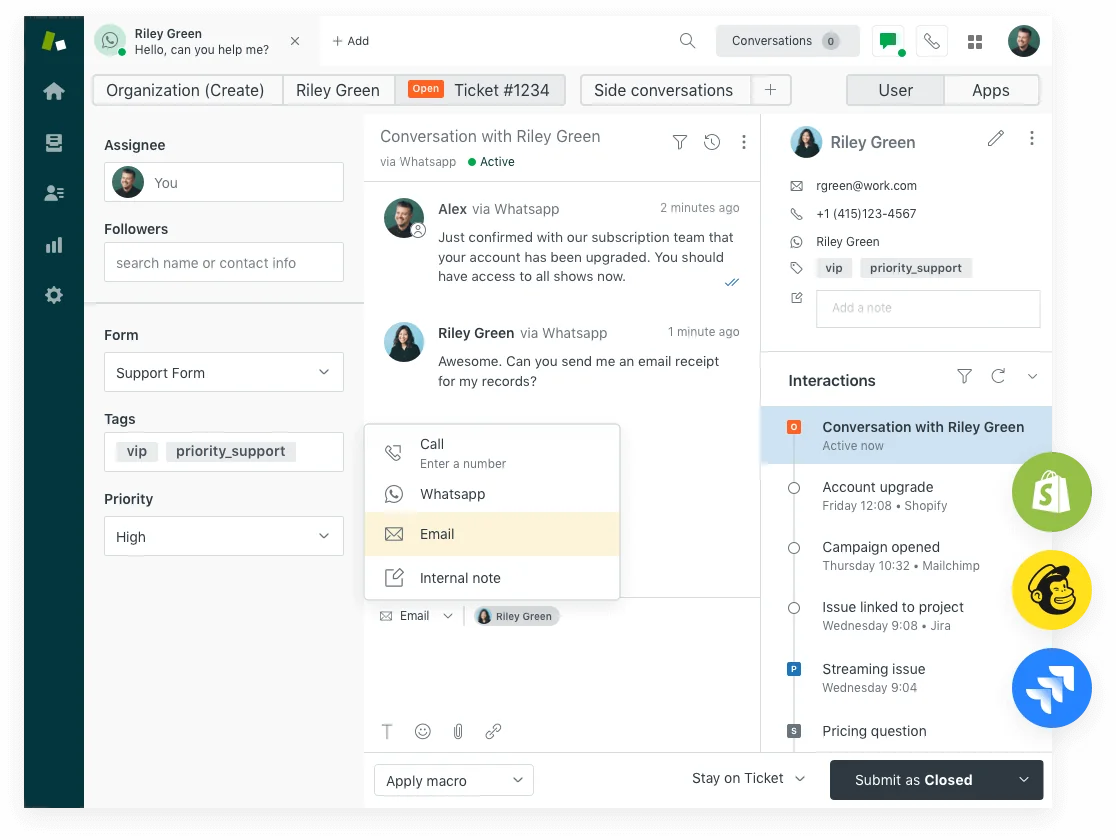
On the AI side, Zendesk splits into two products. AI Agents is the customer-facing autonomous tier, sold in Essential (bundled, knowledge-base Q&A only) and Advanced (the Ultimate.ai-derived tier with scripted dialogues, authorized actions, and API integrations) configurations. Copilot is the agent-side complement: Auto Assist, Admin Copilot, and Intelligent Triage, which auto-classifies every ticket by intent, sentiment, and language.
Where Zendesk fits, and where it doesn't
Zendesk's ceiling is high. The flip side is that getting there is work, and the bundled AI underwhelms. A recurring complaint is that the free Essentials tier doesn't feel like AI at all, pushing teams toward the $50/agent Copilot add-on or third-party alternatives. And the AI quality is famously gated by your knowledge base:
"The Co-Pilot stuff is decent, but we found its effectiveness really depends on having a perfectly curated Zendesk knowledge base, which... ours isn't, lol."
u/ToastBix, r/Zendesk
That's the trade. Zendesk gives a SaaS team room to grow into a sophisticated setup, but you pay for it in both dollars and admin time. If you've got a dedicated ops person and a clean help center, it shines. If you're a lean team hoping AI works out of the box, the runway is longer than the marketing suggests.
The AI layer is where they really differ
Here's the part that decides your bill. Both helpdesks resolve simple tickets and stumble on complex ones, so on raw capability they're closer than the marketing implies. The genuine difference is how the AI is metered, and the two models behave very differently as your SaaS scales.
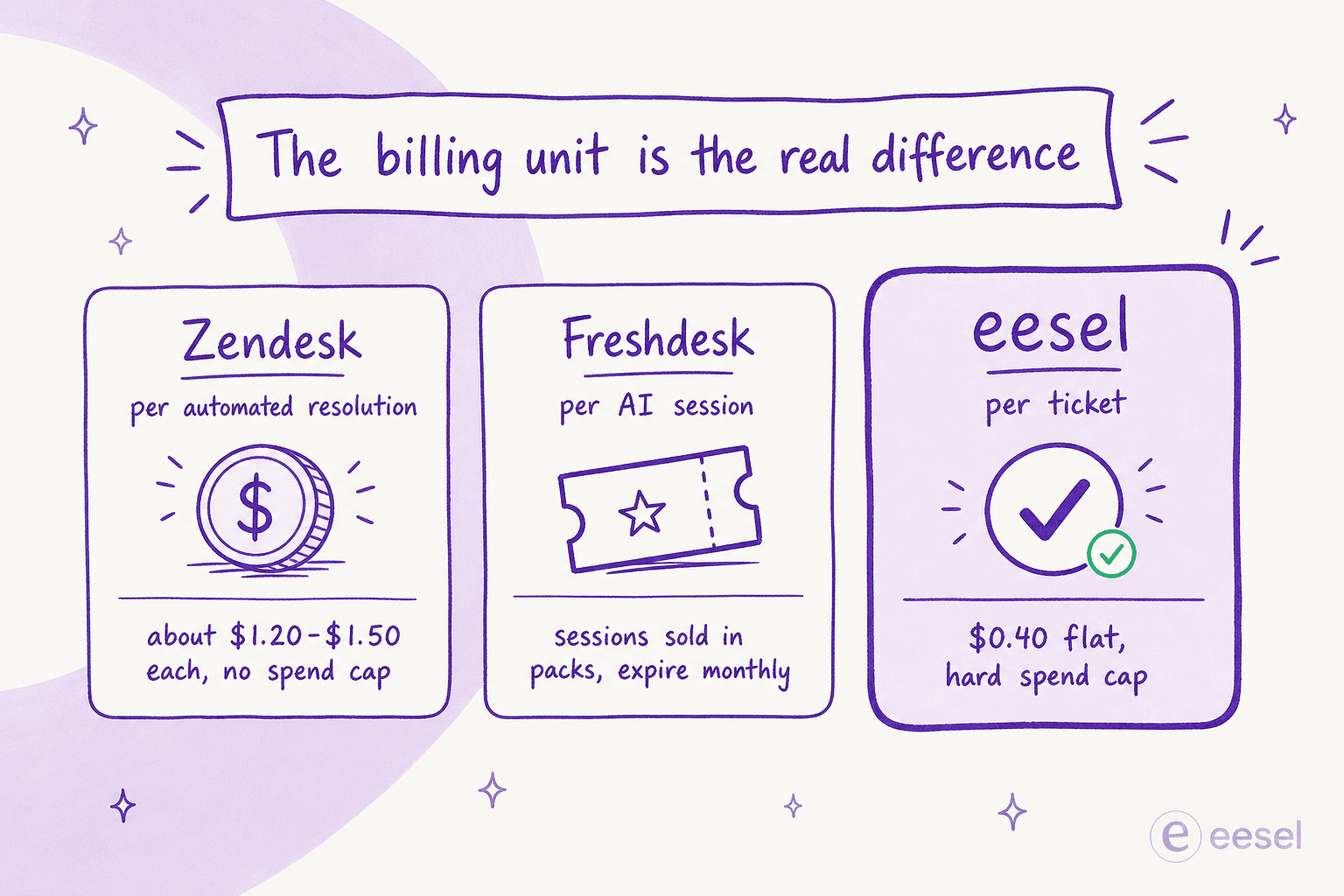
Freshdesk charges per session. Freddy AI Agent ships with 500 free sessions on Pro and Enterprise, then $49 per 100 additional sessions. A session is a unique end-user-to-AI interaction; for the Email AI Agent it's a 72-hour window from the customer's first email. Sessions are sold in packs that don't roll over, so unused capacity expires. It's the friction point users cite most in Freshdesk pricing discussions.
Zendesk charges per automated resolution. You pay for conversations the AI fully resolves without escalation. As of May 2026, Zendesk runs a three-tier model: only Verified Resolutions (where an LLM confirms the issue was actually solved) draw from your allowance, while Assisted Escalation and Contained Resolution are free. That's a fairer model than the old "silence for 72 hours = billable" approach. But third-party teardowns put the overage rate at roughly $1.20-$1.50 per resolution, and crucially there's no spend cap.
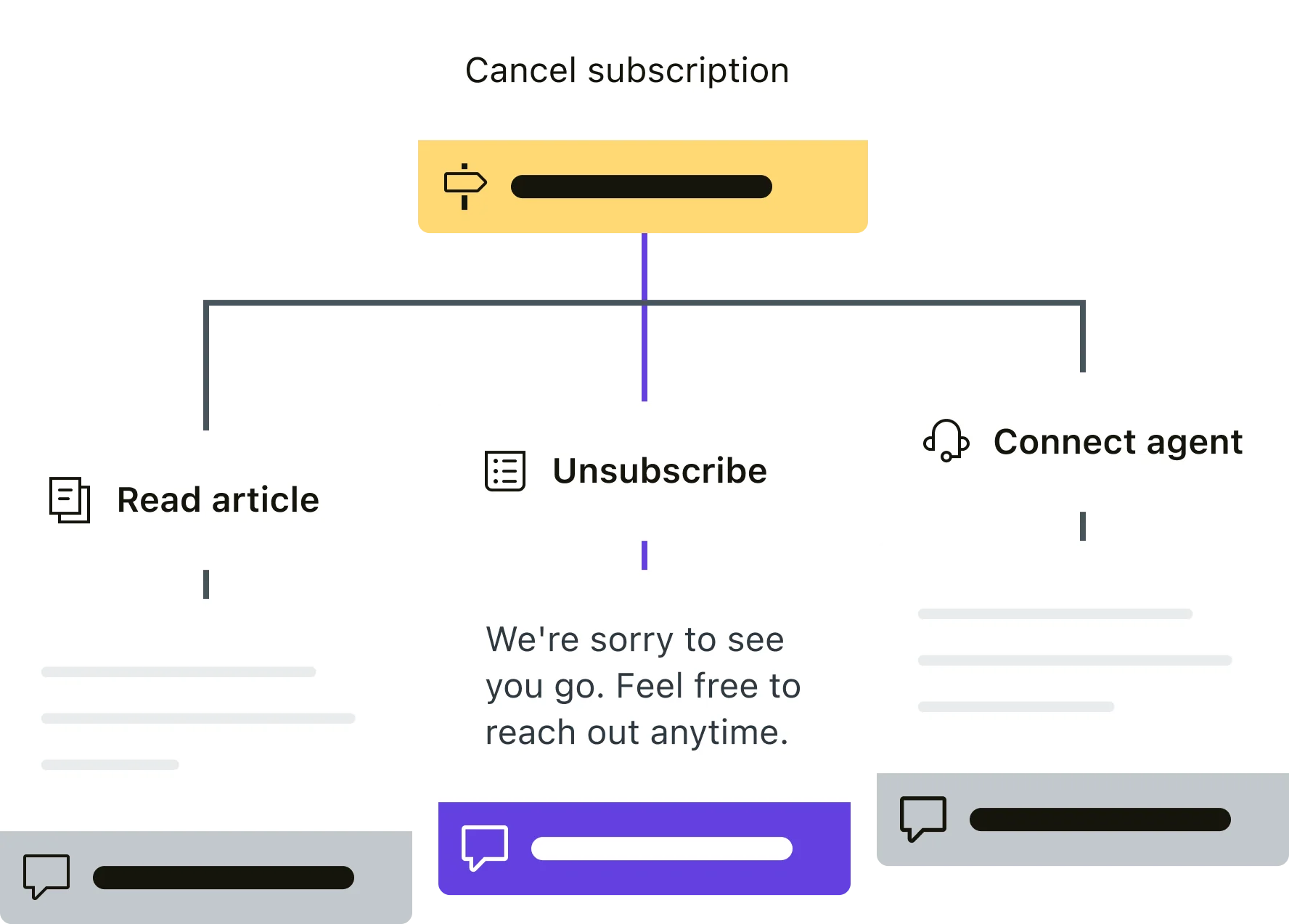
The bot-building experience also differs. Zendesk's Advanced agents use a no-code dialogue/flow builder to script escalation paths, which is powerful but a recurring punching bag in r/Zendesk threads ("the most annoying interface in the world," as one flow-builder comment put it).
The deeper issue both share: the AI is only as good as the knowledge behind it, and it tends to misclassify the complex tickets that matter most. A SaaS support engineer described testing AI in Freshdesk and hitting the same wall teams hit in Zendesk:
"We tested an ai integration in freshdesk and had almost the exact same experience. it worked for very simple tickets but anything slightly complex got misclassified. agents ended up spending more time fixing errors than before, so we had to rethink our approach."
u/Timely_Aside_2383, r/AiAutomations
This is why the AI agent vs rule-based chatbot distinction matters, and why being able to test on real historical tickets before going live is so valuable. Neither native AI lets you do that out of the box.
Pricing: what each actually costs a SaaS team
Let's lay out the full tables, then do the math that the sticker prices hide.
Freshdesk pricing
| Plan | Price (annual) | Built for |
|---|---|---|
| Growth | $19/agent/month | Small teams: ticketing, shared inbox, customer portal |
| Pro (most popular) | $55/agent/month | Custom portals, advanced ticketing, routing, reporting |
| Enterprise | $89/agent/month | Audit logs, approval workflows, skills-based routing |
Plus Freddy: 500 free AI Agent sessions on Pro/Enterprise, then $49 per 100 sessions; Freddy AI Copilot is a separate per-agent add-on. Freshchat and Freshcaller carry their own pricing.
Zendesk pricing
| Plan | Price (annual) | Built for |
|---|---|---|
| Support Team | $19/agent/month | Email/ticketing basics only |
| Suite Team | $55/agent/month | First tier with AI Agents and knowledge base |
| Suite Professional | $115/agent/month | Advanced automation, AI insights |
| Suite Enterprise + Copilot | Contact sales | Governance, full Copilot, generative voice |
Plus Copilot at $50/agent/month, automated-resolution overage billed monthly, and optional $50/agent add-ons for Workforce Engagement and Contact Center.
The worked example that matters
Take a SaaS team of 10 agents handling decent volume on Zendesk Suite Professional. The base is 10 x $115 = $1,150/month. Add Copilot at 10 x $50 = $500. Then layer AI overages: a few thousand resolved conversations a month at $1.20-$1.50 each, and you're quickly into several thousand dollars of AI fees on top. Zendesk's own framing is that AI cost can run 2-3x the base subscription once everything stacks.
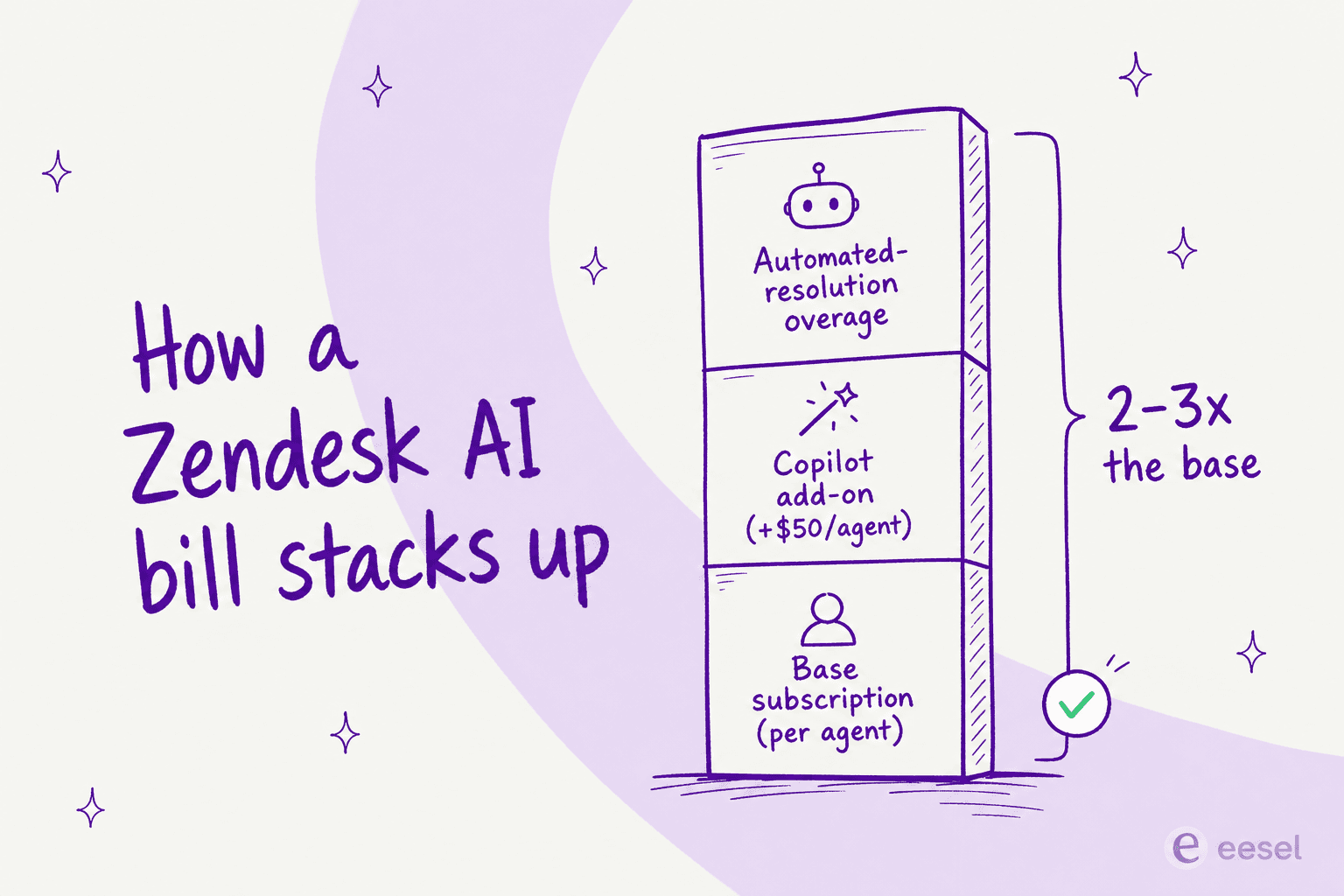
Freshdesk's stack is lower, but its session packs expire monthly, so you either over-buy or get throttled. The shared problem is unpredictability: both meters move with volume in ways that are hard to forecast, and Zendesk's lack of a spend cap means a holiday traffic spike lands as a surprise invoice. For a SaaS team trying to model cost-per-ticket cleanly, that's the real pain, more than any single line item. (If you want to sanity-check the Zendesk side specifically, the Zendesk AI pricing calculator walks through it.)
What real users actually say
Pulling the sentiment together from across Reddit and the review sites:
- Both are well-rated as helpdesks. Zendesk sits at 4.3/5 across 6,837 G2 reviews; Freshdesk at 4.4/5 across ~3,750. The ticketing fundamentals aren't where complaints live.
- The AI is where the frustration concentrates. Zendesk's per-resolution billing is the dominant 2026 complaint. The most-quoted line on r/Zendesk is blunt:
"We stopped using it because ARs are a rip off, and it's a rushed product to get into the AI hype."
u/OGShakey, r/Zendesk
- Auto-mode AI burns trust fast. A pattern across both tools: teams turn on full auto-reply, CSAT dips, and they roll back to assist mode. As one operator described it: "it started giving confident but wrong answers. CSAT dipped quick. What worked better for us was using it as an agent assist." That's the ticket-deflection reality most SaaS teams land on.
The takeaway isn't "AI doesn't work." It's that native AI from either vendor needs careful tuning, a clean knowledge base, and a way to test before you trust it, and the billing should reward resolutions you actually got, not punish volume spikes.
So which should a SaaS team pick?
Here's our take after living in the research.
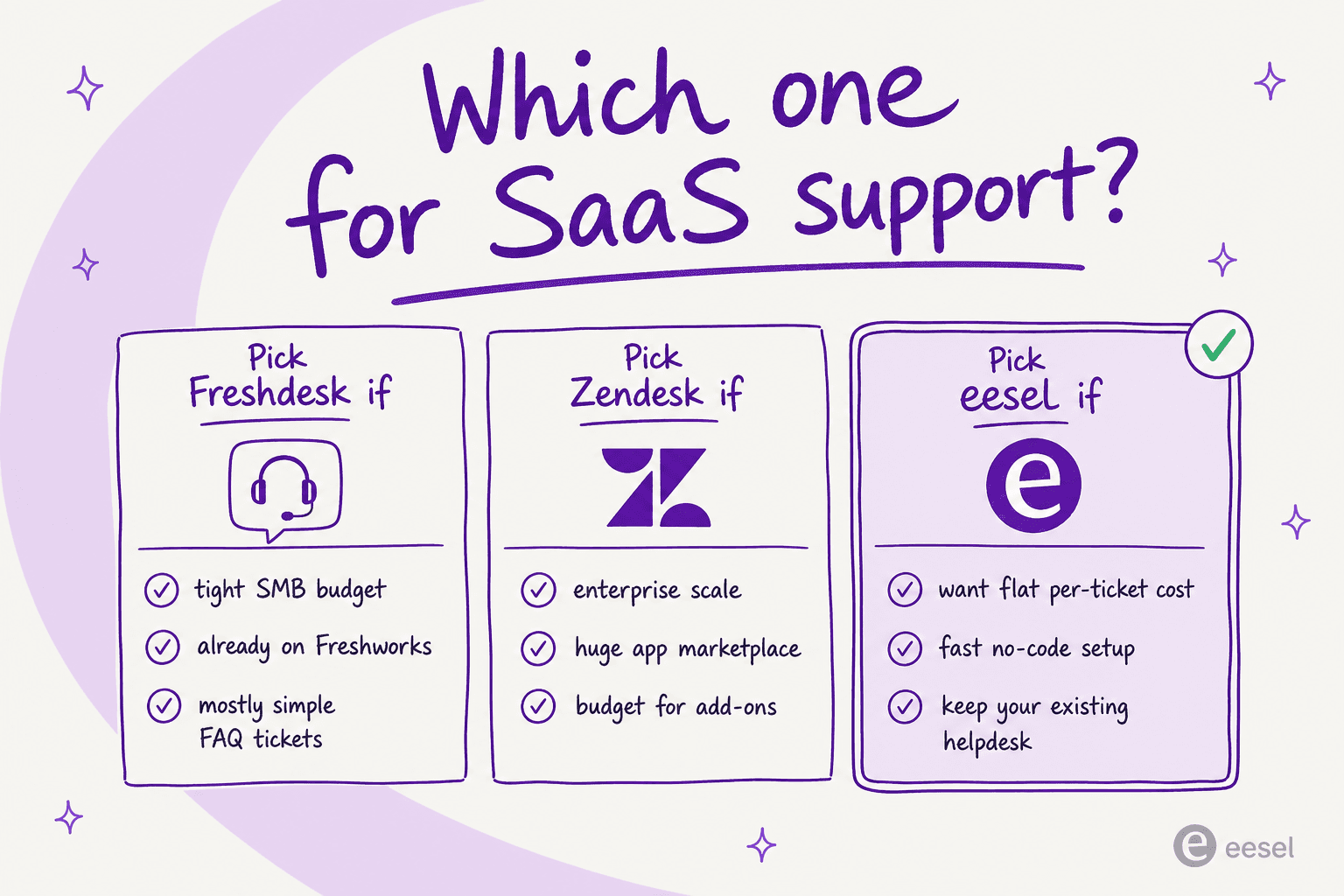
Pick Freshdesk if you're an SMB or early-stage SaaS team, budget-conscious, with mostly simple tickets, or you're already in the Freshworks ecosystem. It's the better value and the gentler learning curve. Start here unless you have a specific reason not to.
Pick Zendesk if you're mid-market or enterprise, need a deep app marketplace and serious governance, have a dedicated ops person to tune the AI, and have budget for the add-ons. It's the more capable platform; just go in clear-eyed about the total cost and the per-resolution meter.
But there's a third move most comparisons miss: treat the helpdesk and the AI as separate decisions. The ticketing system you pick and the AI that resolves tickets don't have to come from the same vendor. If the native AI is too expensive, too unpredictable, or too hard to tune, you can keep the helpdesk and bring your own AI layer. That's exactly the gap eesel fills.
Try eesel on top of whichever helpdesk you choose
eesel is an AI agent that runs natively inside Zendesk, Freshdesk, and 100+ other tools, so you don't have to migrate to upgrade your AI. It connects in under 30 minutes, learns from your past tickets, help center, and macros, and resolves tier-1 tickets at 85%+ out of the box.
Two things make it fit the pain points above. First, pricing: $0.40 per ticket, no per-seat fee, no platform fee, and a hard spend cap, so a volume spike never becomes a surprise invoice (see the full model). Second, you can simulate the AI on thousands of your real historical tickets before it touches a live customer, so you see the resolution rate and the gaps up front instead of discovering them in production.

It's working for SaaS teams already: Gridwise reported eesel "resolving 73% of our tier 1 requests" in the first month, and Smava runs a fully automated Zendesk agent on 100,000+ tickets a month in German. You can try eesel free, no credit card, and point it at your existing Freshdesk or Zendesk to see the numbers on your own tickets.
Frequently Asked Questions

Share this article

Article by
Alicia Kirana Utomo
Kira is a writer at eesel AI with a Computer Science background and over a year of hands-on experience evaluating AI-powered customer service tools. She focuses on breaking down how helpdesk platforms and AI agents actually work so that support teams can make better buying decisions.