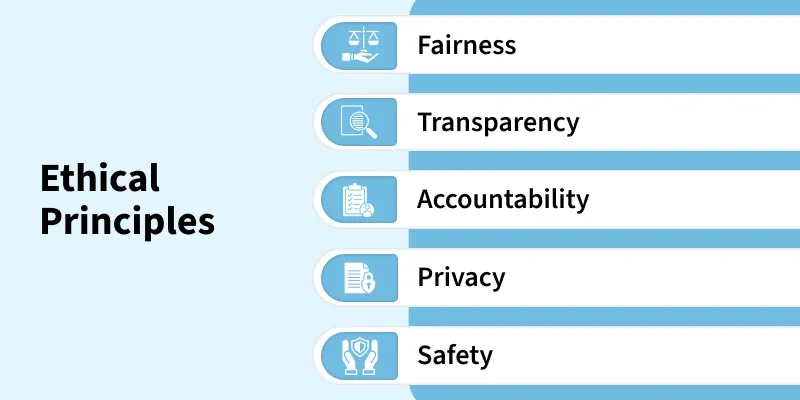
Artificial Intelligence is now used in many important areas across different industries. As these systems grow, ethical rules are needed to prevent misuse, protect user data and avoid unfair decisions. AI ethics provides guidelines to keep AI reliable, responsible and safe.
Guiding Principles: AI ethics consists of rules, values and moral concepts that influence how intelligent systems should be designed and deployed.
Responsible Behavior: Ethical frameworks ensure that models behave safely, avoiding actions that may cause harm in real-world situations.
Fair System Outcomes: These guidelines emphasise equal treatment across different user groups, preventing biased or discriminatory outputs.
Transparency and Clarity: AI ethics encourages developers to make system decisions understandable to users and auditors.
Societal Considerations: Ethical practices evaluate how AI impacts jobs, culture and human rights, ensuring responsible adoption at scale.
Need for AI Ethics
Some of the primary reasons AI ethics is important are:
Reduced Bias: Ethical checks prevent unfair recommendations or predictions, especially in sensitive fields like healthcare or finance.
Explainable Decisions: Users and regulators can understand why an AI system produced a specific output, improving accountability.
Legal Compliance: Proper ethical oversight ensures adherence to privacy laws and emerging global regulations.
User Confidence: Transparent and safe system behavior increases trust, enabling broader acceptance of AI technologies.
Harm Prevention: Ethical safeguards help avoid unintended consequences such as discrimination, security breaches or misinformation.
Practices of AI Ethics
Some of the common practices followed to maintain ethical AI development are:
Data Collection: Datasets should cover diverse demographics and avoid biased sampling. Teams should regularly audit inputs to prevent skewed outcomes.
Regular Bias Testing: Models are evaluated using fairness metrics and controlled test scenarios. This helps us to identify any biased patterns before deployment.
Transparency and Explainability: Systems should provide reasons behind decisions. Clear documentation improves user understanding and accountability.
Privacy-Preserving Techniques: Methods such as anonymization, encryption and differential privacy protect sensitive information. Only essential data is collected and processed.
Human in the Loop Validation: Critical decisions are reviewed or approved by human experts preventing automation errors.
Applications
Some of the applications of AI ethics are:
Healthcare Decision Support: Ensures diagnostic suggestions and treatment plans do not marginalize specific patient groups, improving equitable medical outcomes.
Autonomous Vehicles: Maintains strict safety rules to avoid harmful actions on roads, especially when handling edge-case driving scenarios.
Financial Loan Approvals: Prevents biased loan decisions by monitoring sensitive attributes such as gender, race or location.
Hiring Automation: Promotes unbiased evaluation of applicants by filtering out irrelevant demographic indicators.
Smart Surveillance: Maintains privacy boundaries when gathering public image or behavioral data, preventing unauthorized tracking.
Advantages
Some of the advantages of applying AI ethics are:
Trustworthy Systems: Users gain confidence when automated decisions demonstrate fairness and consistency.