VOOZH about

URL: https://www.geeksforgeeks.org/c-sharp/functions-in-c-sharp/

⇱ Functions in C# - GeeksforGeeks


  • Courses
  • Tutorials
  • Interview Prep

Functions in C#

Last Updated : 22 Apr, 2026

A function is a reusable block of code that performs a specific task. It helps divide a program into smaller parts, making it easier to read and maintain. It can take input (parameters), execute code, and optionally return a value.

  • Promotes code reusability by avoiding repetition
  • Improves readability and structure of the program
  • Makes code easier to manage and maintain

Output
Square of 5 is: 25

Function Syntax in C#

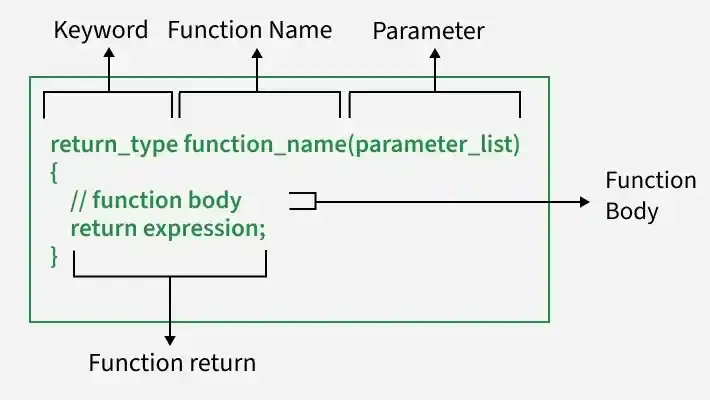
A function in C# follows this general format:

👁 basic-structure-of-a-csharp-function
Basic structure of a C# function.

Each part has a specific role:

  • Return type: Specifies the type of value returned. Use void if no value is returned.
  • Function name: Name used to call the function.
  • Parameter list: Inputs accepted by the function.
  • Function body: Code executed when the function is called.

Function Declaration vs Definition

In C#, functions (methods) are usually declared and defined together inside a class.

Unlike C++, C# does not require separate declaration and definition in different files, methods are typically declared and defined together inside a class.

Calling a Function

A function is used by calling its name followed by parentheses, passing arguments if required.


Output
Welcome to C# Programming!
Multiplication result: 20
  • Greet() is a parameterless method that prints a message.
  • Multiply(int a, int b) takes two integers and returns their product.
  • Functions are called inside Main() using their names.

Types of Functions in C#

Functions in C# can be categorized as:

1. Based on Origin

  • Library Methods: Built-in methods provided by .NET, such as Console.WriteLine() and Math.Sqrt().
  • User-Defined Functions: Functions created by the programmer.

2. Based on Input and Return Type

  • No parameters, no return value
  • Parameters, no return value
  • No parameters, return value
  • Parameters and return value

Note: Choosing the correct type of function improves code readability and flexibility. Functions help in reusing code and organizing large programs efficiently.

Comment
Article Tags:
Article Tags:

Explore