|
VOOZH | about |
|
VOOZH | about |
The CSS :has() pseudo-class is a relatively new feature that allows developers to select elements based on their children. It is a powerful tool for more specific and dynamic styling and can be used in conjunction with other pseudo-classes and selectors.
The :has() pseudo-class is used to select parent elements that contain specific child elements. This allows for conditional styling based on the presence or absence of certain children. The :not() pseudo-class can also be used in conjunction with :has() to select elements that do not have certain children.
Syntax:
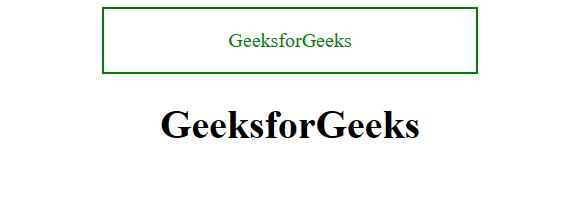
:has()This example selects all div elements that have a p element as a child and applies a specific style to them.
Output:
This example selects all div elements that do not have a p element as a child and applies a specific style to them.
Output:
The :has() pseudo-class in CSS is a highly useful addition for developers looking to apply styles conditionally based on the presence of child elements. Its ability to work in conjunction with other pseudo-classes and selectors makes it a versatile tool for modern web development. Ensure that the target browsers support this feature to avoid compatibility issues.
The :has() pseudo-class is supported by the following browsers: