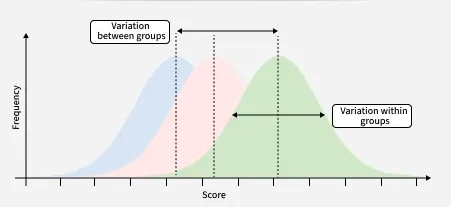
Analysis of Variance (ANOVA) is a statistical technique used to determine if there are significant differences between the average values (means) of two or more independent groups. It works by examining the spread of data within each group compared to the spread between the groups, helping researchers understand if observed differences are likely real or just due to random chance. It is widely used in research, including medicine, to compare treatments, interventions, or conditions.
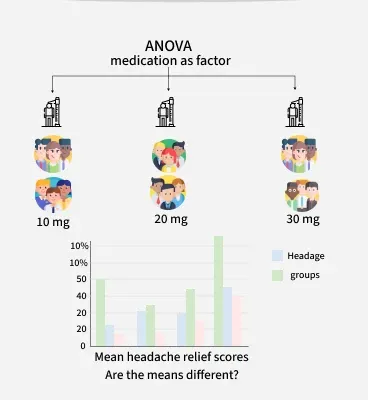
Suppose a doctor wants to test the effectiveness of a new headache medication at three different dosages: 10 mg, 20 mg, and 30 mg. Patients rate their headache relief on a scale of 1 to 10 (1 = no relief, 10 = complete relief). The goal is to determine if the mean relief scores differ significantly between the three dosage groups.
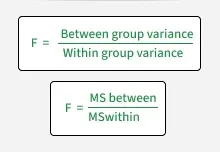
The formula of ANOVA revolves around calculating an F-statistic (or F-ratio). This F-statistic is essentially a ratio that compares the variability between your groups to the variability within your groups.