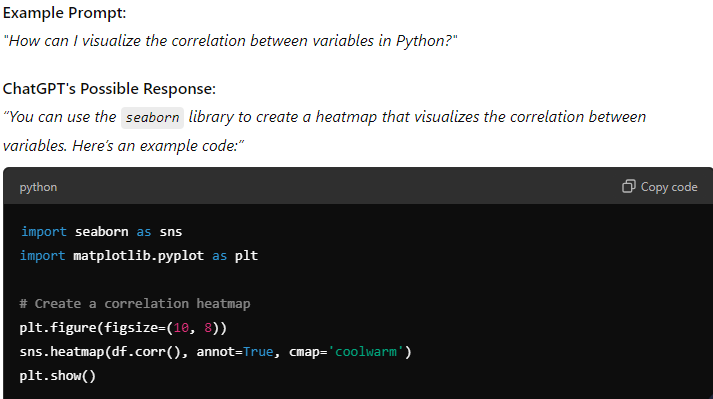
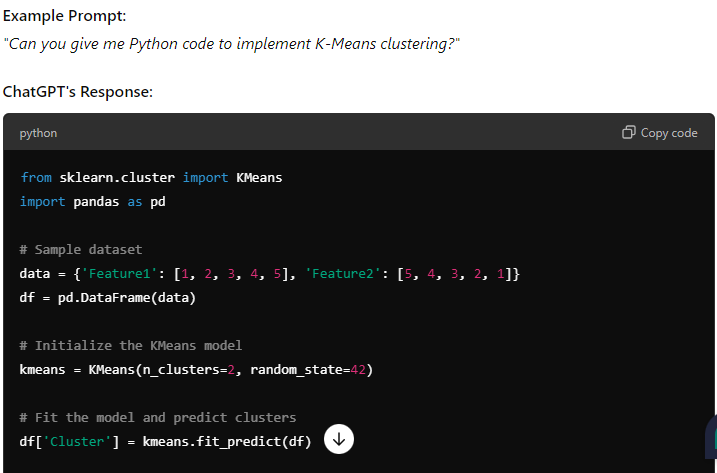
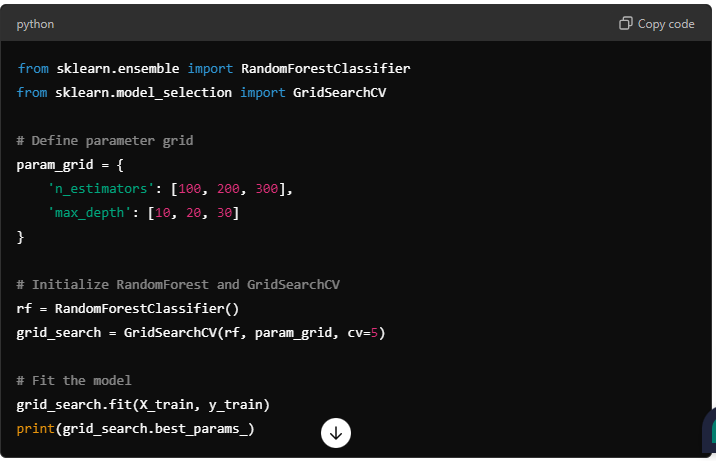
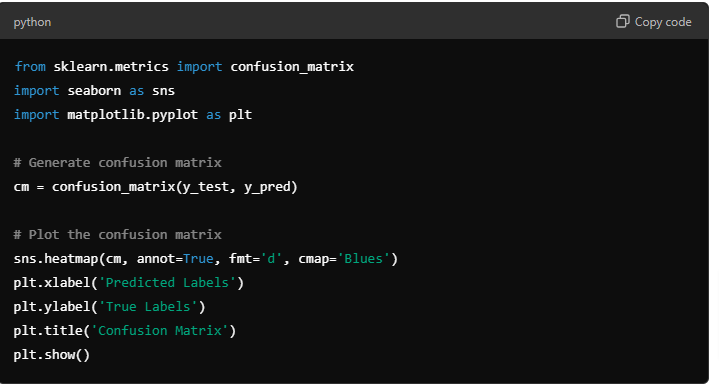
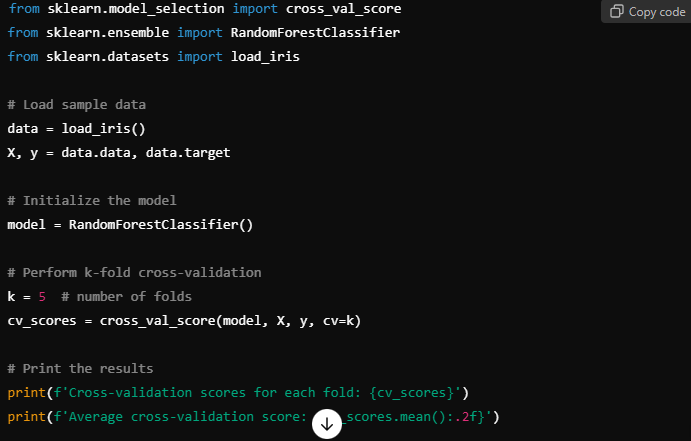
As a data scientist, you can leverage ChatGPT as a valuable tool to streamline various tasks, enhance productivity, and generate insights more efficiently. Whether you're cleaning data, developing models, or reporting results, ChatGPT offers ways to automate and enhance your workflow. ChatGPT, a large language model developed by OpenAI, has advanced capabilities beyond text generation. As a data scientist, you can utilize ChatGPT to accelerate various aspects of your work. From assisting in coding tasks to generating insights from data, ChatGPT can transform your daily routine.
In this article, we will explore the different areas where ChatGPT can assist data scientists, from data preprocessing to model building, evaluation, and collaboration.
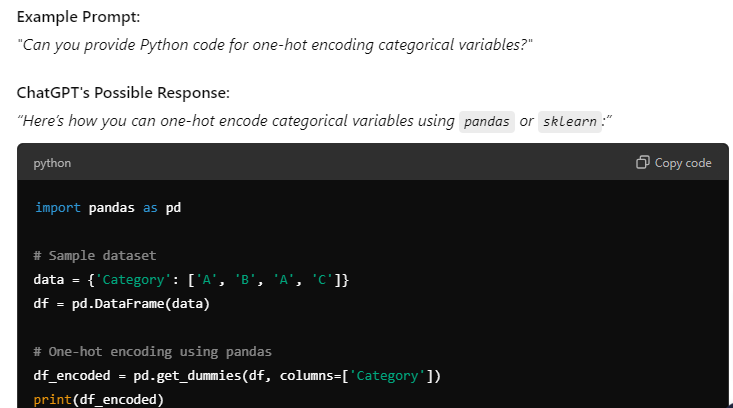
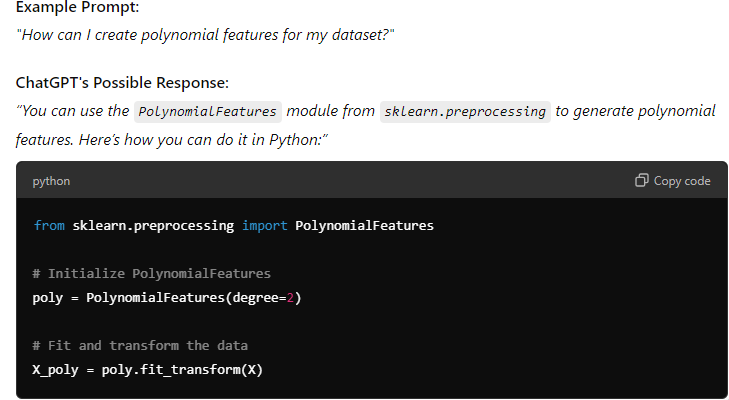
Data transformation tasks such as encoding categorical variables or scaling numeric features can also be automated with the help of ChatGPT. You can prompt it to:
ChatGPT for Data Wrangling and Feature Engineering
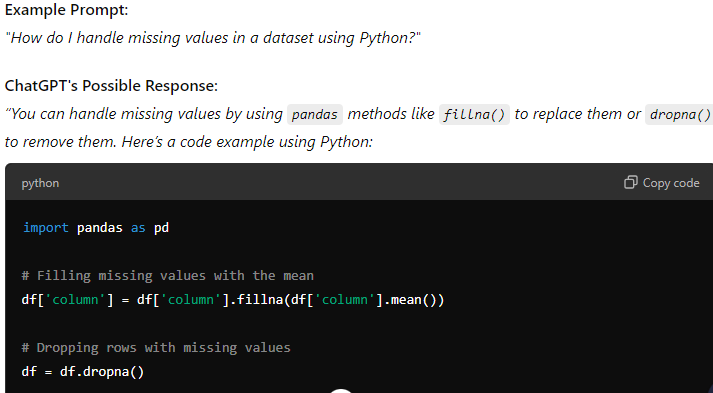
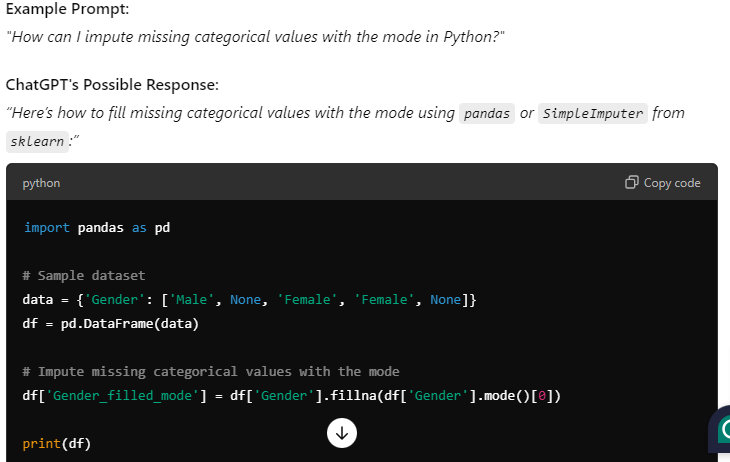
Handling Missing Data
Cleaning and imputing missing values is a crucial step in data wrangling. ChatGPT can provide various strategies and corresponding code to address missing data. For instance, it can:
Generate code for imputing missing values based on statistical methods or machine learning models.
Help create pipelines that handle missing data efficiently.
Automatically generate docstrings for your functions and classes.
Provide explanations for complex code segments, making it easier for others to understand.
Report Writing
ChatGPT can generate sections of reports summarizing data analysis results. It can:
Produce text summaries of findings, key metrics, and visualizations.
Help write comprehensive project reports, explaining model results and implications.
ChatGPT for Collaboration and Knowledge Sharing
Explaining Concepts to Non-Technical Stakeholders
Data scientists often need to present findings to non-technical stakeholders. ChatGPT can help:
Translate complex statistical or machine learning concepts into simple, easy-to-understand language.
Draft concise explanations that make it easier to communicate insights.
Conclusion
Incorporating ChatGPT into your data science workflow can significantly enhance productivity, streamline processes, and foster creativity. By leveraging its capabilities in data exploration, preprocessing, model development, evaluation, and collaboration, data scientists can focus more on analysis and less on repetitive tasks. As AI continues to evolve, tools like ChatGPT will play an increasingly vital role in empowering data scientists to achieve more with less effort. Embrace this innovative technology and take your data science projects to new heights!