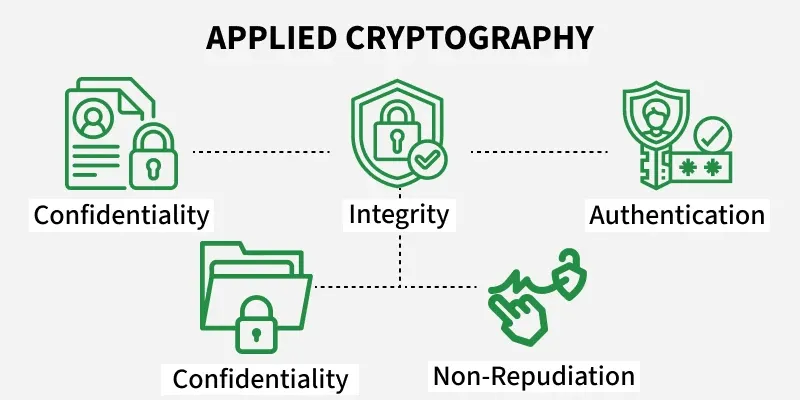
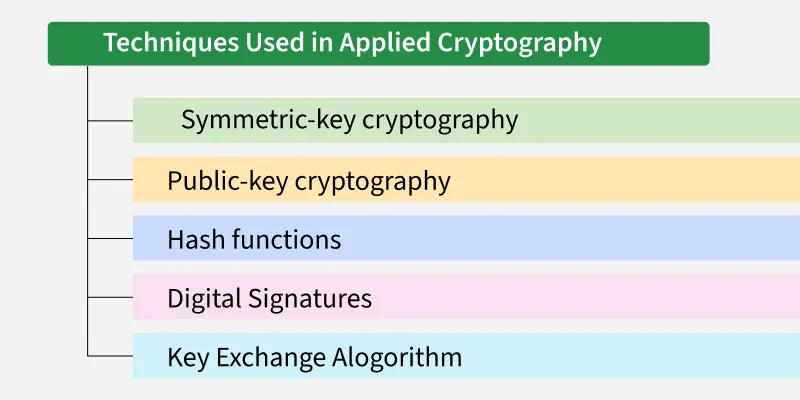
Applied Cryptography is the use of cryptographic techniques to secure real-world systems, data, and communications. It ensures privacy, integrity, authenticity, and trust in digital environments.
Protects data from unauthorized access
Ensures information is not altered
Confirms the sender’s identity
Prevents denial of sending information
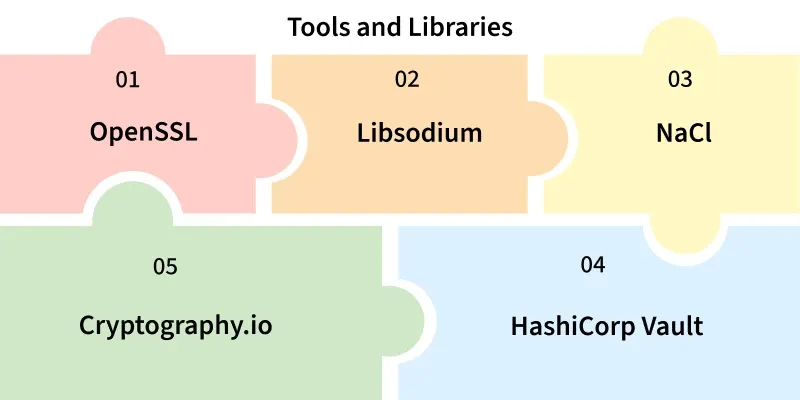
Bridges theoretical cryptography with real applications
Used for building secure apps, APIs, authentication systems
Maintained by Python Cryptographic Authority (PyCA)
Real-World Applications of Applied Cryptography
Here are some of the most common real-world applications
1. Online Banking and E-Commerce
Every time you make an online purchase or use a mobile banking app, applied cryptography helps secure your payment information and transaction details.
The use of applied cryptography ensures secure online transaction
2. Cryptocurrencies and Blockchain
The security and integrity of cryptocurrencies like Bitcoin and Ethereum are built on a foundation of cryptographic principles.
Hash functions are used to create the chain of blocks, and digital signatures are used to authorize and verify every transaction, ensuring a decentralized and tamper-proof ledger.
3. Internet of Things (IoT)
As more devices become connected, from smart thermostats to security cameras, cryptography is essential to secure the communication between these devices and their servers.
Prevents unauthorized access and data tampering.
4. Digital Signatures
Used for documents and software, a digital signature proves the sender's identity and ensures the data has not been altered since it was signed.
This is crucial for legal documents, software updates, and financial transactions.
5.Full Disk Encryption
Operating systems like Windows (BitLocker) and macOS (FileVault) use symmetric encryption to encrypt the entire hard drive.
This ensures that if your computer or phone is lost or stolen, the data on it remains unreadable to an unauthorized person.
6. Password Hashing
Websites and services don't store your actual password. Instead, they store a cryptographic hash of it.
When you log in, they hash the password you enter and compare the two hash values.
If they match, you're granted access.
This protects your password even if the company's database is breached.