|
VOOZH | about |
|
VOOZH | about |
Business logic is the part of an application that controls how its features and processes work according to real-world rules. It decides what should happen, and in what order.
For example, in an online shopping site, business logic ensures that:
When business logic is implemented poorly, attackers can exploit flaws to bypass intended rules. Unlike technical vulnerabilities such as SQL Injection, these issues arise because developers fail to anticipate how users (or attackers) might misuse a feature. As a result, the application may allow fraud, financial loss, or unauthorized access.
If an application does not strictly enforce the correct sequence of actions, an attacker may bypass required steps and directly access later stages of the workflow.
Example:
An attacker may directly navigate to the ‘order confirmation’ page without completing the payment process, thereby obtaining goods or services without making a valid transaction.
Applications often rely on parameters passed through URLs or forms. If these parameters are not properly validated, attackers can alter them to gain unfair advantages.
Example:
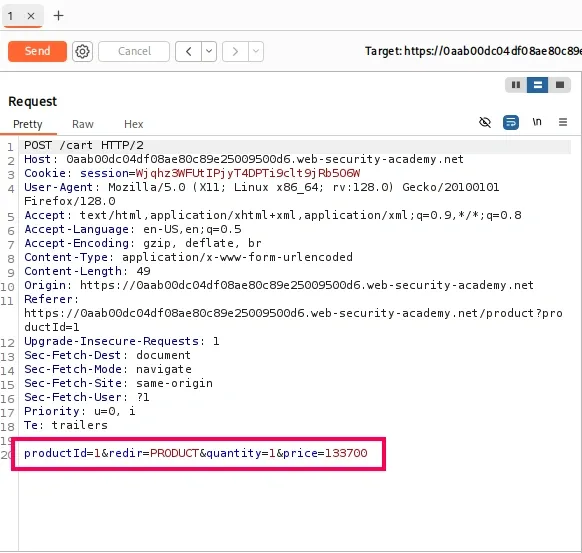
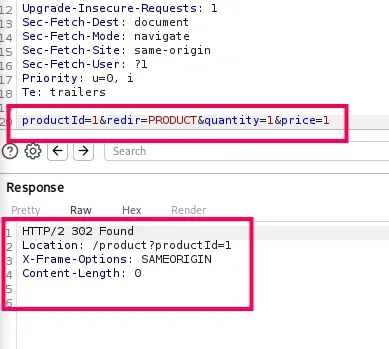
In an online store, the price of an item may be sent in the request as price=100. An attacker could modify this value to price=1, effectively reducing the purchase cost and committing fraud.
If role-based access controls are not properly implemented, users may gain access to resources or functionalities beyond their intended permissions.
Example:
A regular user might change the URL from /user/profile to /admin/dashboard. Without strong access checks, this action could grant the user administrative privileges, allowing them to view or modify sensitive information.
Some applications fail to handle simultaneous or repeated requests correctly. Attackers can exploit this by sending multiple requests at the same time to manipulate system behavior.
Example:
An attacker may submit two requests simultaneously to redeem the same promotional coupon. Due to the race condition, the system processes both requests, giving the attacker double the discount or benefit.
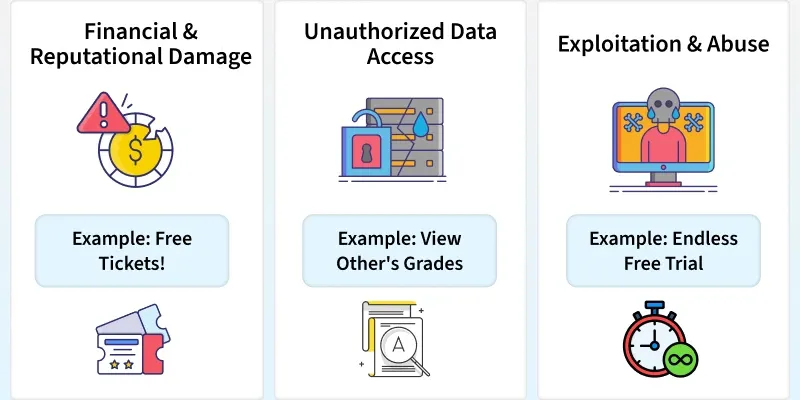
Business logic vulnerabilities can lead to various impacts; a few of the most significant are outlined below:
Organizations can suffer direct financial losses when attackers exploit weak business logic. This may include fraudulent transactions, bypassed payments, or abuse of system functions. In addition, repeated exploitation can damage the organization’s reputation, leading to loss of customer trust.
Example:
A ticketing platform that fails to enforce proper payment validation might allow attackers to book tickets without completing payment. This not only results in revenue loss but also affects customer confidence if legitimate users face booking issues.
Business logic flaws can unintentionally expose sensitive information if proper access controls are not enforced across workflows. This may result in violations of data protection regulations and compromise user privacy.
Example:
A student portal where the system only relies on the studentID parameter in the URL could be exploited. By modifying this value, one student might gain access to another student’s grades or personal details, breaching confidentiality.
Attackers often take advantage of weakly designed features such as discounts, trial periods, or reward systems. These loopholes can be abused repeatedly, causing long-term financial harm and resource misuse.
Example:
In a subscription service, an attacker may repeatedly alter request parameters to reset the trial period, effectively enjoying the service for free without ever upgrading to a paid plan. This not only results in financial loss but also distorts usage metrics for the business.
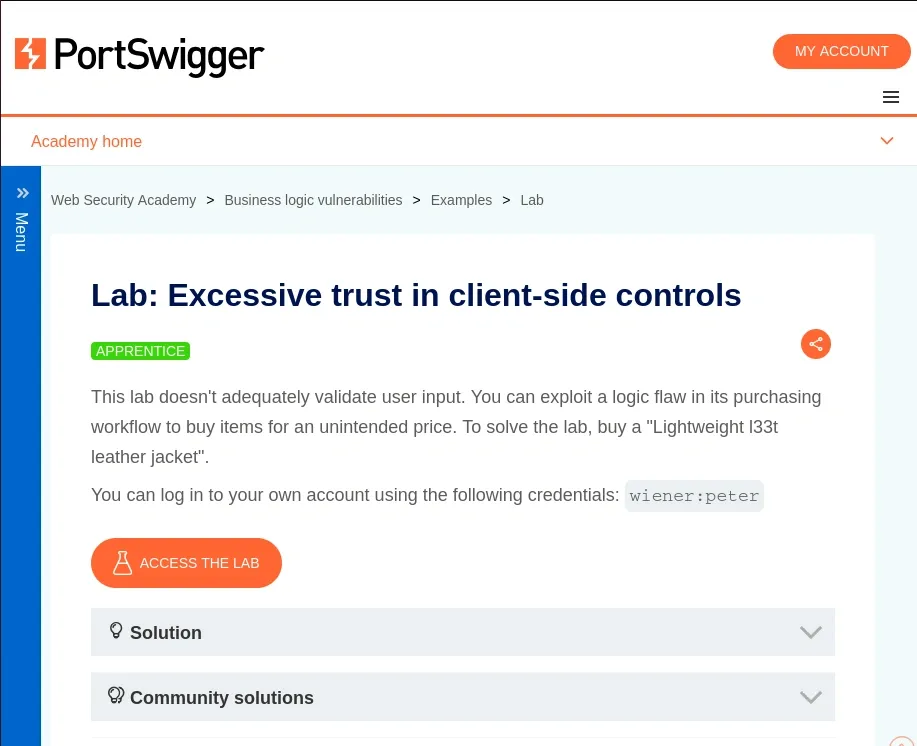
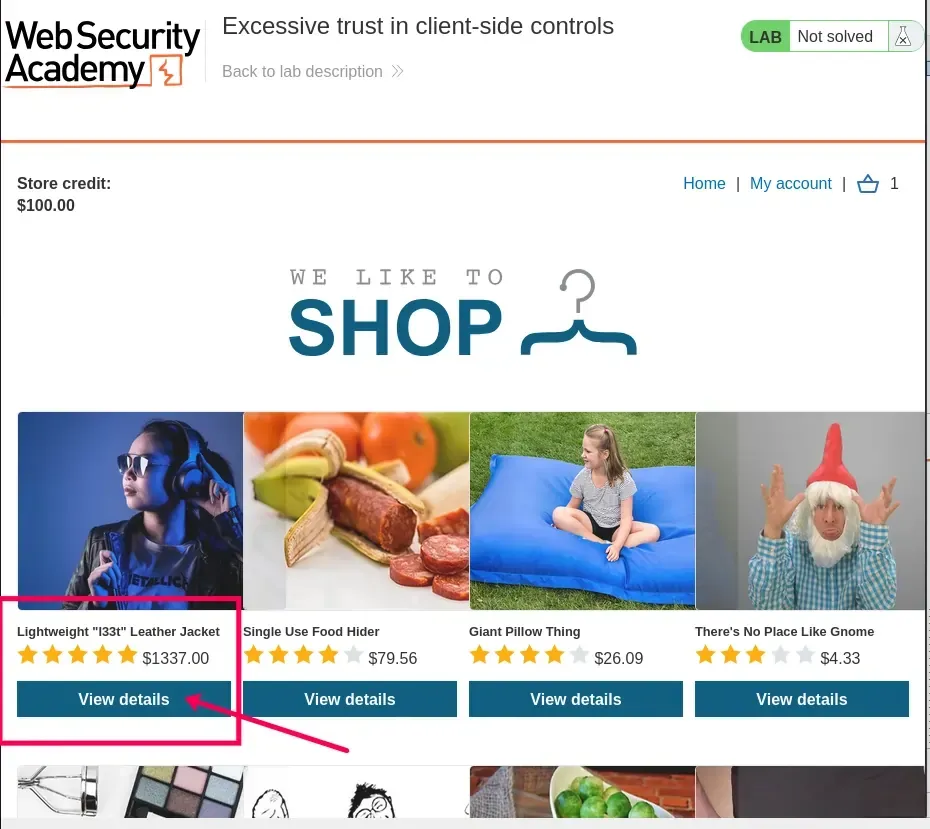
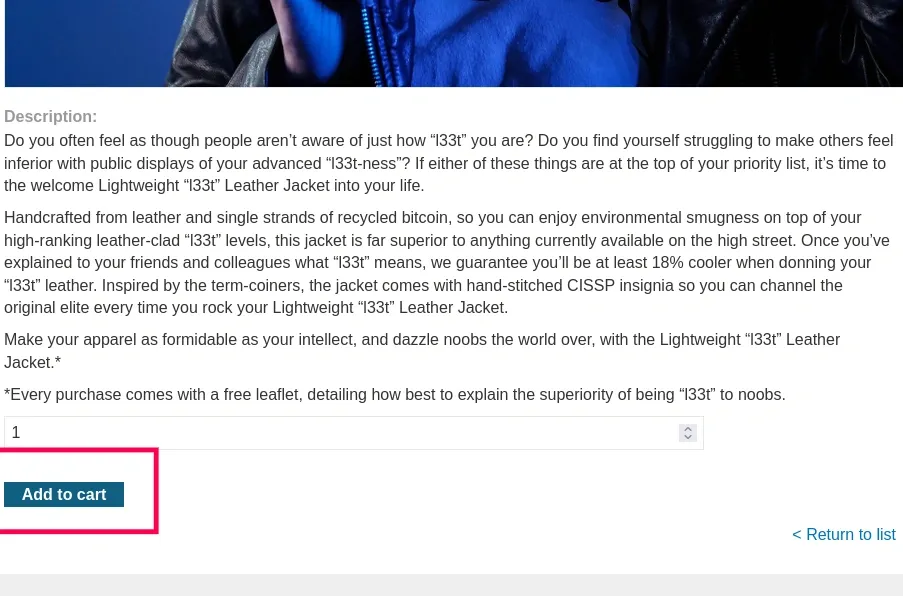
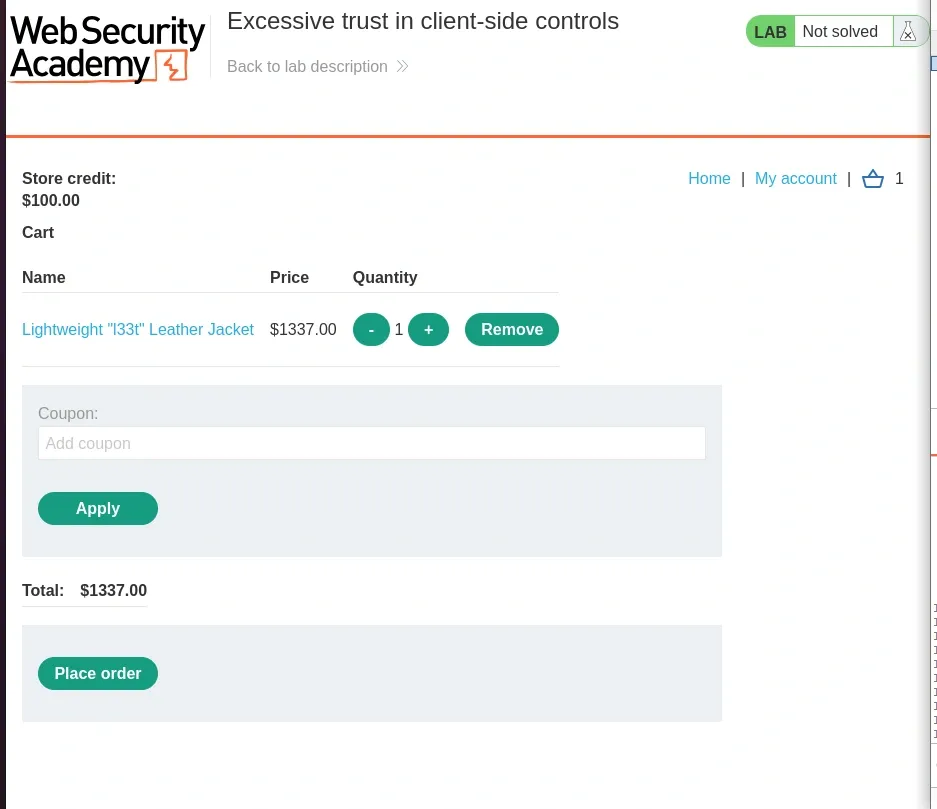
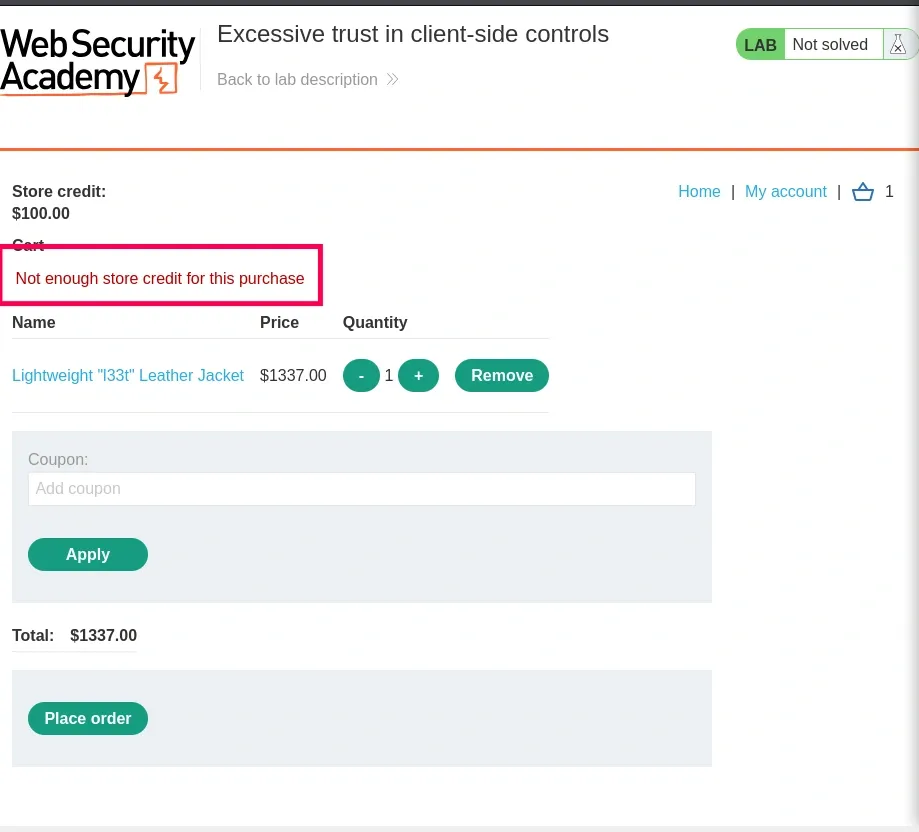
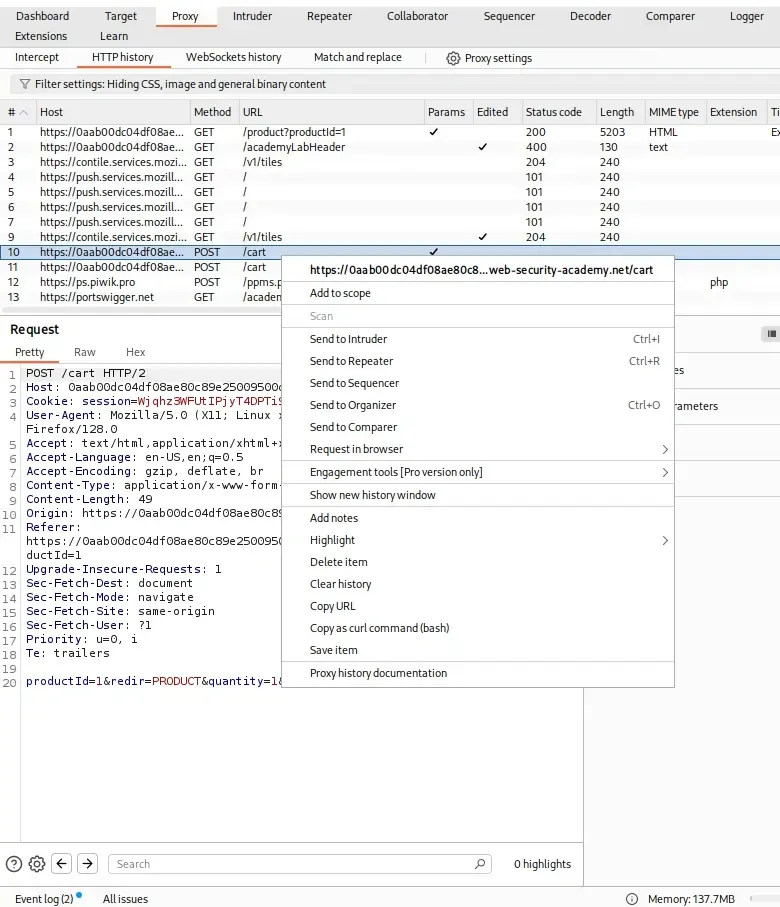
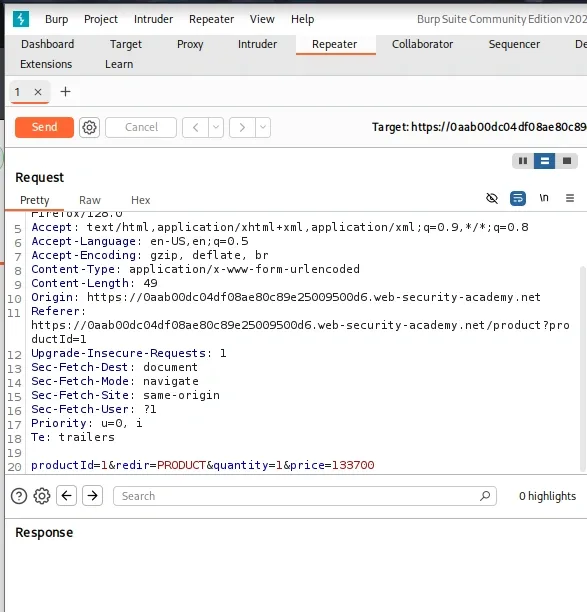
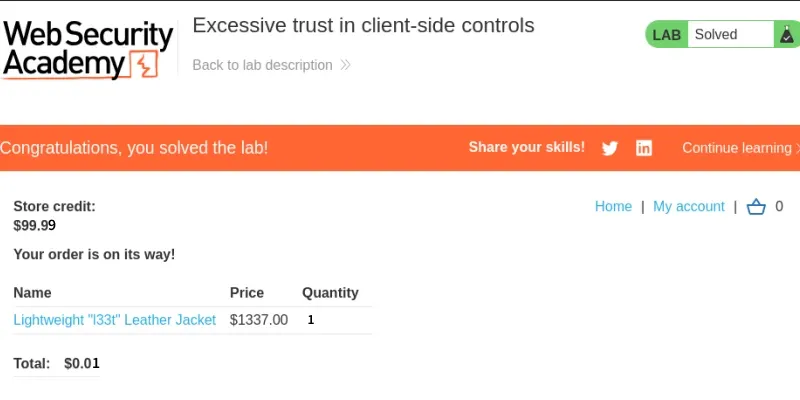
The following is a step-by-step hands-on exercise demonstrating a business-logic vulnerability caused by excessive reliance on client-side controls.
Ensure Burp Suite is running and configured to intercept HTTP traffic from your browser. This typically involves setting your browser's proxy to 127.0.0.1:8080 and ensuring Burp's intercept is off initially for normal browsing.
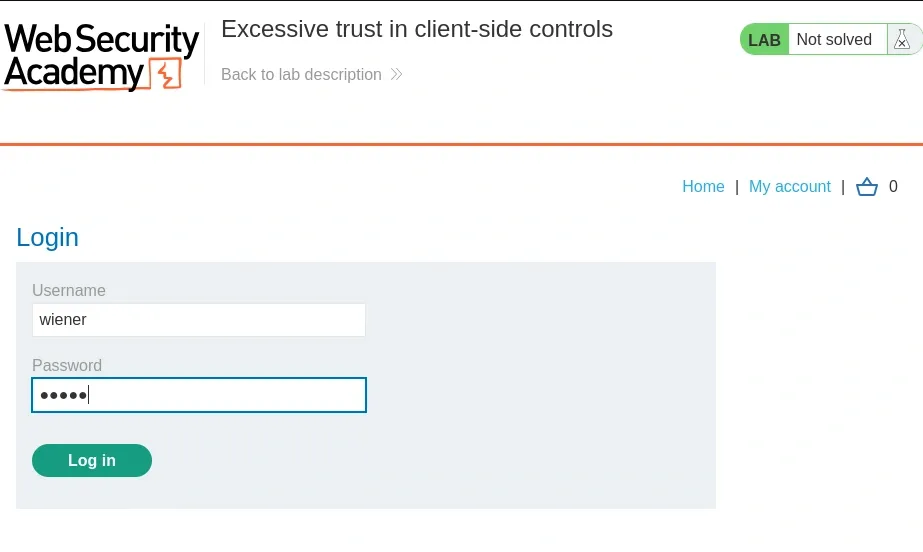
Use the provided credentials to log in to your account:
Username: wiener
Password: peter