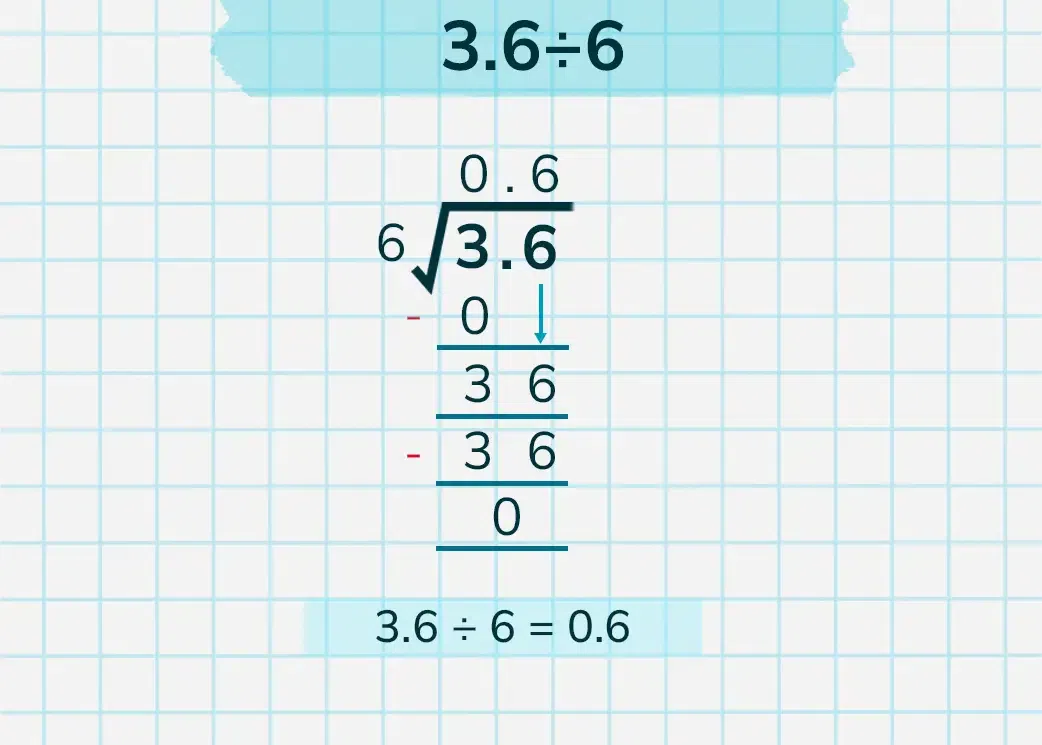
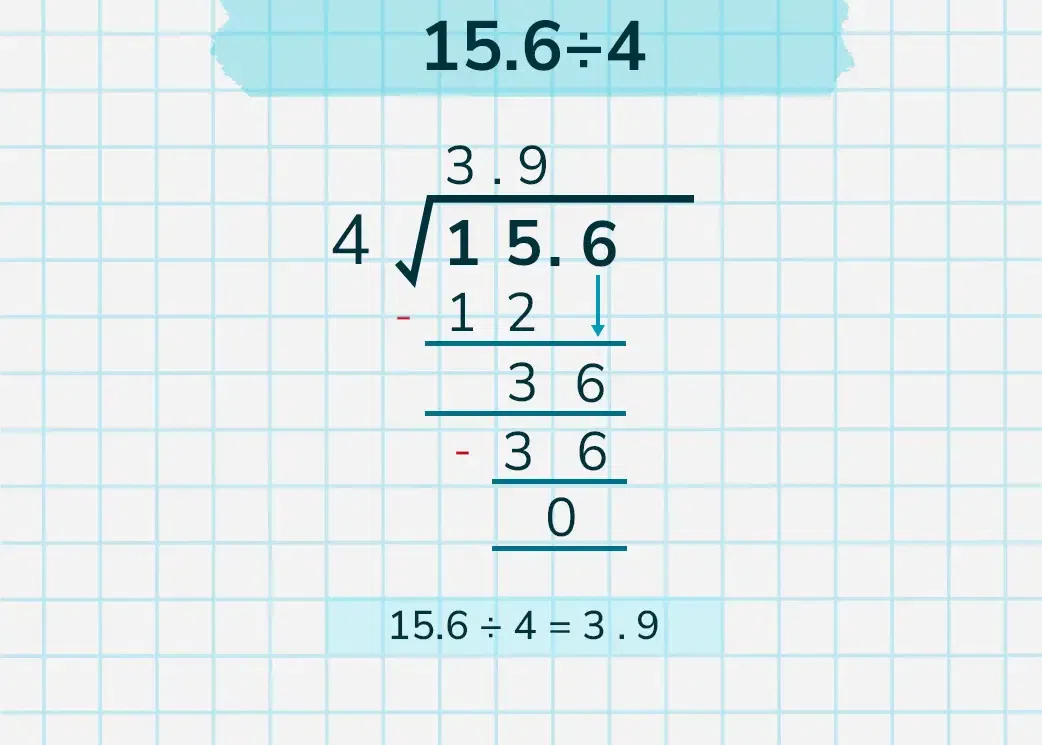
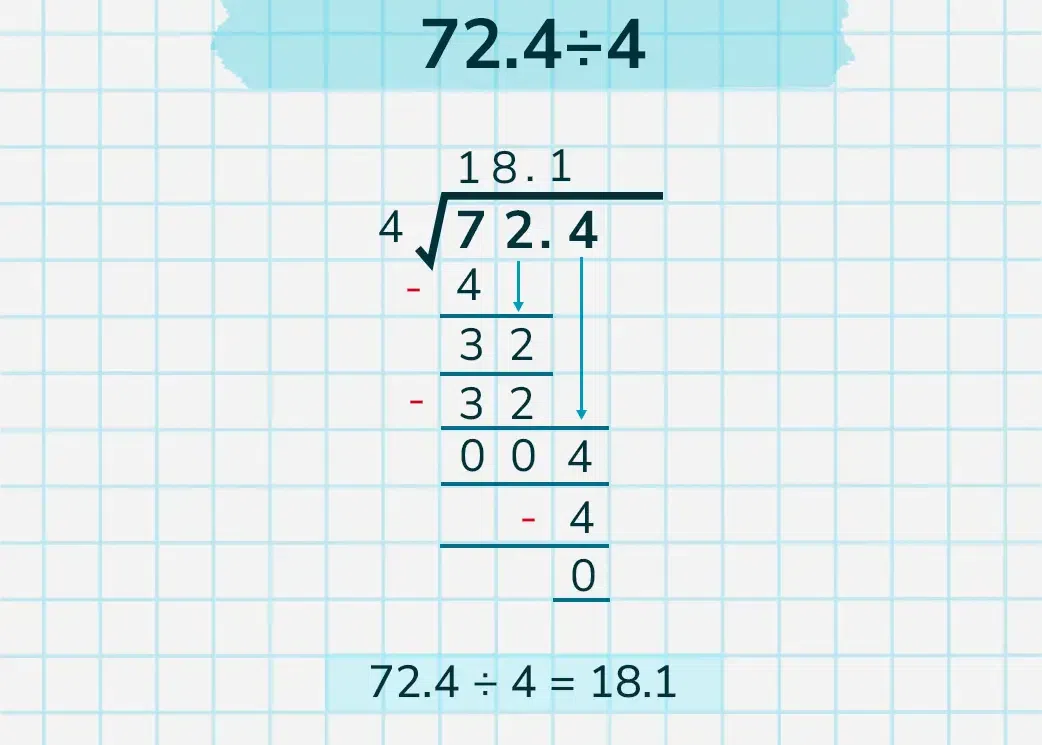
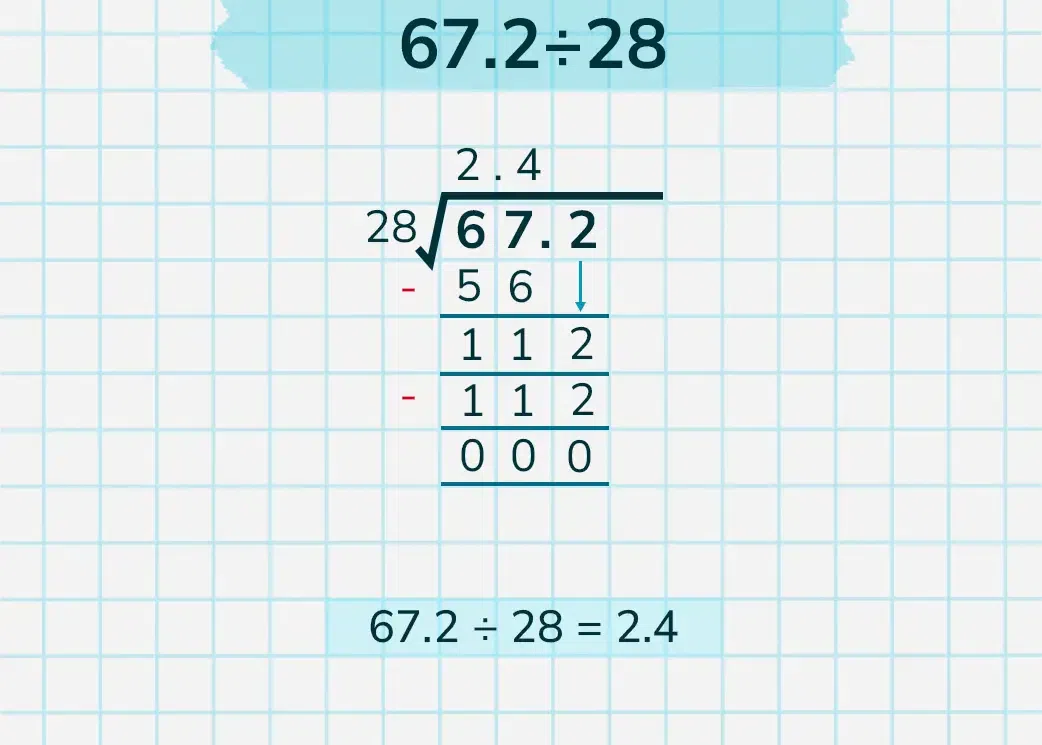
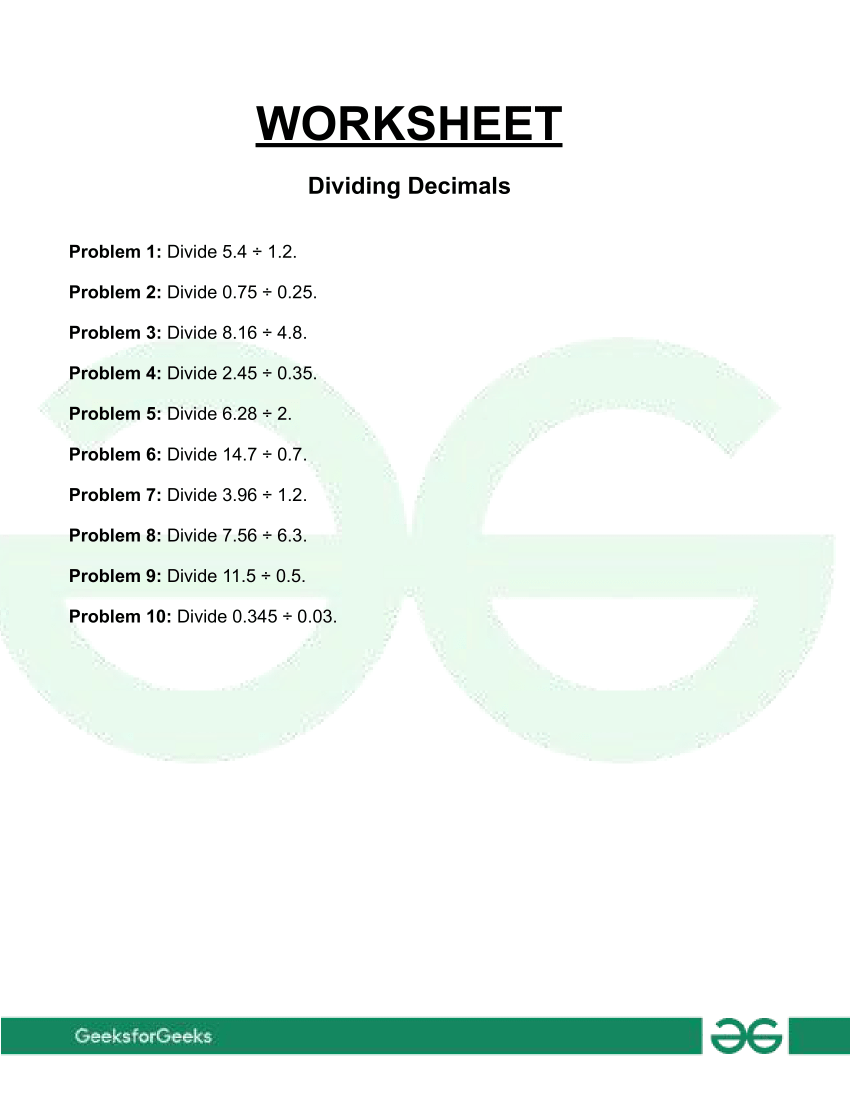
Dividing decimals involves a process similar to dividing whole numbers, but you need to account for the decimal points. The key is to eliminate the decimals by moving them out of the divisor (the number you're dividing by) and sometimes from the dividend (the number you're dividing) as well.
In this article, we will be going to solve problems based on dividing decimals.
What are Decimals?
A decimal is a way of representing numbers that are not whole, using a decimal point to separate the whole number part from the fractional part. Decimals are based on the number 10, which means each place value after the decimal point represents a fraction of 10, such as tenths, hundredths, thousandths, etc.
Parts of Decimal
Whole number part: The digits to the left of the decimal point.
Fractional part: The digits to the right of the decimal point, which represent values less than 1.
For example, in the decimal number 12.34:
The whole number part is 12.
The fractional part is 0.34, which is 34/100.
How to Divide Decimals?
Step 1: Make the Divisor a Whole Number
If the divisor (the number you're dividing by) has a decimal point, multiply both the divisor and the dividend (the number being divided) by a power of 10 to eliminate the decimal in the divisor. This involves moving the decimal point to the right.
Step 2: Perform Long Division
After making the divisor a whole number, use long division to divide the numbers as you normally would.
Step 3: Place the Decimal Point in the Quotient
Once you've completed the division, place the decimal point in the quotient (the result of the division) in the same position as it was in the dividend.
Solved Examples on Dividing Decimals
Problem 1: Dividing 24.75 ÷ 1.5.
Solution:
Make the divisor a whole number:
Multiply both 24.75 and 1.5 by 10, so the problem becomes: 247.5 ÷ 15