|
VOOZH | about |
|
VOOZH | about |
A circle is a set of all points equidistant from a fixed point called the Centre. It is one of the most fundamental shapes in geometry and is widely used in real-life applications like wheels, clocks, and orbits.
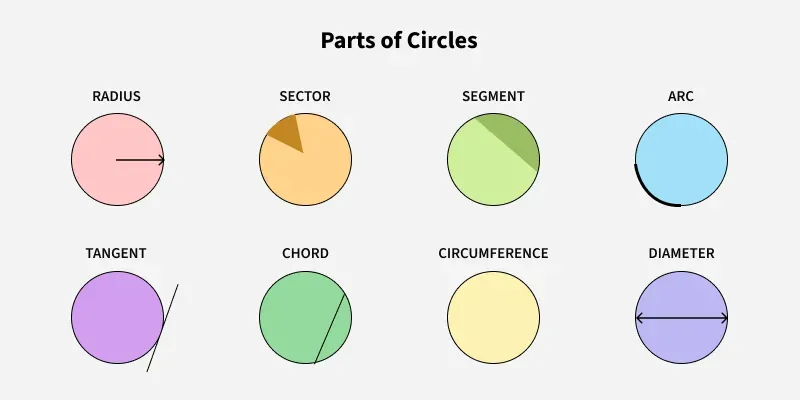
The parts of a circle include the center, radius, diameter, circumference, chord, arc, sector, segment, and tangent.
A circle has several important parts and properties that help describe its structure. Here are the main parts of a circle:
Formula:
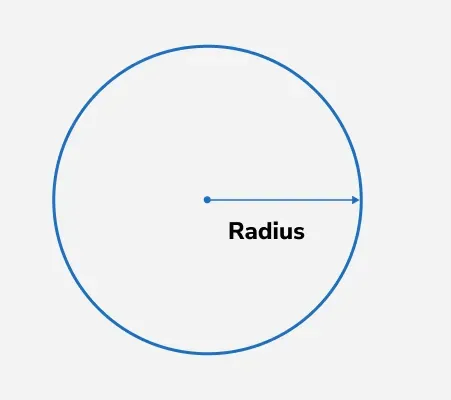
- radius = d / 2 (from Diameter)
- r =
where,
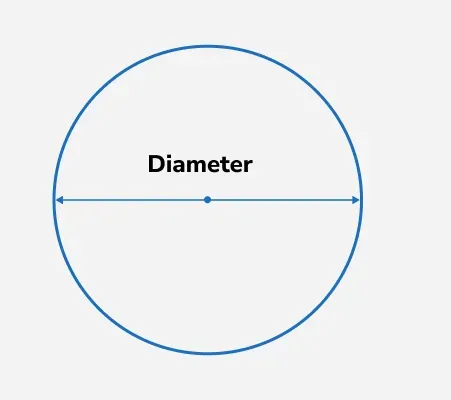
Formula: The diameter of a circle can be calculated through different methods:
- d = 2 r (from radius)
- d = C / 𝞹 (from circumference)
- d = (from area of circle)
Real life-examples include: Wheel rotation, pipe flow rate.
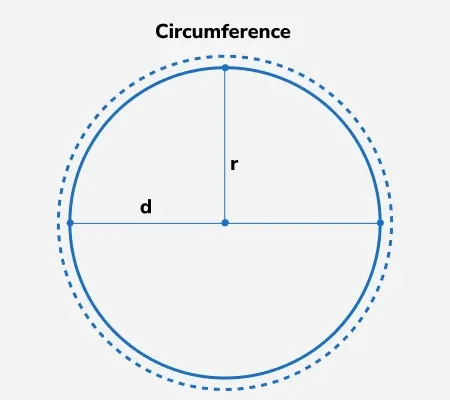
Formula:
C = 2 πr (using the radius)
C = πd (using the diameter)
Real-Life Examples: Measuring circular paths, rotational motion.
Formula:
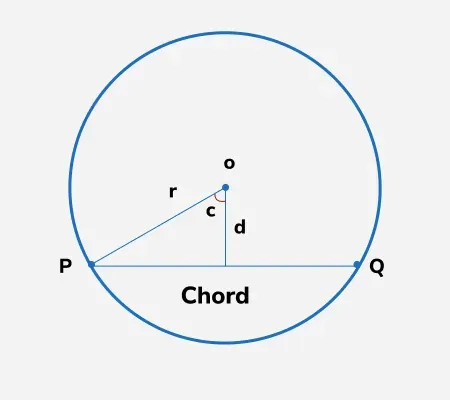
chord length =
where d is the perpendicular distance from the center to the chord (not the diameter).
Formula:
- For circle (x − h)2 + (y − k)2 = r2, the tangent at (x1, y1) is: (x1 - h) (x - h) + (y1 - k) (y - k) = r2
- For circle x2 + y2 = r2, the tangent at (x1, y1 ) is xx1 + yy1 = r2
Formula:
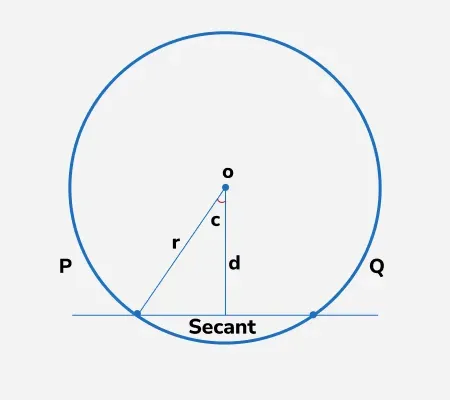
(length of secant) × (its external segment) = (length of the tangent segment) 2
Formula:
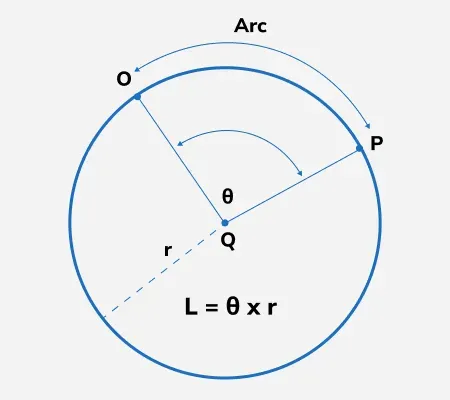
When θ is in radians:
- Arc length = θ × r (used in radians)
When θ\thetaθ is in degrees:
- Arc Length =
Formula:
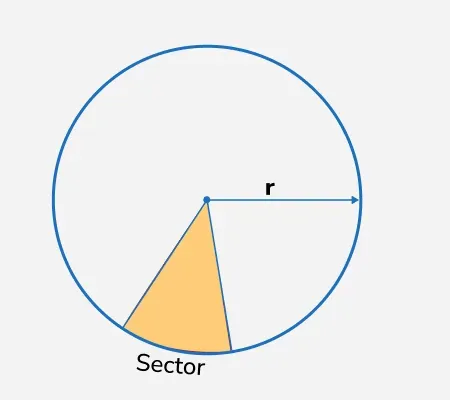
Area of Sector=(θ / π360°) x r2 (when the angle is given)
length of Sector=(θ πr❩ / 180 (when the length is given)
Perimeter of Sector= 2 r + ((θ/ 360) x 2 π r)
Example 1: The radius of circle is 14 meter. Find the area of circle.
Here,
Radius of circle = 14 meter
Area of circle = πr2
Area = π(14)2
Area = 3.14 * 196
Area = 615.44 square meter
Example 2: The circumference of wheel is 600 cm. Find the radius and diameter.
Here,
Circumference of circle = 600 cmFormula for circumference of circle = 2πr
Let us substiute the value of circumference
600 = 2πr
600/2 = 2*3.14*r
300 = 6.28r
r = 300 / 6.28
r = 95.54
Diameter = 2 * Radius
95.54*2
Diameter = 191.08Radius = 95.54
Diameter = 191.08
Example 3: The diameter of sector is 30 cm, and the angle of sector is 45°. Find the area of the sector.
Here,
Diameter = 30cm and angle = 45 degreeArea of sector=𝛉 / 360 × 2πr2
=45 / 360 × 2 (15)2
=1/ 8 × 2 π(225)
=225 π / 8A ≈ 225 × 3.1416 /8
A ≈ 706.86 / 8
A ≈ 88.36 cm2Therefore, Area of sector is 88.36 cm2
Example 4: The radius of the arc is 50 cm and the angle substended by the arc is 90 . Find the length of arc.
Here,
Radius of arc= 50 meter
Angle subtend by the arc=90°
Length of arc = 𝛳 / 360 x 2πr
= 90/ 360 x 2π(50)
= 1 /4 x 2 π(50)
= 100π / 4
= 25πLength of arc ≈ 25 × 3.1416 = 78.54 meter
Therefore, Length of arc is 78.54 meter
Question 1:The circumference of wheel is 540 cm. Find the radius and diameter.
Question 2: The radius of circle is 21 meter. Find the area of circle.
Question 3: The radius of sector is 20 cm. The angle subtended by sector is 90°, find the area of the sector .
Question 4: A curved road sign is part of a circle with a radius of 6 meters. The arc of the sign subtends an angle of 75° at the center.
(a) Find the arc length of the sign.
(b) Find the area of the sector representing the curved sign.
Answer Sheet
1) radius = 85.9 , diameter = 171.8
2) 1384.74 m2
2) 3.1416 m2
3) 7.85 m, 23.56 m