|
VOOZH | about |
|
VOOZH | about |
PL/SQL, short for Procedural Language/Structured Query Language, combines SQL capabilities with procedural programming. It supports variable declaration, control flow structures, functions, records, cursors, procedures, and triggers.
PL/SQL features a block structure with optional sections for variable declarations and exception handling. Its execution section handles SQL queries seamlessly. Overall, PL/SQL offers a robust environment for developing database-centric applications with enhanced control and error-handling capabilities.
Sometimes while creating a table we do not have a unique identifier within the table hence we face difficulty in choosing the Primary Key. To resolve such an issue, we’ve to provide unique keys to every record manually, but this is often also a tedious task. So we can use the Auto Increment feature that automatically generates a numerical Primary key value for every new record inserted. To use the auto-increment feature we have to make the auto-increment field with the sequence object which successively generates several sequences.
CREATE SEQUENCE sequence_name MINVALUE 1 START WITH 1
INCREMENT BY 1
CACHE 10;
In the above syntax,
When working with PL/SQL, generating unique IDs for database records can be cumbersome. To streamline this process, two methods are commonly employed: using sequences or triggers.
Table of Content
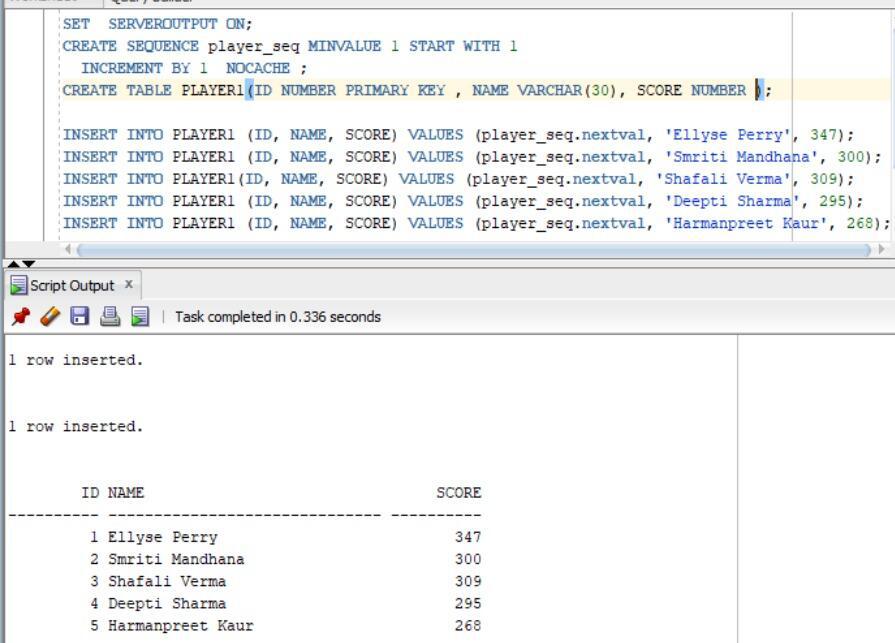
Sequences are objects in PL/SQL that generate unique numeric values. They are particularly useful for auto-incrementing IDs in tables. Here is how you can create and use sequences to achieve auto-incrementing IDs:
CREATE SEQUENCE sequence_name
START WITH 1
INCREMENT BY 1;
Output:
Explanation:
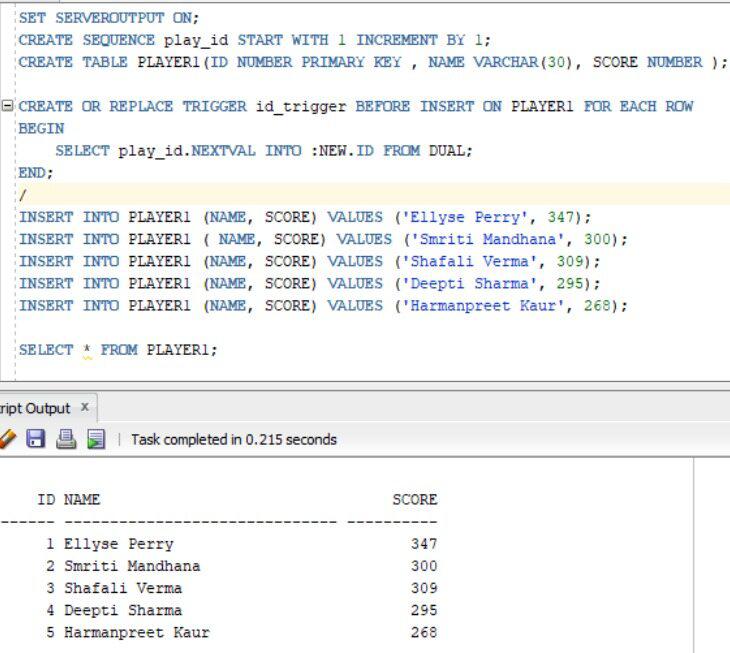
PL/SQL triggers are block structures and predefined programs invoked automatically when some event occurs. They are stored in the database and invoked repeatedly in a particular scenario. To auto increment the ID, we will use BEFORE conditional trigger so that it is activated as the user try to insert the row into the table.
CREATE SEQUENCE sequence_name
START WITH 1
INCREMENT BY 1;

CREATE OR REPLACE TRIGGER trigger_name
BEFORE INSERT ON table_name
FOR EACH ROW
BEGINSELECT sequence_name.NEXTVAL INTO :NEW.ID FROM DUAL;
END;
/
Output:
Explanation:
In conclusion, we explored two methods to auto-increment IDs in PL/SQL tables: using sequences and triggers. Both approaches offer efficient ways to manage unique identifiers and streamline database operations. While sequences offer simplicity and ease of use, triggers provide greater flexibility and control over the insertion process.