|
VOOZH | about |
|
VOOZH | about |
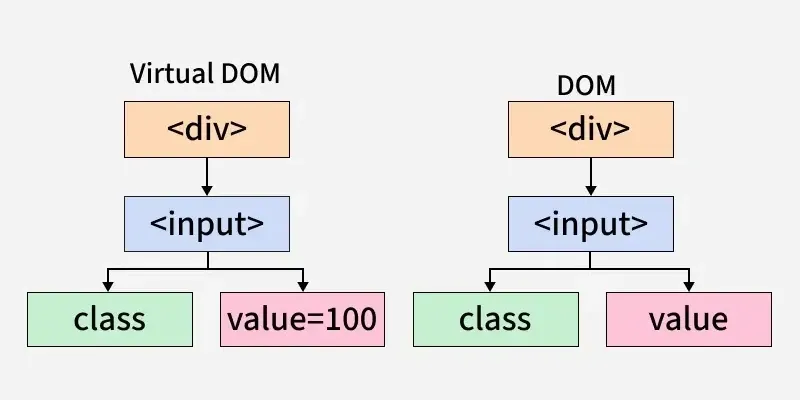
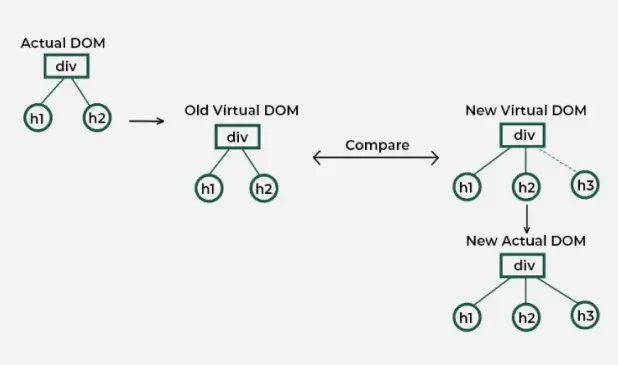
The Virtual DOM in React helps update the user interface efficiently by tracking changes in a lightweight copy of the real DOM.
React Fiber is the new reconciliation engine that improves how React processes updates. It makes rendering more flexible by splitting work into smaller units, so the app stays responsive even during heavy updates.
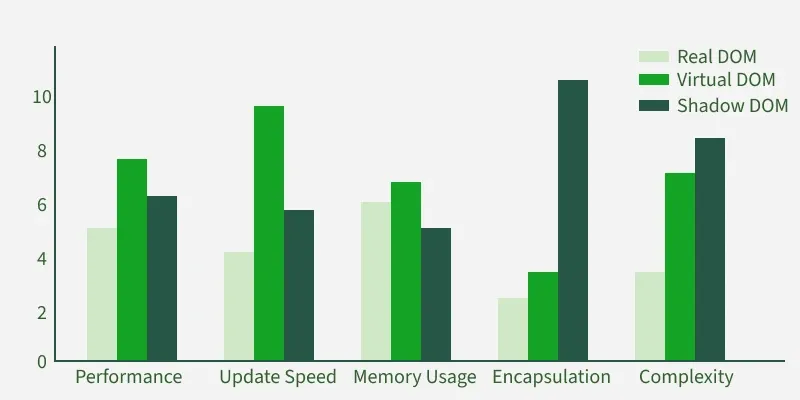
Virtual DOM and Shadow DOM serve different purposes in modern web development. Virtual DOM focuses on improving rendering performance, while Shadow DOM focuses on component encapsulation and isolation.
Virtual DOM optimizes UI updates by efficiently applying only necessary changes to the real DOM.
Note: It is especially beneficial for single-page applications (SPAs) where responsiveness and speed are critical.
Below are the main differences between Real DOM, Virtual DOM, and Shadow DOM.
Real DOM | Virtual DOM | Shadow DOM |
|---|---|---|
The actual structure of a web page, a tree-like representation of HTML. | A lightweight, in-memory representation of the Real DOM. | A web standard for encapsulating a subtree of DOM elements within a component |
Represents the UI, allowing programs to access and modify content. | Optimizes performance by minimizing direct Real DOM manipulations. | Encapsulation of component's internal structure, styles, and behavior. |
Directly manipulates on-screen elements. | Does not directly manipulate on-screen elements; it's a diffing mechanism. | Creates an isolated DOM subtree that doesn't affect the main DOM. |
Can be slow for frequent updates as it re-renders the entire tree. | Fast updates due to diffing algorithm and batching of changes. | Can enhance performance by isolating styles and behavior, reducing conflicts. |
No inherent encapsulation; styles and scripts are global | No inherent encapsulation; focuses on update efficiency. | Provides strong encapsulation for styles and JavaScript within a component. |
Native to web browsers. | Implemented by JavaScript libraries/frameworks (e.g., React, Vue). | Native web standard implemented by browsers. |
Fundamental for all web pages. | Used in modern JavaScript frameworks for efficient UI updates. | Building reusable, self-contained web components with scoped styles. |
Yes, direct changes are immediately visible. | No, updates are first applied to the virtual copy, then "patched" to the Real DOM. | No, it's an isolated part of the DOM, not the primary UI update mechanism. |
Global CSS, prone to conflicts. | Global CSS (unless handled by frameworks). | Scoped CSS, styles defined within a Shadow DOM stay within it. |