|
VOOZH | about |
|
VOOZH | about |
ReactJS Fragments are a way to group multiple elements without adding an extra node to the DOM. It allows you to return multiple child elements from a component without wrapping them in a parent container like a <div>.
The primary benefit of Fragments is the capability to reduce the elements available in the DOM.
Syntax:
<>
 <h1>Hello, World!</h1>
 <p>Welcome to the world of React!</p>
</>
We can use react Fragement in two ways. we have implemented each one here.
This is the simplest and most common way to use fragments in React. The shorthand uses empty tags <> and </> to wrap multiple elements.
Use the React.Fragment component directly. While this is more detailed, it offers extra functionality, such as the ability to assign keys when using Fragments in lists.
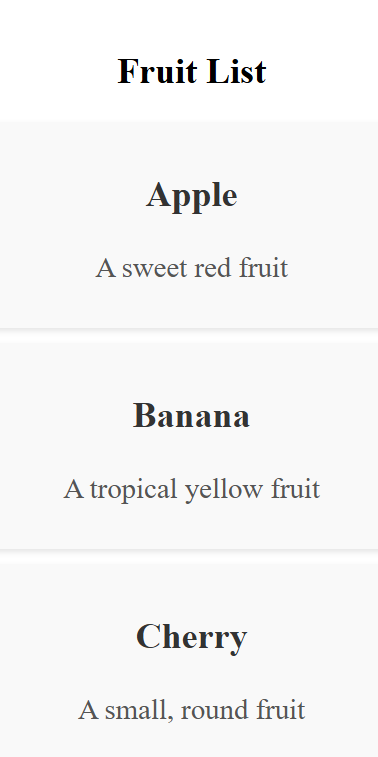
Here, we have created a simple example that display a list of fruits using ReactJS Fragments.
Output
In this code
Feature | React Fragment | <div> Element |
|---|---|---|
Purpose | Groups elements without adding extra nodes. | Groups elements but adds an extra <div>. |
DOM Structure | No extra node in the DOM. | Adds an additional div node to the DOM. |
Semantic Markup | Maintains clean structure. | Can clutter HTML with extra <div>s. |
Use Case | Ideal for rendering multiple components without extra DOM elements. | Suitable when a wrapper element is needed for styling, layout, etc. |
Performance | More efficient because it doesn’t add extra DOM nodes. | Less efficient due to the additional wrapper node. |
Support for key Prop | Can support key when used with lists. | Supports key like any regular element, especially useful in lists. |
Attributes | Cannot have attributes like className or style. | Can have attributes such as className, id, etc. |
Nested Components | Works well with child components without creating an unnecessary wrapper. | Can be used to wrap multiple elements, especially when additional styling or events are required. |
Common Use | Frequently used when rendering lists or when no additional wrapper is needed. | Used for general layout purposes where extra structure or styling is required. |
React Fragment replaces the <div> element, which can cause issues with invalid HTML, with the following advantages.
React Fragments optimize structure, improve performance, and maintain semantic HTML by eliminating unnecessary wrapper elements. While useful for lists and layouts, they lack attributes and direct DOM manipulation. Use them wisely for a cleaner, more efficient React app.