|
VOOZH | about |
|
VOOZH | about |
In React JS, the development of each component involves the use of different lifecycle methods. All the lifecycle methods used to create such components, together constitute the component's lifecycle. They are defined as a series of functions invoked in various stages of a component.
There are primarily 4 phases of a lifecycle as follows.
Table of Content
This is the initial phase of the React component lifecycle. As the name suggests, this phase involves all the declarations, definitions, and initialization of properties, default props as well as the initial state of the component required by the developer.
The second phase of the React component lifecycle, followed by the initialization phase, is the mounting phase. It commences when the component is positioned over the DOM container and rendered on a webpage. It consists of 2 methods, namely:
The third phase of the ReactJS Component Lifecycle is the Updation phase. It is also responsible for handling user interaction and passing data within the component hierarchy. Some of the lifecycle methods falling into this category are as follows:
Unmounting is the last phase of the ReactJS component lifecycle. This phase includes those lifecycle methods which are used when a component is getting detached from the DOM container. It is also responsible for performing the required cleanup tasks. Once unmounted, a component can not be re-mounted again.
Step 1: Create a new react application using the following command:
npx create-react-app demo-appStep 2: Move into your project directory using the following command:
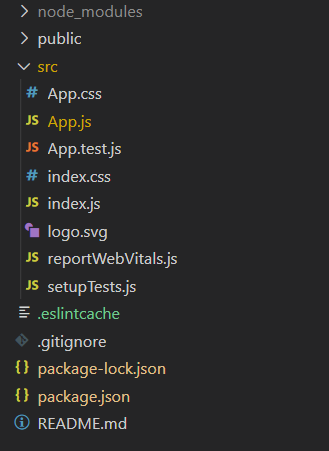
cd demo-appProject Structure:
The updated dependencies in package.json file will look like:
"dependencies": {
 "react": "^18.2.0",
 "react-dom": "^18.2.0",
 "react-scripts": "5.0.1",
 "web-vitals": "^2.1.4",
}
Example: Now write down the following code in the App.js file.
Step to Run Application: Run the application using the following command from the root directory of the project.
npm startOutput:
👁 Image