|
VOOZH | about |
|
VOOZH | about |
Change management in Project Management is a process of handling changes that come up during a project. It is a way to keep things running smoothly and make sure the project stays on track, even when things shift unexpectedly.
Here we are learning about the Change management in details:
Table of Content
Change Management in Project Management is a process of helping organizations to navigate and handle changes smoothly throughout a project lifecycle. It is a structured process that guides teams and individuals through transitions, making sure everyone is on the same process and timeline when changes happen. The goal is to make sure the changes are adopted successfully without affecting too much changes to the project or team dynamics.
Read more about the Project Management Tutorial
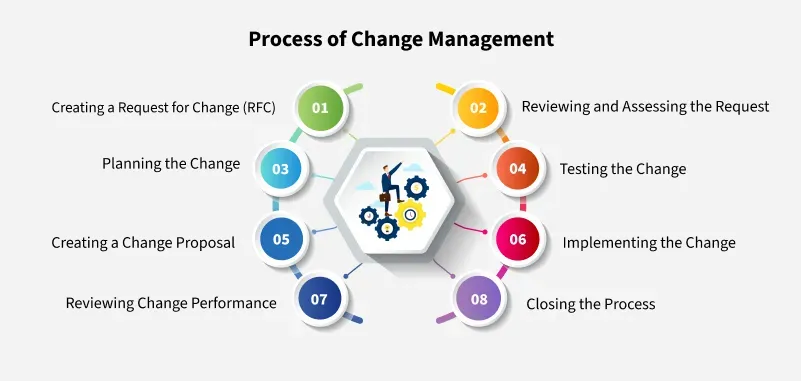
The change management process is all about guiding people and organizations through changes in a smooth and efficient way. The goal is to make the transition as easy as possible while making sure that everyone gets on board with the change.
Everything starts with identifying the need for a change. This could happen because of a bug, an improvement suggestion, or a new requirement. Once the need is recognized, a formal request for change (RFC) is created. This document explains what needs to change, why it’s necessary, and what impact it could have on the system.
Once the RFC is submitted, it’s reviewed by the change management team. They’ll assess whether the change is needed, if it’s feasible, and what resources will be required to implement it. The team also looks at the risks and how the change might affect the existing system.
Once the request is deemed appropriate, a detailed plan is created. This plan outlines what needs to be done, when it will happen, and what resources are required. A timeline is set, and any backup plans are made to avoid major disruptions during the change.
Before the change is made live, it undergoes thorough testing in a controlled environment. This step make sure that the change works as expected and does not cause any problems with the existing system. Testing helps catch any issues early, so they do not appear when is live.
If the testing goes well, a formal change proposal is written up. This proposal includes all the details about the change, how it will be implemented, and any risks involved. The proposal is reviewed and approved by the necessary stakeholders.
Once everything is approved, the change is implemented in the live environment. Care is taken to ensure the change doesn’t cause any disruptions to the system. Depending on the change, it might be rolled out gradually or scheduled during a planned downtime.
After the change is made, the team monitors its performance to see if everything is working as expected. They check if the change has achieved the desired outcomes and if any new issues have arisen. Feedback from users is collected to make sure the change is a success.
When everything is confirmed to be running smoothly, and any necessary adjustments have been made, the process is officially closed. The documentation is updated, and a final review is conducted to evaluate how well the change was handled and if it met the goals.
Change management can be divided into four main types, each suited to different situations:
Here is the Source of Change in project management:
There may be multiple reasons involved during the development process for which certain changes are required to be implemented in the product. These sources are as follows :
Change management is the way of help organizations to handle change in a smooth and effective way. Here are the Reason why change management important:
Medical Industry Example: Imagine a hospital is switching to a new electronic health record (EHR) system. This change would impact nearly every part of the hospital’s operations from how doctors and nurses track patient information to how the billing process works. Without a solid change management plan in place, this transition could lead to confusion, mistakes, and delays.
A good change management plan make sure that everyone gets the proper training on the new system before it goes live. It also allows for gathering feedback from staff after the system is up and running, so any issues can be addressed quickly. This way, the hospital can make the transition smoothly, keeping operations running efficiently and minimizing any disruptions to patient care.
Change management is important not just for individual projects, but for the overall growth of an organization. Project managers are in the perfect position to lead this process, as they’re already responsible for guiding the team and keeping everything on track. With their leadership, they can make sure that changes are handled smoothly, helping both the project and the organization grow and succeed.
If you want to learn How Software product made from starting to End Do Refer the "SDLC".