|
VOOZH | about |
|
VOOZH | about |
The Design Phase of software development deals with transforming the customer requirements as described in the SRS(Software Requirement Specification) documents into a form implementable using a programming language.
Software Design Process is the phase where developers plan how to turn a set of requirements into a working system. Like a blueprint for the software. Instead of going straight into writing code, developers break down complex requirements into smaller, manageable pieces, design the system architecture, and decide how everything will fit together and work.
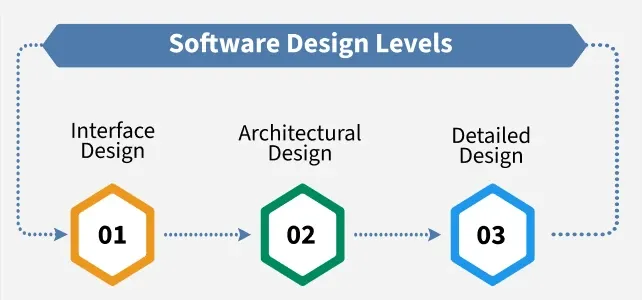
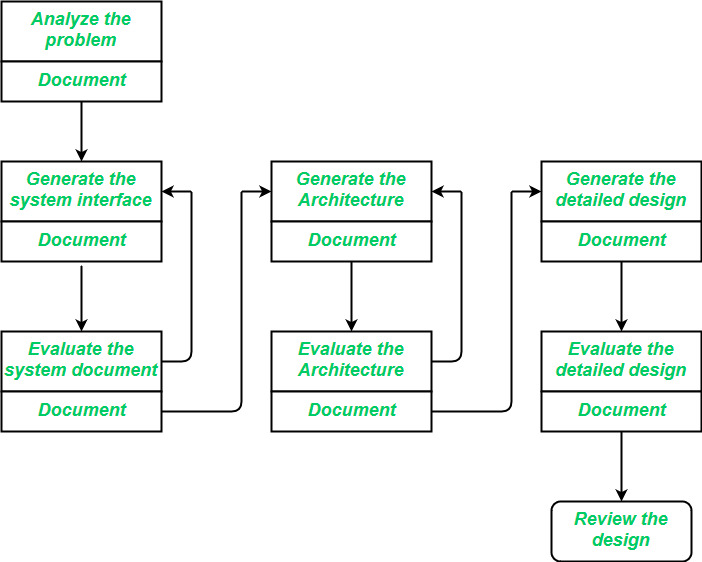
The software design process can be divided into the following three levels or phases of design:
Interface Design is the specification of the interaction between a system and its environment. This phase proceeds at a high level of abstraction with respect to the inner workings of the system i.e, during interface design, the internal of the systems are completely ignored, and the system is treated as a black box. Attention is focused on the dialogue between the target system and the users, devices, and other systems with which it interacts. The design problem statement produced during the problem analysis step should identify the people, other systems, and devices which are collectively called agents.
Interface design should include the following details:
Architectural design is the specification of the major components of a system, their responsibilities, properties, interfaces, and the relationships and interactions between them. In architectural design, the overall structure of the system is chosen, but the internal details of major components are ignored. Issues in architectural design includes:
The architectural design adds important details ignored during the interface design. Design of the internals of the major components is ignored until the last phase of the design.
Detailed design is the specification of the internal elements of all major system components, their properties, relationships, processing, and often their algorithms and the data structures. The detailed design may include:
The Actual Software Design process travel through the one end to another end of making and Software well with completion of requirements and the phases which included in the same that are bellow:
Before jumping into the design, the first step is to make sure the team understands what the users need, what the business goals are, and any potential challenges. This understanding sets the foundation for creating a design that meets both user and business needs.
During this phase, the team gathers data through methods like interviews, surveys, and focus groups. This helps get a clearer picture of what the users want and allows the team to design with the user in mind, ensuring the software will truly meet their needs.
In the design phase, the team starts creating visual elements like wireframes, user stories, and flow diagrams to map out how the system will work. Based on the feedback, prototypes are created and fine-tuned to make sure the design is moving in the right direction.
After gathering feedback, the team gets into more details with the technical design. This phase involves creating a thorough technical document that outlines exactly how the software will be implemented, including specific components and how they will work together.
The focus here is on making sure the software is easy to use. UI designers work on the visual elements, navigation, and overall user experience to ensure the interface is intuitive and friendly.
Prototypes are created to visualize the design and functionality before the full development process begins. These can range from simple wireframes (low fidelity) to fully interactive models (high fidelity) depending on the stage of development.
Good software design is built on several core element that work together to create effective system.
1. Architecture: This is the conceptual model that defines the structure, behavior, and views of a system. We can use flowcharts to represent and illustrate the architecture.
A solid architecture verify the system is flexible, stable, and easy to maintain over time.
2. Modules: Modules as the building blocks of the system. Each one handles a specific task or feature. Breaking a system into smaller modules makes it easier to develop, test, and maintain the system.
These are components that handle one specific task in a system. A combination of the modules makes up the system.
3. Components: This provides a particular function or group of related functions. They are made up of modules. Organising the system into components helps keep the code clean and makes the system more adaptable.
4. Interfaces: These are smaller units within modules that focus on specific functions. This is the shared boundary across which the components of a system exchange information and relate.
5. Data: Data is at the heart of any system. It’s all about how information is stored, accessed, and shared. This is the management of the information and data flow.
Software Design comes when the project requirement are done and when we are about to start the Development process, He.re is How Software Design fits into the Software Development Life Cycle.
After planning, the designing of software phase starts. This is where the team uses tools like wireframes, data flow diagrams, and UI designs to map out how the system will work. It’s like drawing the roadmap for how everything will come together and how we can use each component well with proper functionality. After the Designing phase the Actual process of Software Development begins.
To make sure software is easy to manage, maintain, and update, there are a few important principles that should guide the design process:
There are many tools that make the process easier and more efficient, whether you're working on wireframes, prototypes, or documentation. Here are some popular tools:
Software Design is a important part of the Software Development process and it play a major role for clean and clear development of product. Here we learned about the Software Design in detail, you can refer SDLC process for more information of Software development.