Agile Software Development is a software development methodologythat values flexibility, collaboration, and customer satisfaction. It is an iterative and incremental approach to the importance of delivering a working product quickly and frequently. It involves close collaboration between the development team and the customer to ensure that the product meets their needs and expectations.
Agile as a Mindset: Agile represents a shift in culture that values adaptability, collaboration, and client happiness, and it gives team members more authority.
Quick Response to Change: Agile fosters a culture that allows teams to respond swiftly to constantly shifting priorities and requirements.
Regular Demonstrations: Agile techniques place a strong emphasis on regular demonstrations of project progress.
Cross-Functional Teams: Agile fosters self-organising, cross-functional teams that share information effectively and communicate more effectively.
Agile Software Development Process
Agile software development, often just called 'Agile', focuses on being flexible and practical when delivering software. Instead of launching everything at once, Agile delivers small, valuable updates to users over time.
The development team works closely with the customer to understand what they really need from the software. The team listens carefully to the customer’s needs, then sorts and prioritises these requirements to make sure the most important features are developed first.
2. Planning
The team creates a clear plan for how they’ll build the software. They decide which features to focus on in each development cycle (called an iteration).
3. Development
This is where the team starts turning their plan into reality. They work in short, focused cycles, building small, usable pieces of the product. Each cycle builds on the last, which helps the team stay on track and get quick feedback to keep improving.
4. Testing
As the software gets built, it’s also tested to make sure it works properly and meets the customer’s needs. Testing ensures the product is of high quality and free from errors, so problems are caught early on before they become bigger issues.
5. Deployment
Once everything is tested and working as expected, the software is deployed, which means it’s ready for customers or end-users to start using. It’s the moment when all the development work comes to life.
6. Maintenance
Even after the software is released, the job isn’t done. The team keeps maintaining the software, verifying it continues to work well and stays up-to-date with any new needs or changes from the customer.
Agile Software Development Cycle
Let's see a brief overview of how development occurs in Agile philosophy.
Meet: Initial stage, stakeholders and team members meet to discuss the project idea, business goals, and customer requirements.
Plan: planning phase, tasks are identified, and a timeline is created. The team estimates effort, allocates resources, and prepares for the upcoming iteration.
Design: The system architecture and design are prepared based on the requirements.
Develop: The team starts building the software according to the design. Coding is done in small increments, and features are developed step by step.
Test: The software is tested to ensure it works correctly and meets the requirements. Bugs and errors are identified and fixed to maintain quality.
Evaluate: the completed work is reviewed with team members and feedback is collected so that improvements are identified.
Now the cycle will repeat from here for next iteration.
Four Values of Agile Software Development
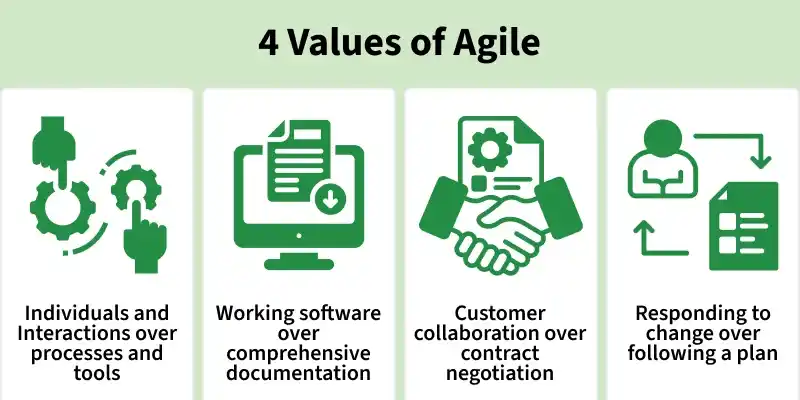
The four core values of Agile software development, as outlined in the Agile Manifesto, focus on what truly matters for creating successful software.
1. Individuals and Interactions over Processes and Tools: This value stresses that the strength of the team and how well they work together is more important than the tools or processes they use.
2. Working Software over Comprehensive Documentation: Agile prefers delivering functional software quickly rather than getting down in lengthy documentation.
3. Customer Collaboration over Contract Negotiation: Agile values regular collaboration with customers over sticking strictly to contracts. The idea is to involve the customer throughout the development, verifying that the product meets their needs.
4. Responding to Change over Following a Plan: In Agile, change is expected, and the approach encourages flexibility. Rather than rigidly following a plan that may no longer apply, Agile teams adapt and adjust based on new information, changing market conditions.
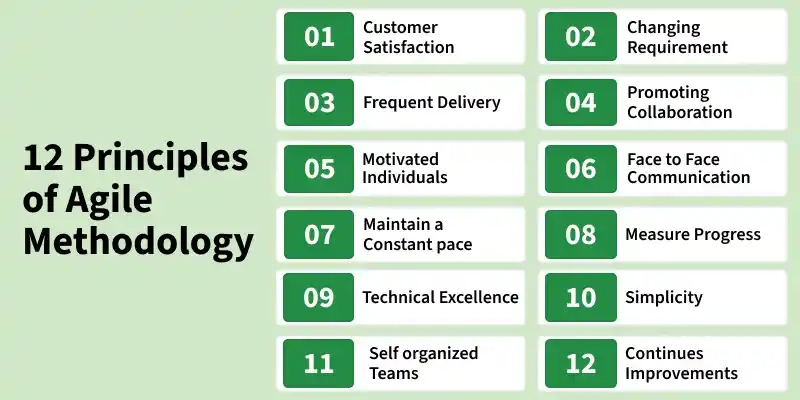
There are 12 agile principles mentioned in the Agile Manifesto.Agile principles are guidelines for flexible and efficient software development.. The focus is on delivering value, maintaining a sustainable work pace, and ensuring technical excellence.