|
VOOZH | about |
|
VOOZH | about |
Image sharpening is a crucial process in digital image processing, aimed at improving the clarity and crispness of visual content. By emphasizing the edges and fine details in a picture, sharpening transforms dull or blurred images into visuals where objects stand out more distinctly from their backgrounds. This not only makes photographs more visually appealing but also enhances their usefulness in analysis, recognition and interpretation tasks. Two effective and commonly used sharpening techniques in MATLAB are the Laplacian filter and high boost filtering.
The Laplacian filter is an edge-detection operator that highlights regions of rapid intensity change, which are typically found at edges within an image. It works by applying a special convolution mask that calculates the second derivative of pixel values in all directions. This method:
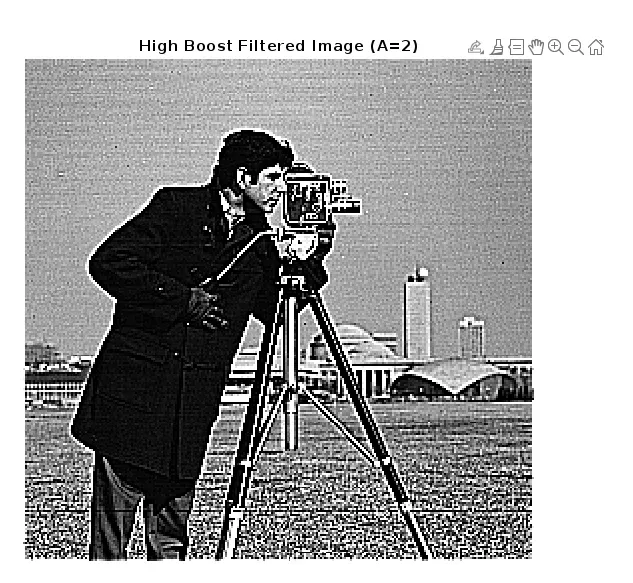
High boost filtering is a technique that sharpens an image by boosting its edge information while still retaining the low-frequency (smooth) areas. This method goes beyond simple edge enhancement by allowing us to control the degree of sharpness through an amplification constant (often denoted as "A"). The essential steps are:
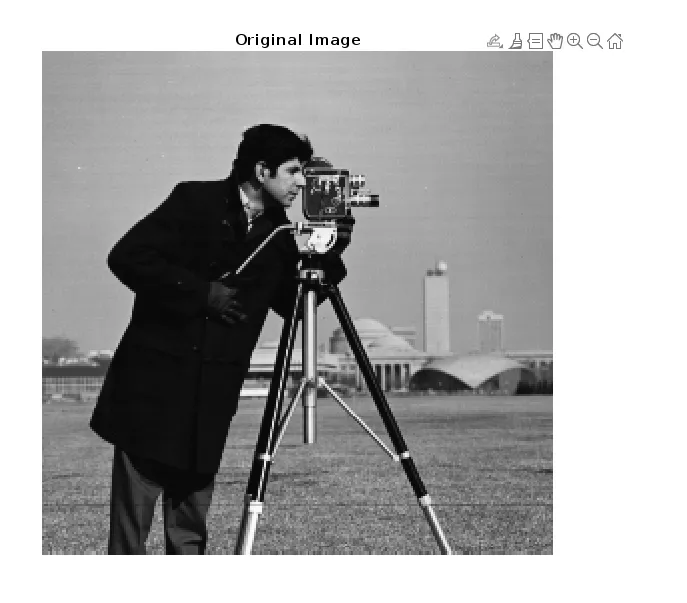
Step 1: Load a Test Image
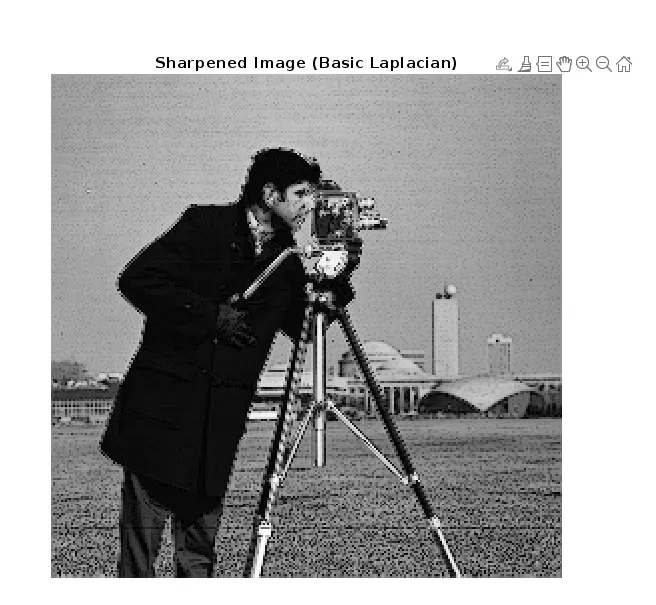
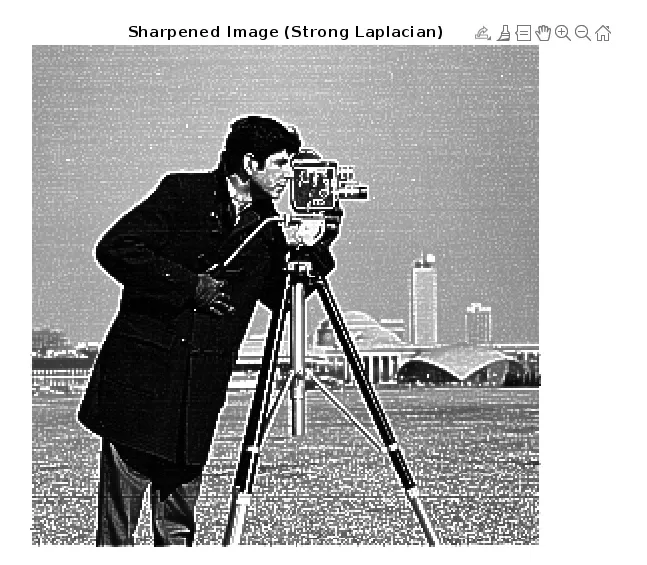
The Laplacian filter is a simple edge detector, we can sharpen the images by either subtracting or adding the edge map, based on the filter used.
1. Using a Basic Laplacian Filter
2. Using a Stronger Laplacian Filter
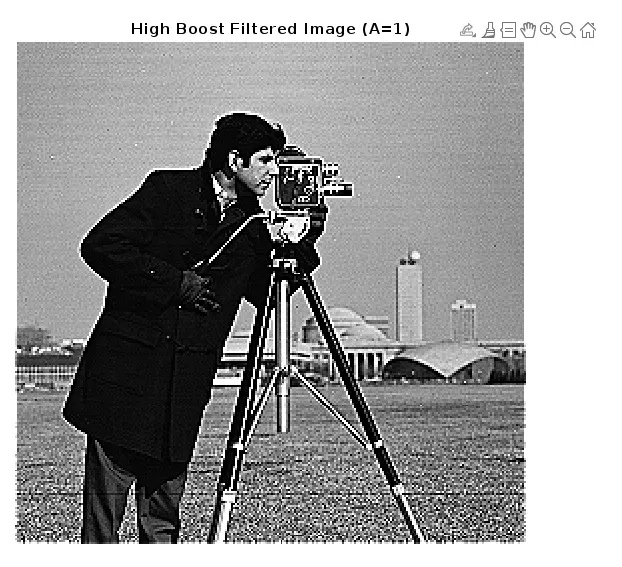
High boost filtering combines the original image with an edge-enhanced version for more aggressive detail enhancement.
1. Standard High Boost Filter: The filter enhances image details by combining edge emphasis and the original image.
2. Stronger High Boost Filter:
Image sharpening enhances the clarity and distinction of edges in digital pictures. Using MATLAB, both Laplacian and high boost filtering offer straightforward, effective ways to make images look crisper and more detailed. By applying these filters, we can quickly improve image quality for better analysis, presentation or interpretation.