The term "pervasive computing", also referred to as "ubiquitous computing", describes the integration of computing capabilities into everyday objects so they can interact and carry out tasks with ease. It makes technology nearly invisible in day-to-day living by enabling gadgets to operate in the background with little user input.
Devices are integrated into everyday objects and function flawlessly.
Requires little or no direct user interaction.
Devices communicate using wireless networks
Systems can adjust based on user needs and preferences
Microelectronic Technology: Allows for the creation of small, powerful, compact gadgets with low energy consumption.
Digital Communication Technology: Enables smooth network connectivity by offering large bandwidth and quick data transfer at reduced prices.
Internet Standardization: Ensures interoperability between devices through standardized protocols, along with support for security, services, and billing systems.
Overview of Pervasive Computing Environment
In order to build a networked ecosystem, pervasive computing combines computer technology, consumer devices, and wireless communication. Even in places without conventional wired infrastructure, it makes information accessible. Wireless communication, low battery consumption, persistent storage, and advanced capabilities like multimedia display and voice processing are all supported by this ecosystem.
By enabling communication and information access at any time and from any location, these systems improve convenience and productivity.
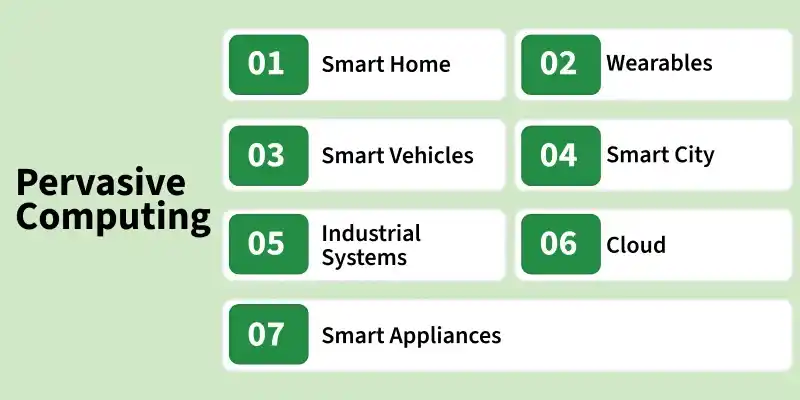
Applications of Pervasive Computing
Many industries employ pervasive computing to increase productivity and enhance user experience: