|
VOOZH | about |
|
VOOZH | about |
In Agile software development, effective planning and prioritization are essential for delivering high-quality products. The Product Backlog and Sprint Backlog are two important components of the Scrum framework that help teams manage work efficiently and ensure continuous delivery of value.
Prioritized list of all features, enhancements, bug fixes, and requirements forms the Product Backlog, which is maintained by the Product Owner and continuously updated based on changing business needs and customer feedback. Its key features are:
Purpose: The Product Backlog ensures the development team always works on the most valuable tasks first and is aligned with business goals.
Subset of items selected from the Product Backlog for completion during a specific sprint is known as the Sprint Backlog, including tasks the development team commits to delivering within the sprint duration. Its key features are:
Purpose: The Sprint Backlog helps the team focus on short-term goals and deliver incremental value at the end of each sprint.
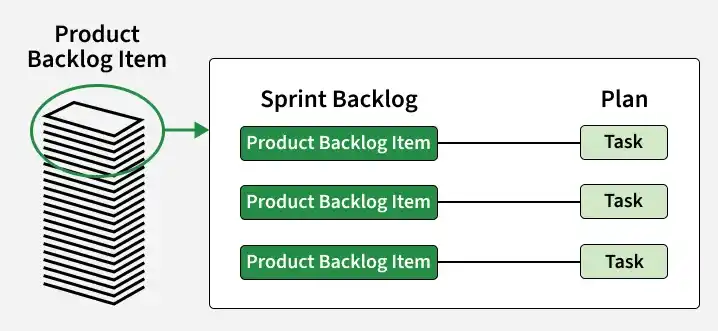
The Product Backlog and Sprint Backlog are closely connected in the Scrum framework. The Product Backlog represents the complete list of work items for the product, while the Sprint Backlog contains a selected set of items taken from it for implementation in a sprint.
During Sprint Planning, the team selects high-priority items from the Product Backlog and moves them into the Sprint Backlog. The Development Team then breaks these items into smaller tasks and works on them during the sprint. This ensures that long-term product goals are gradually achieved through short, focused iterations.
| Feature | Product Backlog | Sprint Backlog |
|---|---|---|
| Scope | Entire product requirements | Selected sprint work |
| Ownership | Product Owner | Development Team |
| Flexibility | Continuously updated | Fixed during sprint |
| Focus | Long-term vision | Short-term execution |