|
VOOZH | about |
|
VOOZH | about |
Six Sigma is a methodology that helps organizations in making their process better and more efficient by identifying and removing errors and variations. Variations in processes can lead to errors, these errors can lead to product defects and product defects can lead to poor customer satisfaction. By reducing variation and errors Six Sigma can reduce process costs and increase customer satisfaction. Six Sigma was introduced in 1986 by an American Engineer Bill Smith. He introduced this term while working at Motorola. Industries like manufacturing, service industry, government agencies, aerospace, and e-commerce use Six Sigma to improve their processes and product quality.
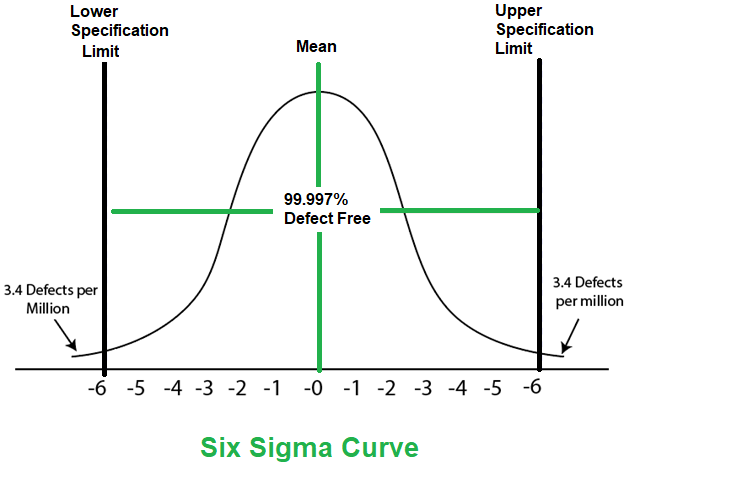
Six Sigma is a methodology used by most organizations for process improvement, and It is a statistical concept that aims to define the variation found in any process. Six Sigma is a process of producing high and improved quality output. This can be done in two phases - identification and elimination. The cause of defects is identified and appropriate elimination is done, which reduces variation in whole processes. Six Sigma processes have a failure rate of only 3.4 per million opportunities i.e. 99.99966 percent of Six Sigma products are free from defect, while Five Sigma processes have a failure rate of only 233 errors per million opportunities.
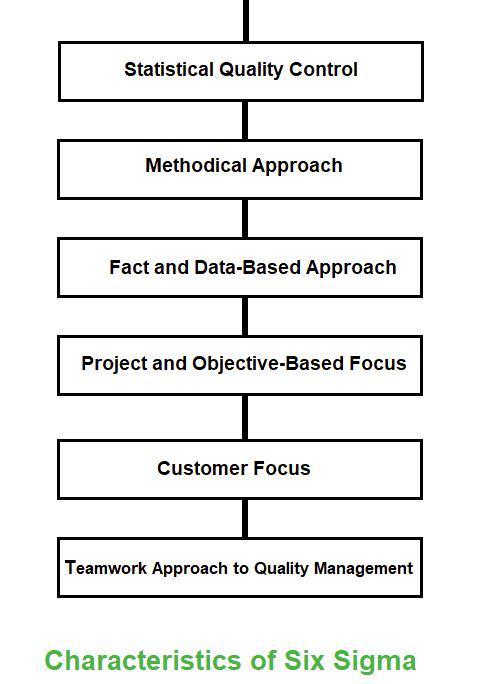
👁 ImageThe Characteristics of Six Sigma are as follows:
Lean Six Sigma is a combination of two methodologies i.e. Lean Methodology and Six Sigma Methodology. Lean Six Sigma methodology can fix both efficiency and quality issue as the main goal of Lean is to eliminate waste that means remove anything that does not add value to customer while six sigma reduce variation and errors. Lean Six Sigma deliver value to customer by removing unnecessary steps and inefficiencies that don't contribute to product. Lean Six Sigma helps in continuous improvement as both Lean and Six Sigma promote Continuous improvement.
Organizations can enhance their sigma level by integrating Six Sigma principles into leadership, process management, and improvement efforts. Some Common Six Sigma Principals are:
The primary principal of six sigma methodology is to focus on customer. Voice of the Customer (VoC) and methods for determining what the customer truly want from a product or process. Organizations can boost customer happiness by combining that knowledge with measurements, analytics, and process improvement approaches, resulting in higher profits, client retention, and loyalty.
The Six Sigma approach requires constant process improvement. An organization that fully implements the Six Sigma technique never stops improving. It continuously discovers and priorities opportunities. Once one area has been improved, the organization will move on to another. The organization continuously find ways to increase the signa level because the goal is to achieve the level of 99.99966 accuracy for all processes inside an organization while also making sure other essentials like financial stability.
A method to continuously improve a process is to reduce its variation. Every process has an inherit variation. Variation in processes can lead to errors, these errors can lead to product defect and product defect can leads to poor customer satisfaction. By reducing variation and errors six sigma can reduce process cost and increase customer satisfaction. Suppose there are some developers developing web application, variation will exist as every developer have different coding styles, expertise levels, environment factors and project requirement. By adopting strategies like coding standards and guideline, code reviews, automated testing and documentation variation can be reduce to some extent.
Waste is a major problem in the six sigma methodology. Eliminating waste means removing items, procedures or people that are not required for the process's outcome or removing anything that does not add value to customer. Eliminating waste can reduce processing time, errors in process and lowers overall costs.
Until organizations provide employees with the tools they need to monitor and sustain improvements, implementing improved processes is only a temporary solution. Process improvement usually involves two approaches in most organizations. An improvement is first defined, planned, and carried out by a process improvement team consisting up of project managers, methodology specialists, and subject matter experts. The employees that deal with the process on a daily basis are then equipped by that team to supervise and handle it in its improved condition.
Six Sigma improvements are frequently used to handle uncontrolled processes. Out-of-control processes meet certain statistical conditions. The purpose of improvement is
to bring a process back under statistical control. Then, after the improvements are implemented, measurements, statistics, and other Six Sigma tools are utilized to keep the process under control. Implementing controls and training people on how to apply them is a key component of continuous improvement.
The Two Six Sigma methodologies used in the Six Sigma projects are DMAIC and DMADV. Six Sigma teams usually use DMAIC or DMADV approaches to achieve process improvements and establish process control.
DMAIC is used to enhance an existing business process. A DMAIC project involves identifying important problem that are creating the problem, verifying those problem , brainstorming solutions, implementing them, and designing a control plan to maintain the improved state. The DMAIC methodology is designed for the team who are responsible for improving a project. DMAIC phases allow flexibility, that helps the team to fit their activities. If a process need to completely replaced or redesigned for user experience in such case team can use DMADV method.
The DMAIC project methodology has five phases:
Let's see the explanation of each phase:
The Define phase of a DMAIC project involves identifying problems, establishing project requirements, and setting success goals. Six Sigma leaders can use tools inside the phase to create flexibility for different project types, depending on factors such as leadership advice and budgets.
During the DMAIC Measure phase, teams use data to validate assumptions about the process and problem. Validation of assumptions also makes it into the analysis step. The measurement phase focuses on collecting and arranging data for analysis. Measuring in a Six Sigma project might be challenging without proper data collection. To gather data, teams may need to build tools, create queries, filter through large amounts of information, or use manual processes.
Analyze phase is a critical stage where the root causes of problems or inefficiencies within a process are identified and understood. During the Analyze phase of a DMAIC project, teams develop predictions about relationships between inputs and outputs, use statistical analysis and data to validate the prediction and assumptions they've made thus far. In a DMAIC project, the Analyze phase leads to the Improve phase, where hypothesis testing can confirm assumptions and potential solutions.
During the Improve phase of a project, Six Sigma teams begin developing the concepts that came from the Analyze phase. They employ statistics and real-world observations to test assumptions and solutions. As teams select and start implementing solutions, hypothesis testing keeps going throughout the enhance phase. It starts in the analyse phase.
In DMAIC Phase Controls and standards are established so that improvements can be maintained, but the responsibility for those improvements is transitioned to the process owner.
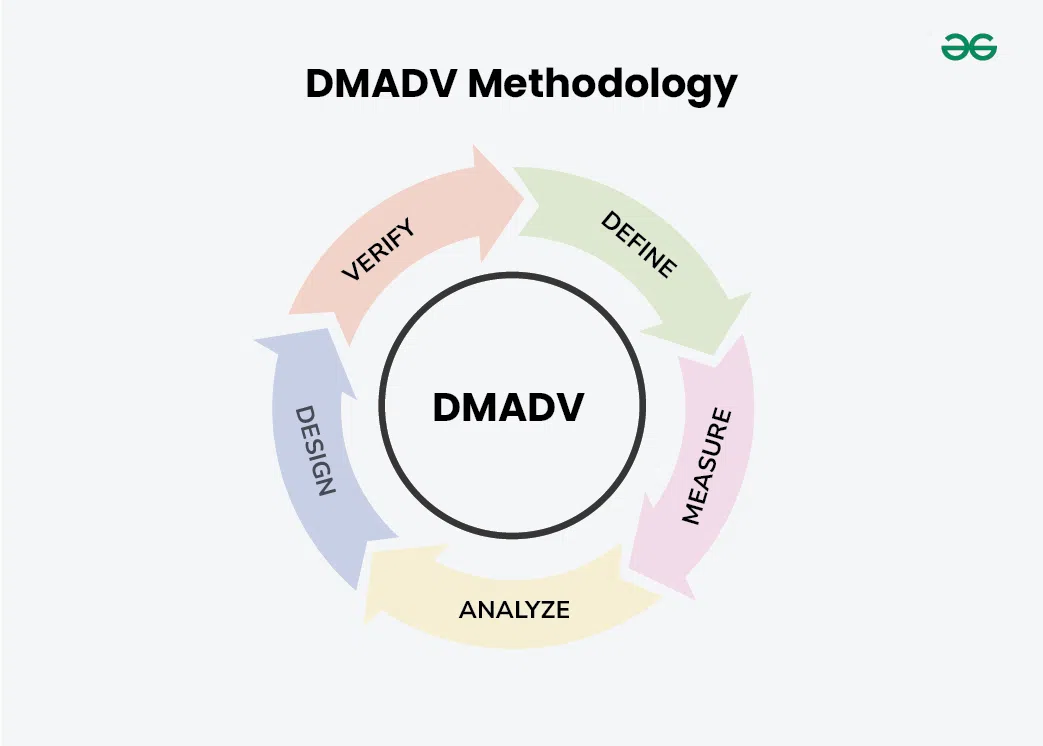
DMADV is used to create new product designs or process designs. Six Sigma teams use DMADV in the following scenario:
The DMADV project methodology also has five phases:
In a DMADV project, the Define stage is slightly more strict. Teams must identify problems and define requirements within a change management environment. When an organization has a change management program in place, Six Sigma teams must include all program needs in the DMADV stages.
During the DMADV Measure phase, teams use data to validate assumptions about the process and problem. Validation of assumptions also makes it into the analysis step. The measurement phase focuses on collecting and arranging data for analysis.
Analyze phase is a critical stage where the root causes of problems or inefficiencies within a process are identified and understood. They priorities identifying best practices and standards for measuring and designing new processes.
The fourth phase is when DMADV projects start to vary significantly from DMAIC projects. The team designs a new process that includes solution testing, mapping, workflow principles, and infrastructure development.
The Verify phase in DMADV checks if the designed solutions work as intended, measuring their success against initial goals, ensuring improvements are effective and sustainable.
The primary difference between DMAIC and DMADV in terms of team goals and project outcomes. Both methodology aims to deliver better quality, better efficiency, more production, more profits and provide excellent customer satisfaction.
A Six Sigma certification demonstrates practical knowledge and execution of the methodology. Some organizations provide internal certification methods. Most Six Sigma certifications are obtained through online or onsite training courses.
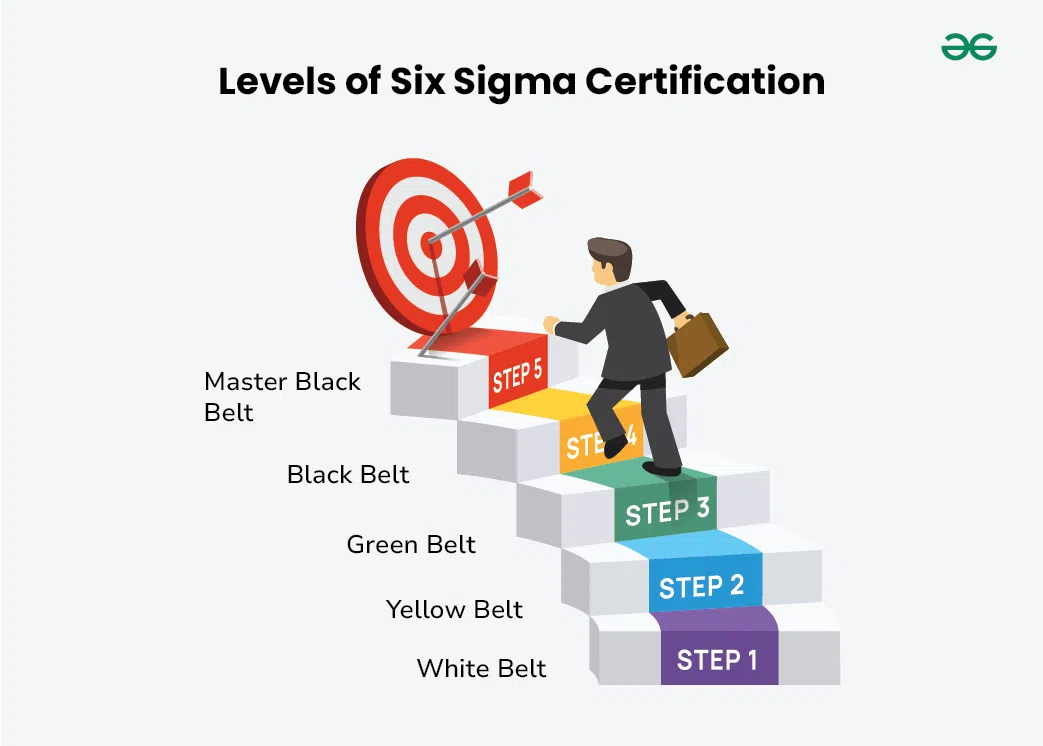
Six Sigma levels are differentiated by belt level. Following are the levels of six sigma certification:
Most certification programms require individuals to pass an exam to get certified; however, some green and black belt candidates must also demonstrate their expertise through Six Sigma project experience.
Tools and Technique used in six sigma are:
Six Sigma is a structured methodology used by organization to improve processes by reducing inherit variation and defects. Six Sigma helps the organization in improving the efficiency, quality and customer satisfaction by reducing variation and defects in processes. Six Sigma consists of two methodology DMAIC and DMADV. DMAIC stands for "D-Define", "M-Measure", "A-Analysis", "I-Improve", "C-Control" . DMAIC is used to enhance an existing business process. DMADV stands for "D-Define", "M-Measure", "A-Analysis", "D-Design", "V-Verify". DMADV is used to create new product designs or process designs.