|
VOOZH | about |
|
VOOZH | about |
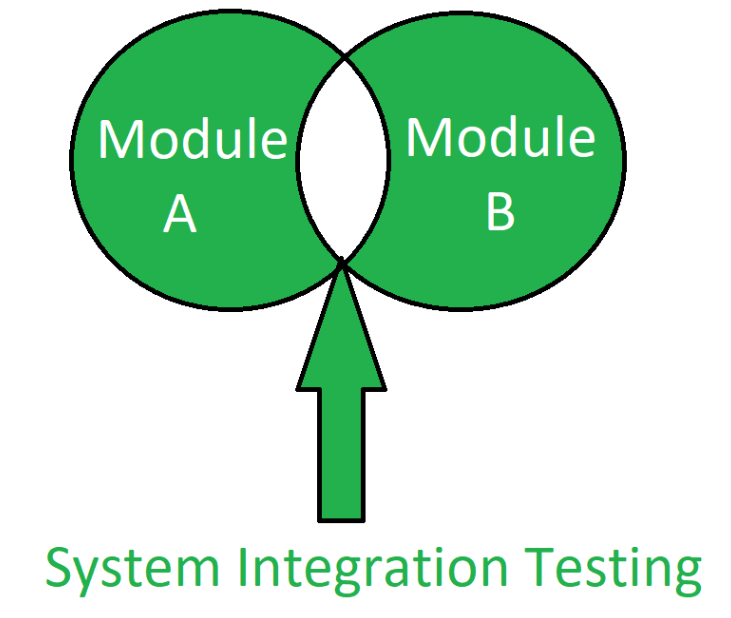
System Integration Testing (SIT) is the type of software testing that is carried out to perform the overall testing of a complete system that consists of many integrated components. The system on which SIT is performed may have different hardware parts, different software parts or both hardware and software. SIT is the process of fabricating the constituent integral parts of a system in a reasonable and logical way. SIT performs the testing in a less cost. It checks the full functionality of the system. System test is involved in SIT which is a process of verification of the system fulfilling the requirements and it test whether the system performs in according to the user's requirements. During the development phase, system integration testing is the first testing process performed after the system is assembled. SIT can also be defined as a testing process that exercises the coexistence of a software system with other system. Multiple integrated systems are involved in it and it is assumed that each have already passed system integration testing. SIT is performed to test the interactions among several integrated components.
SIT is a black-box testing technique.
Objective of System Integration Testing: The objective of SIT is to:
👁 Image
Major States of SIT: There are three major states of system integration testing:
System Integration Testing (SIT) is a type of testing that focuses on verifying the interactions and interfaces between different systems or components of a software application. The purpose of SIT is to ensure that the different components are integrated and work together correctly as a system.
SIT is typically performed after unit testing and integration testing, and before user acceptance testing (UAT). SIT tests the end-to-end flow of data and transactions through the system, including the interfaces between the components, the communication protocols, the data transfer mechanisms, and the shared resources.
During SIT, various test scenarios are executed to ensure that the components of the system interact with each other seamlessly and correctly, and that they conform to the functional and non-functional requirements of the system. The testing team may use automated testing tools and techniques to simulate various real-world scenarios and edge cases.
The test environment for SIT should closely resemble the production environment, including all the hardware, software, and networking components, to ensure that the system behaves as expected in the production environment. Any defects or issues that are discovered during SIT are logged and tracked, and are usually fixed before the system is deployed for user acceptance testing or production.
In summary, SIT is an important testing phase in the software development lifecycle that ensures that the different components of a system are integrated and work together correctly. SIT helps to identify and resolve any issues or defects before the system is deployed for user acceptance testing or production, thereby reducing the risk of costly and time-consuming rework.
In summary, SIT plays a critical role in ensuring that the different components of a software application are integrated and work together correctly. SIT helps to identify and resolve any issues or defects, thereby reducing risk and improving system quality and performance.