Waterfall testing is a sequential testing approach where testing begins only after the complete development of the software. It follows a linear and structured process in which each phase is completed before moving to the next. Development and testing are handled separately, which ensures organization but delays defect detection.
Testing starts after development is fully completed.
Testing and development teams work separately.
Each testing level is executed one after another.
Example: A company develops an e-commerce website completely first, and then the testing team tests all features together, leading to multiple defects being found at once.
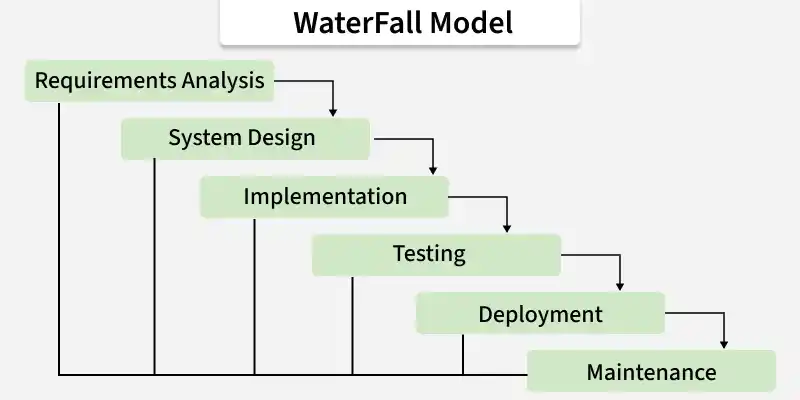
This diagram shows the sequential flow of phases where testing begins after development is completed and moves level by level.
Requirement Analysis: Understanding system needs.
System Design: Creating architecture and design.
Implementation (Coding): Developing the system.
Testing: Verifying and validating the system.
Deployment: Releasing the product.
Maintenance: Fixing issues and updates after release.
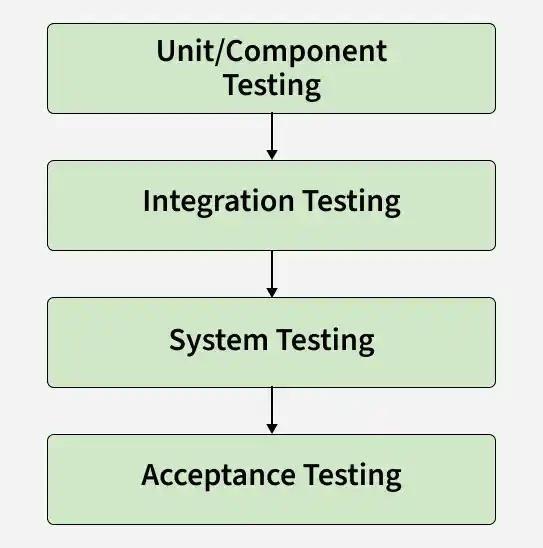
Testing Levels
In the Waterfall model, testing is done in multiple levels after development is completed. Each level focuses on a specific aspect of the system and is performed sequentially.