Metadata refers to data that provides information about other data. It describes the structure, content and characteristics of a file, document, image or dataset, helping users and systems understand and manage data more effectively.
It gives context and meaning to raw data.
It can include details like author name, creation date, file size and format.
It improves data organization, searchability and accessibility.
It’s widely used in databases, websites, digital media and data analytics.
Importance
Metadata is crucial because it adds context to raw data. Without metadata, understanding the meaning, source, or reliability of data would be difficult. It is especially important in:
Data analysis for ensuring accurate interpretation.
Web development for improving search engine optimization (SEO).
Database systems for efficient querying and data management.
Digital libraries for cataloging and indexing information resources.
Example
Suppose you have an image file named photo.jpg. The metadata for this image might include:
File size: 3 MB
Resolution: 1920 × 1080
Date created: 25-Oct-2025
Camera model: Canon EOS 80D
Here, metadata tells you details about the file, not the content of the image itself.
Types of Metadata
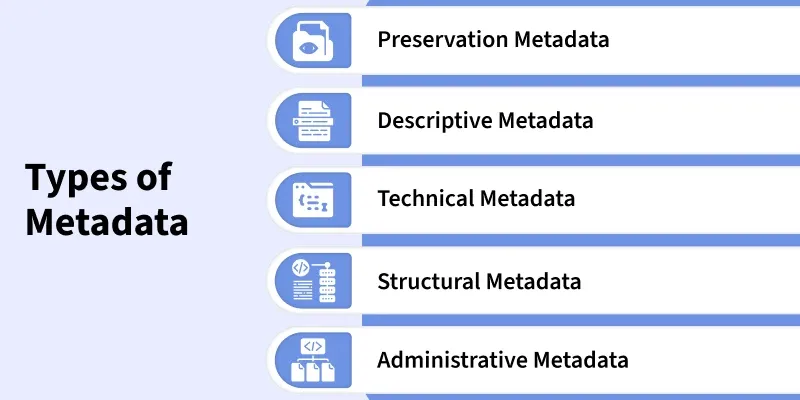
Metadata is generally divided into five main categories:
Preservation Metadata: Ensures long-term access to digital assets by storing details about file formats, preservation methods and migration strategies.
Descriptive Metadata: Describes content details like title, author, keywords and date to help users identify and locate resources.
Technical Metadata: Covers technical details such as file type, size, resolution and software used for creation or editing.
Structural Metadata: Shows how data is organized and related helping users navigate chapters, sections or multimedia parts.
Administrative Metadata: Includes management details like ownership, creation date, access rights and preservation policies.
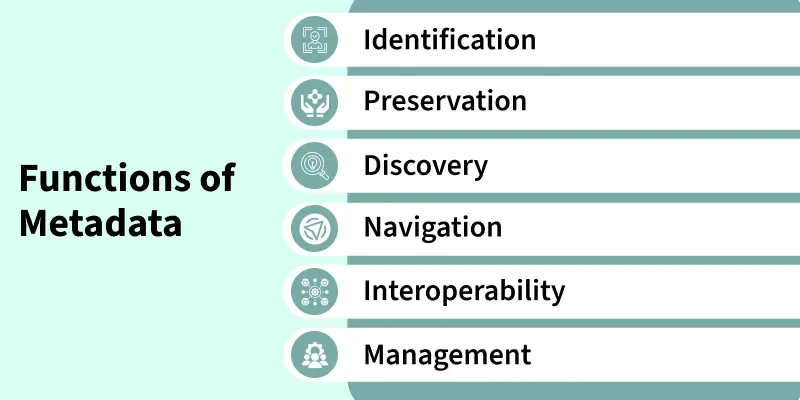
Functions of Metadata
Metadata plays a key role in managing, organizing and interpreting data. Its functions extend beyond simple descriptions and are essential for ensuring data consistency and usability across systems.