What is Project Management Workflow and why is it important?
Last Updated : 23 Jul, 2025
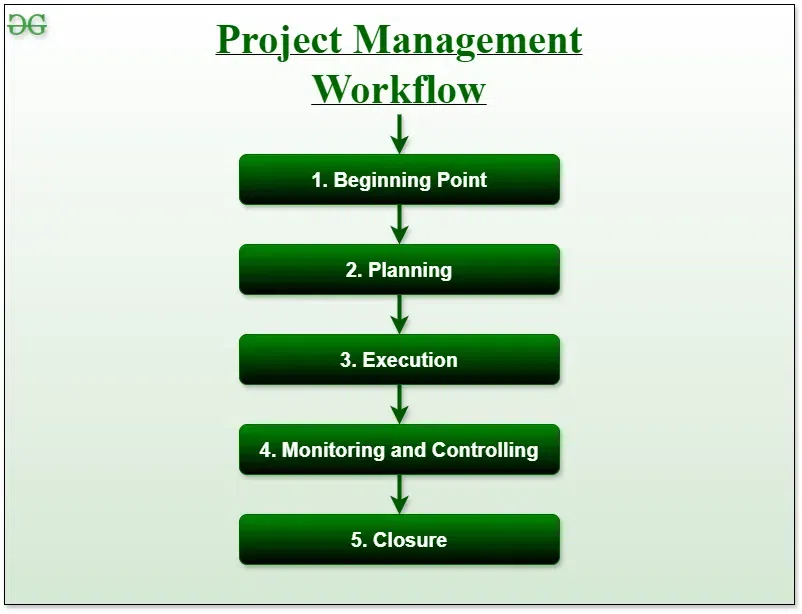
A project's execution workflow is an organized system that directs work on a project from start to finish. It includes processes for monitoring, planning, carrying out, and closing down to make sure projects are completed successfully. Understanding its importance is essential as it promotes structure, cooperation, and effectiveness in accomplishing project objectives within specified limitations.
A project management workflow is an organized set of procedures and actions intended to direct the implementation of a project from start to finish. It includes all phases of a project's organization, planning, execution, control, and closing with the goal of reaching predetermined objectives within predetermined parameters including resources, time, and money. Defining project scope, assigning resources, making timelines, delegating tasks, tracking advancement, controlling risks, and guaranteeing high-quality deliverables are typical tasks included in this procedure. Workflows for project management that are effective help team members, stakeholders, and other interested parties collaborate, communicate, and coordinate in order to guarantee that projects are completed effectively and achieve the intended goals.
Clarity and Alignment: When roles, responsibilities, and objectives are well-defined, all project participants are aware of what is expected of them, which fosters alignment and a focus on shared objectives.
Timeline Management: It assists in establishing reasonable deadlines and monitoring advancement, guaranteeing tasks are finished on schedule.
Cost Control: It makes budget management possible, guards against excessive spending, and guarantees long-term financial stability.
Continuous Improvement: It makes it easier to learn from previous experiences, which enables methods and approaches to be improved for upcoming initiatives.
Resource Optimization: By allocating resources effectively in accordance with project needs, waste is decreased and productivity is increased.
Put remedial measures in place to deal with problems and hazards as they emerge.
Maintain constant contact with stakeholders in order to ask for input and offer updates.
5. Closure
Make that the project's deliverables and goals have been reached by reviewing them.
Obtain the stakeholders' formal approval.
To identify areas for development and to highlight wins, hold a lessons learned session.
Archive project records, and finish up any outstanding administrative work.
Manage Risks Proactively: Proactively manage risks by identifying possible hazards early in the project and creating plans to reduce them. Throughout the course of the project, regularly reevaluate the risks, and be ready to put backup plans into place as needed.
Promote Cooperation and Teamwork: Create a friendly, cooperative atmosphere where team members are empowered to exchange ideas, pose questions, and cooperate to achieve shared objectives.
Resource Allocation: Assign work to team members in accordance with their qualifications and availability to make sure that resources are used efficiently and workloads are balanced.
Effective Communication: To make sure that everyone is in agreement and informed on the status, modifications, and difficulties of the project, encourage open and honest communication between team members and stakeholders.
Record Everything: Maintain thorough records of all project schedules, decisions, and modifications. This documentation guarantees that everyone gets entry to to the records they require and acts as a useful reference.
Evaluate and Revise Plans Frequently: Keep an eye at the project's development in contrast to the plan, and be prepared to make modifications as needed. Schedules, budgets, and resource allocations must all be up to date to account for adjustments and maintain progress of the project.
The foundation of any effective project execution is its project management workflow, which offers direction, clarity, and control at every stage of the project's lifespan. Its capacity to maximize resources, control risks, promote communication, and guarantee quality results makes it crucial, eventually boosting project success and stakeholder satisfaction.